UK's Phantom Data Centers Are Straining the Power Grid
Speculative 'phantom' data centers are clogging the UK's grid connection queue. Ofgem is pushing back—but the fix isn't simple when AI ambition is this loud.

Written by AI. Zara Chen
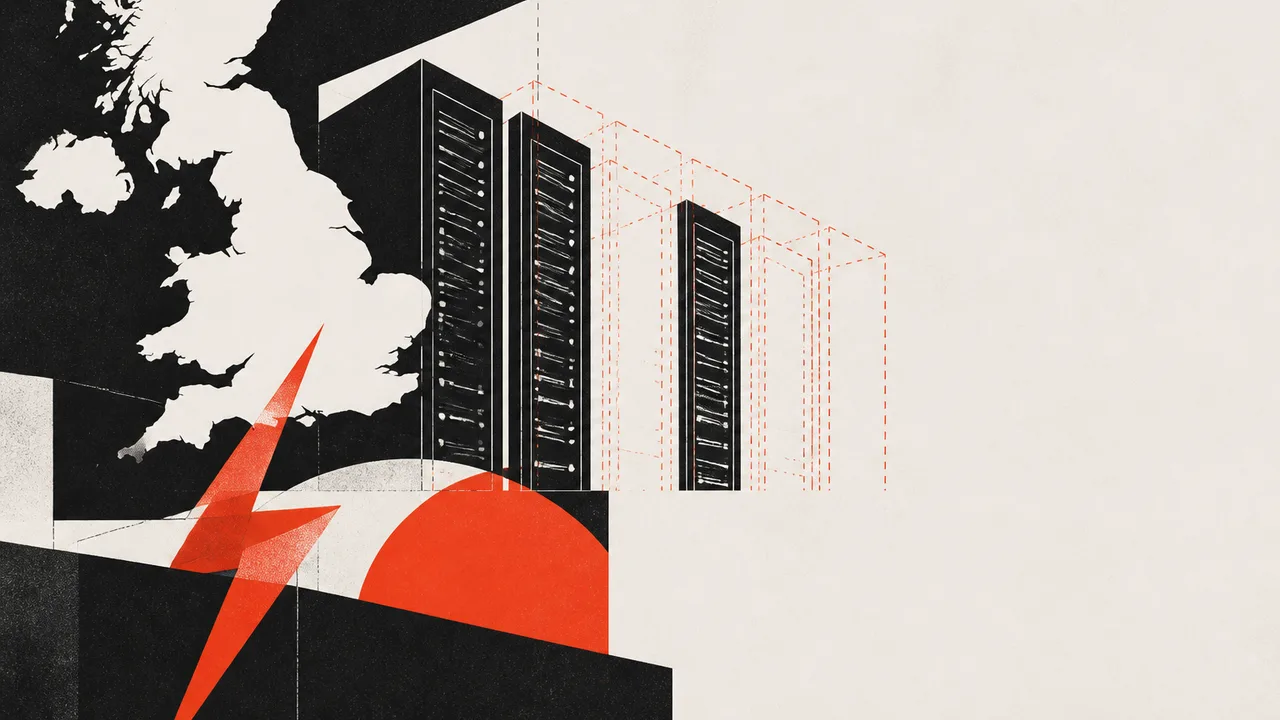
Somewhere in Britain right now, there's a data center that doesn't exist yet — and it's already breaking things.
Not in the dramatic, Hollywood-disaster sense. But in the very boring, very consequential way that speculative infrastructure projects tend to break things: by eating up grid capacity that other projects need, slowing down connection timelines across the board, and handing planners a genuinely maddening puzzle. You can't build around something that might not materialize. But you also can't ignore it, because what if it does?
This is the "phantom data center" problem, and according to Wired, it's now officially on the desk of the UK's energy regulator. The country's AI ambitions are real and growing — data centers form the literal physical backbone of everything from cloud compute to generative AI workloads — and that appetite for power is colliding hard with a grid that wasn't designed for this moment.
What "phantom" actually means here
Let's be precise about what we're talking about, because "phantom data center" sounds spookier than it is.
When a company wants to connect a large facility — like a data center — to the UK's national grid, it applies for a grid connection. That application reserves capacity. The problem is that reserving capacity is relatively cheap and low-risk for developers, so the incentive structure quietly encourages speculative applications. Companies throw their name in the queue for projects that may be years from breaking ground, or may never break ground at all.
The result is a queue full of ghosts. Real capacity, reserved for facilities that don't exist and might never exist, while projects that are genuinely ready to build are stuck waiting behind them.
Ofgem, the UK's energy regulator, has been trying to untangle this. The core challenge is a textbook collective action problem: individually rational behavior — reserve your spot early, hedge your bets — produces a collectively irrational outcome. Every developer acting in their own interest creates a gridlock that's bad for everyone, including them. Nobody wants to be the sucker who didn't hold their place in line, so everyone holds their place in line, and the line becomes useless.
This dynamic isn't unique to the UK or to data centers, but it's hitting particularly hard right now because the demand spike is real and steep. AI infrastructure isn't a maybe — it's happening — which means the pressure on grid connections is only going one direction.
The grid wasn't built for this conversation
It's worth stepping back for a second to appreciate just how structural this problem is. The UK's electricity infrastructure was engineered around a pretty different world — one where large industrial power draws were geographically predictable, demand grew gradually, and the big question was how to keep the lights on in homes and factories. Data centers consuming tens or hundreds of megawatts in a single location weren't really part of the planning assumptions.
And now they are, everywhere, all at once. The AI boom has a power appetite that's hard to overstate. Training large models, running inference at scale, storing and retrieving the oceans of data that observability platforms alone generate — it all adds up fast. The New Stack has covered how AI is poised to dramatically worsen the data burden on existing infrastructure, which means the compute facilities themselves need to keep scaling.
That scaling requires power. Reliable, large-scale, grid-connected power. And the UK grid, like most national grids, is now navigating a transition that's happening simultaneously on multiple fronts: decarbonization, electrification of transport and heating, and now the sudden vertical demand curve from digital infrastructure.
Something has to give in the planning process, or everything slows down.
What Ofgem is actually doing about it
The regulator's response is essentially an attempt to inject friction into the queue — to make speculative applications more costly and therefore less attractive, while moving genuinely ready projects to the front. The specifics of exactly how Ofgem is restructuring the queue process are detailed in their ongoing work (worth tracking directly at ofgem.gov.uk), but the broad principle is: if you want a grid connection reservation, you need to demonstrate you're serious.
This is harder than it sounds. "Serious" is fuzzy. A project can be serious about eventually building and still be years from construction. Planning permissions, financing, land agreements — these things move slowly. Ofgem has to design a system that penalizes genuine phantoms without kicking out legitimate projects that are just navigating normal development timelines.
There's also an equity dimension here that doesn't get enough attention: the companies best positioned to hold multiple speculative queue spots are the biggest ones. Startups and smaller developers with fewer resources may actually be squeezed out by reforms that inadvertently favor whoever can put up the biggest financial commitment. Fixing a collective action problem often requires careful design to avoid simply shifting who bears the costs.
The UK's AI ambitions are real, and so is the bind
The UK government has been vocal — sometimes very vocal — about wanting Britain to be a leading destination for AI infrastructure investment. Data centers are a big part of that pitch. They represent jobs, economic activity, and the physical precondition for the kind of digital economy the government keeps describing in its industrial strategy documents.
But wanting to be an AI hub and being able to power an AI hub are two genuinely different things. Grid capacity is a real constraint, not a political one. No amount of ambition changes the physics of electricity transmission or the timeline for building new substations.
This is where the tension gets interesting rather than just frustrating. Because the UK actually has some structural advantages here — it's moving aggressively on offshore wind, has decent geography for grid expansion, and Ofgem does have meaningful regulatory authority. These aren't nothing. But regulatory authority and clean energy buildout both take time, and the AI investment window feels, to a lot of people in the industry, like it's moving faster than either.
Some developers are exploring alternatives at the margins — distributed energy resources, on-site generation, co-locating with renewable projects directly. ZDNet's analysis of plug-in solar plus battery setups is obviously aimed at a residential scale, but the underlying logic — that grid independence has real economic value when grid access is constrained or expensive — scales conceptually to commercial contexts too. A few data center developers have started treating on-site renewable generation less as a PR move and more as a genuine hedge against connection delays.
It doesn't solve the problem. But it maps the shape of it: when the centralized solution is slow, people start looking for workarounds, and workarounds have their own inefficiencies.
The queue is the policy
Here's the analytical lens I keep coming back to: the grid connection queue is UK energy policy right now, in a very concrete sense. Who gets power, when, and in what order — that's not just an administrative process. Those decisions determine which industries grow here, which investors come here, and whether the UK's stated AI ambitions connect to actual outcomes or remain aspirational branding.
Ofgem reforming that queue isn't a technical footnote. It's one of the most consequential policy levers in play right now, sitting somewhat invisibly beneath the more headline-friendly debates about AI governance and digital regulation.
The phantom data center problem is, at its core, a coordination failure. And coordination failures don't resolve themselves — they require someone to redesign the rules of the game. Whether Ofgem's intervention is calibrated well enough to clear the queue without choking the pipeline is something we'll be watching over the next few years.
The data centers that exist only on paper are already shaping what gets built in steel and concrete. That's a strange kind of power for a ghost to have.
More Like This

This Creator Got Shadowbanned on YouTube in 25 Days—On Purpose
A vidIQ creator deliberately shadowbanned their channel with AI-generated content to expose how YouTube's algorithm actually works. The results are wild.

AI Data Centers Are Fueling a U.S. Gas Power Surge
AI data centers are driving a massive U.S. gas power build-out. BloombergNEF tracks 99 plants that could raise power-sector emissions 20%. Here's what that means.

Cloud Giants Win the AI Investment Race
Investors are going all-in on AI—but the winners aren't scrappy startups. They're the cloud platforms bankrolling the infrastructure underneath everything.

Anti-AI Violence Is Spreading. Here's What's Driving It
From Molotov cocktails to Berlin blackouts, anti-AI violence is escalating. What's fueling it, who's behind it, and where is it heading?

Starlink Satellites Are Now Scanning Earth's Atmosphere
Kyoto University researchers repurposed 1,200 Starlink satellites as an accidental atmospheric scanner. Here's what that means for science—and who controls it.
Inner Mongolia Is Now the Engine of China's AI Boom
Ulanqab, Inner Mongolia has become China's hottest AI data center hub. Here's what's driving the boom—and what it means for the global AI race.

Apple Sues OpenAI Over Alleged Trade Secret Theft
Apple filed a federal lawsuit accusing OpenAI of orchestrating a systematic theft of hardware trade secrets via former employees. Here's what we know.

Ben Bernanke Joins Anthropic's AI Oversight Trust
Former Fed Chair Ben Bernanke joins Anthropic's Long-Term Benefit Trust. Here's what his economic expertise actually means for AI governance—and what it doesn't.