Ben Bernanke Joins Anthropic's AI Oversight Trust
Former Fed Chair Ben Bernanke joins Anthropic's Long-Term Benefit Trust. Here's what his economic expertise actually means for AI governance—and what it doesn't.
Written by AI. Zara Chen
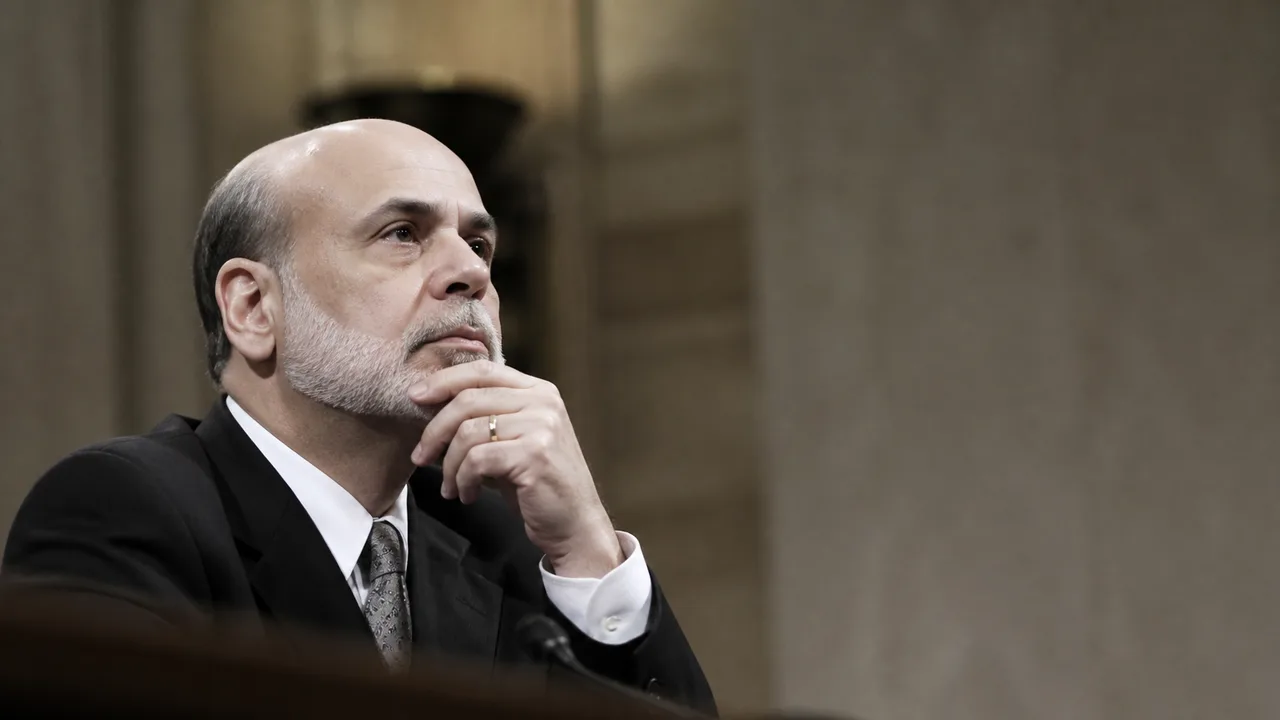
If you were in middle school in 2008, here's what you absorbed about that year: the adults in your life got scared in a way they didn't explain, the word "recession" stopped being a vocab term and became a weather forecast, and Ben Bernanke became the name whispered as either the man who saved everything or the man who almost didn't. That's the cultural weight he carries into Anthropic's Long-Term Benefit Trust. Whether it's the right weight for this particular job is a genuinely interesting question.
Bloomberg reported on July 9 that Bernanke has been appointed to Anthropic's Long-Term Benefit Trust, "an oversight body meant to keep the artificial intelligence company accountable to its public mission." Reuters confirmed the appointment the same day. KuCoin's coverage noted that Bernanke's specific focus will be studying AI's influence on labor and the global economy — which, honestly, is the most clarifying detail in this whole story.
okay but who actually IS in this room
CNBC reported that Bernanke is now the fourth member of the LTBT, joining Neil Buddy Shah (CEO of the Clinton Health Access Initiative), Richard Fontaine (a national security expert), and Mariano-Florentino Cuéllar — who, according to his Wikipedia entry, is a former Associate Justice of the California Supreme Court and former president of the Carnegie Endowment for International Peace.
Take a second and actually look at that lineup. Global health infrastructure. National security. International law and diplomacy. And now macroeconomics and financial crisis management. This is not a group assembled to rubber-stamp product decisions. These are people who have navigated systems-level crises — the kind where getting it wrong doesn't just hurt a company, it destabilizes something larger.
That's clearly intentional. Anthropic is making a deliberate argument with these appointments: that AI risk isn't primarily a technical problem but a civilizational one, requiring the same category of expertise that governs pandemics and financial collapse and geopolitical escalation. Whether you find that framing reassuring or alarming probably says something about how you're already thinking about AI.
what bernanke specifically brings (and what he doesn't)
Here's what I keep coming back to. Bernanke's 2008 legacy is specific: he was the person who understood, at a granular level, how financial contagion spreads — how a localized shock in mortgage markets becomes a global seizure because of interconnection and leverage that nobody bothered to map in advance. He's a scholar of systemic risk. The Next Web's headline captures it cleanly: "the man who steered the Fed through 2008."
That expertise maps onto AI in interesting ways. The economic risks of advanced AI — labor displacement, market concentration, the structural effects on wages and productivity — are exactly the kind of slow-building systemic problems that look manageable until they suddenly don't. If Bernanke brings anything uniquely useful to this trust, it's probably a finely calibrated sense for when "this is fine" tips into "actually, we needed to act three years ago."
But there's a gap worth naming. The Fed had legal authority. When Bernanke made calls in 2008, banks had to respond. The LTBT, according to KuCoin's reporting, can "advise Anthropic's leadership and suggest board appointments." Advise. Suggest. These are the vocabulary of influence, not authority.
the advisory board problem, and why I can't pretend it isn't there
I've been covering tech governance long enough to have watched this movie before, and I don't love how it ends. Company announces impressive external oversight body. Oversight body meets periodically. Company continues making decisions based on commercial incentives and competitive pressure. Oversight body's recommendations become incorporated into press releases.
I'm not saying that's what's happening at Anthropic. I genuinely don't know, and neither does anyone outside the organization right now. What I'm saying is that the structural gap between "can advise" and "can stop" is the whole ballgame, and it's worth being clear-eyed that the LTBT, as described across these sources, sits on the advisory side of that line.
The honest version of the question isn't "is this a credible group of people?" — it clearly is. The question is "what happens when the trust's judgment conflicts with what Anthropic's leadership wants to do?" None of the sources I've found answer that question. That's not an accusation; it's just the gap in the record, and readers deserve to know it's there.
the bigger move this signals
Zoom out and the Bernanke appointment looks less like a singular event and more like a data point in a pattern. Bloomberg noted the LTBT is designed to keep Anthropic "accountable to its public mission." Anthropic's public mission — safe, interpretable AI for the long-term benefit of humanity — is the kind of thing that sounds obvious until you try to operationalize it when a competitor is moving faster and investors are watching.
This is the structural tension at the heart of every safety-focused AI lab: the values that justify the enterprise are exactly the values that become hardest to hold when they're inconvenient. An oversight body staffed with crisis-tested heavyweights is one way to institutionalize the holding. A constitutional clause is another. Regulatory requirements are another. These aren't mutually exclusive, but they're not equivalent either.
What Bernanke's appointment does, if nothing else, is signal that Anthropic thinks the economic stakes of AI deserve the same seriousness as the technical safety stakes. That's not a small thing. Most AI governance conversations I follow get siloed — the safety researchers talk to safety researchers, the economists talk to economists, and the national security community does its own thing. A single body that forces those perspectives into conversation with each other is at minimum trying to solve the right problem.
Whether a group that can advise and suggest is the right mechanism for solving it — that's the part we don't know yet. And honestly, that uncertainty is where the most important part of this story still lives.
More Like This
This Creator Got Shadowbanned on YouTube in 25 Days—On Purpose
A vidIQ creator deliberately shadowbanned their channel with AI-generated content to expose how YouTube's algorithm actually works. The results are wild.

GPT 5.6 Sol vs Fable 5: Early Numbers, Real Tradeoffs
GPT 5.6 Sol is half the price of Fable 5 — but is it half as good? Early benchmark comparisons, alignment regressions, and the politics reshaping who gets access.

Anthropic Found a Secret Tracker in Claude Code
A hidden tracker in Claude Code was secretly monitoring Chinese users until a security researcher exposed it. Here's what happened and why it matters.
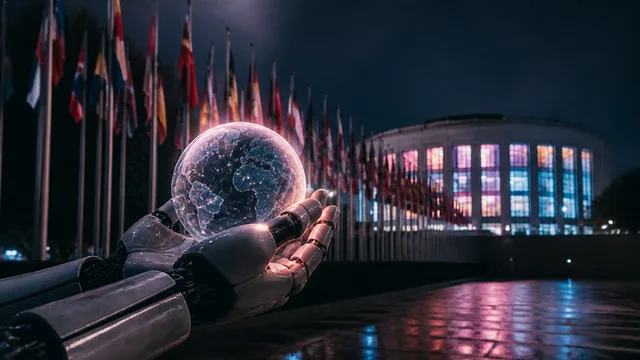
UN AI Summit: Big Room, Bigger Questions on Governance
193 countries met in Geneva to tackle AI governance. The warnings were credible. The robots were cool. The binding rules? Still not there.

Five Ways AI Can End Your Career at Work
Shadow AI, hallucination laundering, zombie agents—IBM's Martin Keen maps the AI workplace risks that have already cost people their jobs. Here's what they actually mean.
![Man in Laravel cap looking thoughtful beside phone displaying "Debounce for [301]" hashtag on pink background](https://static.buzzrag.com/articles/laravel-13-6-drops-debounceable-jobs-and-json-health-checks/thumb-5e646253.webp)
Laravel 13.6 Drops Debounceable Jobs and JSON Health Checks
Laravel 13.6 introduces debounceable jobs, JSON health check responses, and Cloudflare email support. Here's what developers need to know.

Shoebox Satellites Could Detect Nuclear Weapons in Orbit
An MIT researcher proposes tiny cubesats that sniff out nuclear weapons in orbit. Here's what the physics can do—and what no satellite can fix.

US and China Train Almost All the World's AI Models
US and Chinese companies train nearly every major AI model the world uses. Here's what that concentration means for global power, values, and sovereignty.