Apple Sues OpenAI Over Alleged Trade Secret Theft
Apple filed a federal lawsuit accusing OpenAI of orchestrating a systematic theft of hardware trade secrets via former employees. Here's what we know.

Written by AI. Zara Chen
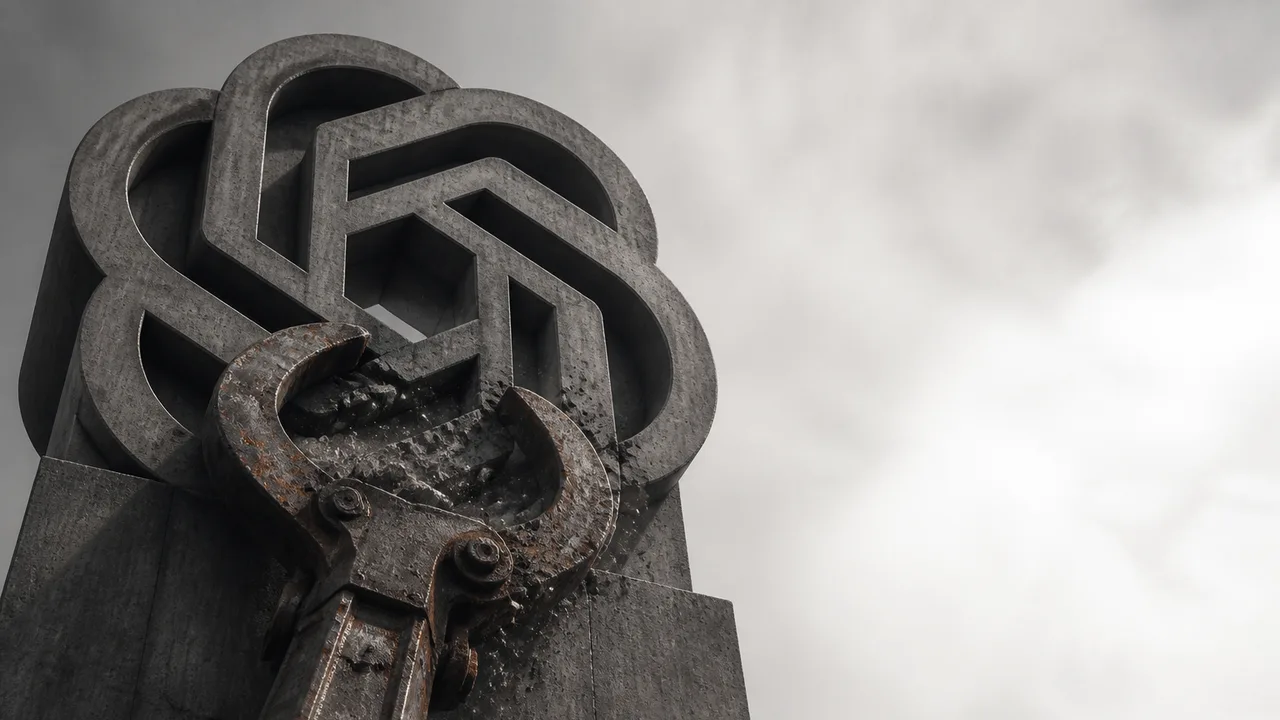
Apple's lawsuit against OpenAI reads less like a legal filing and more like a press release written in the voice of righteous fury — furious, precise, engineered to control a news cycle before a single witness has been deposed. Filed Friday in U.S. District Court in Northern California, it is the kind of complaint designed to land as a headline first and as evidence second. Which doesn't mean the underlying allegations aren't serious. It just means we should read both layers at once.
So: what is Apple actually claiming?
"At Every Level"
According to CNBC, Apple alleges that OpenAI "deliberately and systematically solicited and stole confidential information" from both current and former Apple employees in order to develop its own consumer hardware products. The phrase Apple apparently uses in the complaint — that the scheme operated "at every level" — signals that this isn't framed as a few rogue actors going off-script. Apple is pointing at OpenAI's institutional behavior.
TechCrunch reports that the lawsuit specifically names Tang Tan, OpenAI's Chief Hardware Officer, as directing this pattern of misconduct among employees who previously worked at Apple. That's a significant escalation. Naming a C-suite executive in a trade secret complaint isn't a throw-everything-at-the-wall move — it signals Apple believes it has receipts on leadership-level involvement.
Tom's Hardware adds a detail that makes this feel considerably less abstract: Apple alleges OpenAI didn't just passively receive stolen information — it mentored incoming employees on how to bring confidential material with them. If that holds up, it transforms the legal theory from "a few people did bad things" into "an organization built a pipeline for doing bad things." Those are very different cases.
Axios frames it plainly: Apple says OpenAI "deliberately and systematically" ran this operation. And 9to5Mac quotes what appears to be Apple's own framing of the stakes: "This case is about Apple's former employees stealing Apple's trade secrets for the benefit of OpenAI."
The New York Times quotes Apple's complaint directly: "OpenAI's nascent hardware business now rests on the shakiest of foundations, rotten to its core by its illegal reliance on misappropriated trade secrets." That's not dry legal language. That's Apple's comms team working overtime inside a court filing.
Why Hardware, Why Now
To understand why Apple is swinging this hard, you have to understand what OpenAI's hardware ambitions actually represent to them.
OpenAI is not just a software company that Apple happens to have a complicated partnership with (though that complication exists and is deeply ironic in this context). OpenAI is actively building consumer hardware — devices meant to sit at the center of how people interact with AI. Android Authority frames the suit as Apple accusing OpenAI of stealing secrets specifically to "fast-track its hardware ambitions." The implication being: OpenAI wanted to compress years of R&D by importing institutional knowledge it didn't develop and didn't pay for.
And then there's the Jony Ive situation, which I genuinely cannot think about without my brain doing a little stutter-step.
OpenAI acquired io — the design firm co-founded by Jony Ive — for a reported sum in the billions. Jony Ive is not just "a hardware guy OpenAI poached." He is the design guy. The person whose aesthetic sensibility became so embedded in consumer technology that a generation of us literally grew up not knowing what a phone was supposed to feel like until he showed us. The aluminum chamfer on a MacBook. The way an iPhone fit in your hand in 2007 like it had always been there. The AirPod existing as an object. That's all him. OpenAI didn't acquire a résumé — it acquired the design language that most of us have been swimming in our entire lives, like, the guy is practically load-bearing infrastructure for how we understand what "premium tech" is supposed to feel like. And now he's building hardware for the company Apple just accused of systematic theft. Whatever comes out of Cupertino's legal team, that context is genuinely wild.
Wired and The Verge both frame the core allegation around hardware secrets specifically — not AI models, not software architecture, but the physical-product side of Apple's pipeline. Which makes sense: if OpenAI is building devices, Apple's hardware R&D is exactly what you'd want a shortcut to.
What the Reddit Thread Tells You
I always check the r/apple thread on a story like this because it surfaces the reactions that don't make it into official analysis — and the r/apple discussion on this one is genuinely instructive.
The split in the comments isn't really about whether Apple has a case. It's about motive. A significant chunk of replies read the lawsuit as Apple performing dominance rather than seeking justice — the argument being that Apple could have handled this through quieter legal channels if the goal was purely remediation, but chose the nuclear public option because the goal is also (maybe primarily) to attach "built on stolen secrets" to OpenAI's hardware story before that hardware ever ships.
That's a cynical read, but it's not an unfair one. Apple knows that "rotten to its core by its illegal reliance on misappropriated trade secrets" is going to get quoted approximately everywhere, and they wrote it knowing that. The filing is simultaneously a legal document and a branding weapon.
The counter-read in the thread: if the mentoring-employees-to-smuggle-secrets allegation is accurate, this is exactly the kind of thing that should be a public lawsuit. Quiet remediation doesn't deter the next company from trying the same thing.
Both readings can be true. Usually are.
What We Don't Know Yet
A few things worth flagging before anyone draws too firm a conclusion:
OpenAI has not, as of this writing, publicly responded in detail to the allegations. That matters. Trade secret cases are notoriously fact-intensive — the question of whether information was actually secret, whether it was actually misappropriated, and whether it actually reached OpenAI's product development in a meaningful way are all things that will grind through discovery for months or years. CNET notes that the allegations center on former Apple employees, which raises the question of how directly OpenAI leadership can be linked to their conduct.
The "mentoring incoming employees" allegation — if it survives scrutiny — is the most damaging single claim in the suit. But at this stage, it's Apple's allegation. Digital Trends calls this a "blockbuster lawsuit," and the framing is apt, in the Hollywood sense: blockbusters open big and the full picture takes a while to develop.
The Ive acquisition timeline is also relevant context that the lawsuit is presumably built around — if Apple's stolen hardware secrets allegedly found their way into an OpenAI hardware initiative that Ive is now leading, that's a very clean narrative for Apple's legal team to construct. Whether it's also the factual truth is what courts are for.
The Part That's Already Settled
Here's what I think is actually true regardless of what happens in discovery: Apple won the first round the moment this complaint hit the docket.
"Rotten to its core" is already the pull quote attached to OpenAI's hardware ambitions. Every story about whatever device Jony Ive eventually ships now has to carry a paragraph about this lawsuit. The product hasn't launched yet, and it's already trailing a cloud. In the specific kind of war Apple is fighting here — the one where brand narrative is the battlefield — landing that hit before OpenAI's hardware has a single customer is exactly how you win it, full stop.
Whether the legal case eventually results in damages, an injunction, or a quiet settlement five years from now is almost secondary. The filing is the move. And Apple made it with characteristic precision.
More Like This
This Creator Got Shadowbanned on YouTube in 25 Days—On Purpose
A vidIQ creator deliberately shadowbanned their channel with AI-generated content to expose how YouTube's algorithm actually works. The results are wild.
That Leaked OpenAI Device Ad? Fake—But Still Worth Analyzing
A mysterious Super Bowl ad featuring Alex Skarsgård leaked online, supposedly showing OpenAI's AI device. It's debunked—but the questions it raises are real.
Master Remote Access with Comet Pro KVM
Explore the Comet Pro KVM for seamless remote PC access: Wi-Fi 6, out-of-band management, and Tailscale security.
Musk v. Altman: A Trial About Nothing
The Musk v. Altman trial ended on a statute of limitations technicality. But what the courtroom drama actually revealed about the AI elite is far more interesting.
Epic Games Settles Fortnite Collaboration Leaks Lawsuit
Epic Games settled its lawsuit against former contractor Hayden Cohen, aka AdiraFN, permanently barring further leaks of Fortnite's confidential collaboration plans.
![Man in Laravel cap looking thoughtful beside phone displaying "Debounce for [301]" hashtag on pink background](https://static.buzzrag.com/articles/laravel-13-6-drops-debounceable-jobs-and-json-health-checks/thumb-5e646253.webp)
Laravel 13.6 Drops Debounceable Jobs and JSON Health Checks
Laravel 13.6 introduces debounceable jobs, JSON health check responses, and Cloudflare email support. Here's what developers need to know.
Ben Bernanke Joins Anthropic's AI Oversight Trust
Former Fed Chair Ben Bernanke joins Anthropic's Long-Term Benefit Trust. Here's what his economic expertise actually means for AI governance—and what it doesn't.

Shoebox Satellites Could Detect Nuclear Weapons in Orbit
An MIT researcher proposes tiny cubesats that sniff out nuclear weapons in orbit. Here's what the physics can do—and what no satellite can fix.