Why Telecom Networks Are Getting an AI Personality Transplant
Nvidia and Supermicro execs explain why 6G networks need AI baked in from scratch—not just bolted on top. The difference matters more than you'd think.

Written by AI. Zara Chen
Here's the thing about telecom networks that nobody really thinks about: they were basically designed to be giant pipes. You ask for data, data flows to you, done. But AI doesn't work like that at all, and that mismatch is about to become a Very Big Problem.
At Mobile World Congress 2026, Nvidia's Soma Velayutham and Supermicro's Yaming Wang sat down to explain why telecom companies are scrambling to redesign their networks from the ground up—not just slap some AI features on top and call it a day. The distinction sounds technical, but it's actually kind of profound.
The Difference Between Adding AI and Being AI
Velayutham breaks it down: old networks were built for "seek and download." You want a video, you get a video. Linear, predictable, one-way traffic. AI traffic is "prompt and generate"—you're constantly talking back and forth with the network in real time. It's iterative, unpredictable, and fundamentally conversational.
"You're actually interacting with the data continuously," Velayutham explains. "So it's a very iterative process and therefore fundamentally it has to be software defined and programmable because you got to ask for data and you get a response back. You're actually talking to the network."
Wang draws the contrast even more sharply. Bolting AI onto an existing network means you're just adding servers in the back and calling it AI-enabled. A truly AI-native network uses deep learning algorithms for core functions like self-healing and dynamically adjusts itself based on what's happening. It's the difference between wearing a computer and being a cyborg.
The iPhone Moment for Cell Towers
Velayutham drops what might be the conversation's most interesting comparison: he checked the iPhone App Store that morning and found 2.2 million apps. Twenty years of development, all possible because the iPhone is programmable.
"Instead of searching for a killer app, what we need to do is let the networks, the base station, become programmable and open up," he says. "I believe that with 6G and AI, this is fundamentally the base station will become the next—the iPhone moment has come for the base station."
It's a compelling frame. Nobody knew we needed Uber or TikTok or Pokémon Go until the platform existed to support them. If base stations become truly programmable—not locked down by proprietary standards and vendor lock-in—what applications emerge that we can't even imagine yet?
The question isn't rhetorical. Telecom operators have been desperately searching for ways to monetize their massive 5G investments. Wang points to integrated sensing and communication (ISAC) as one early possibility: using cell towers' existing infrastructure to track moving objects and provide location data to enterprises, governments, or robotics systems. "The essential thing is the operators own the last mile," Wang notes. "With last mile they can offer differentiated low latency services to many different customers."
But if the iPhone comparison holds, the real opportunities probably aren't the obvious ones.
The Efficiency Problem Nobody's Talking About
Here's where things get tricky: AI traffic patterns are going to absolutely explode network demand. You're not just downloading a movie anymore—you're having an ongoing conversation with AI systems, which means constant back-and-forth data transmission. Traffic goes up, energy consumption goes up, spectrum gets crowded.
The pitch is that AI can also solve this problem by optimizing spectral efficiency—delivering more traffic with less spectrum. Wang points out that current networks run on predefined protocols that can't adapt in real time. An AI model could dynamically adjust based on actual traffic patterns instead of trying to predict everything in advance.
"You cannot predict all the traffic patterns but you can adjust that in real time," Wang says. "Then you can really save energy as well."
Whether this actually plays out or just becomes a never-ending cycle of AI creating problems that require more AI to solve—well, that's the interesting tension nobody in this conversation addresses directly.
Physical AI Needs a Nervous System
The conversation's most forward-looking section focuses on what Velayutham calls "physical AI"—AI systems that interact with the actual physical world, not just digital information. Think robots, autonomous vehicles, anything that needs to coordinate movement in physical space.
This stuff requires what he calls "time-space coherency." If a robot moves forward, other objects need to know that immediately and respond accordingly. Digital interaction can tolerate a few milliseconds of lag. Physical interaction? Not so much.
"Telco networks are the best to provide it because they understand this concept of time-space coherency," Velayutham argues. "With physical AI, telco networks become almost critical to make sure that's completely time synchronized."
Wang gets specific: robots currently navigate using SLAM (simultaneous localization and mapping), basically using their own cameras to build a map as they go. It works, but it's limited to what the robot can directly see. Cellular networks could provide a much broader navigational view.
Timeline? Wang estimates early trials in the next couple years, actual deployment in five. Whether that's optimistic or realistic probably depends on how quickly the programmable infrastructure actually materializes.
The Unanswered Questions
What this conversation doesn't really address: who pays for all this infrastructure redesign? Telecom companies are already stretched thin from 5G deployments. Building AI-native 6G networks from scratch isn't cheap.
There's also the classic chicken-and-egg problem. Applications won't emerge until the infrastructure exists. Infrastructure won't get funded until there's clear demand from applications. The iPhone had Apple's resources and vision to break that cycle. Telecom operators are... not exactly known for their bold innovation investments.
And then there's the energy question. Yes, AI can optimize networks. But the total energy footprint of AI-saturated networks interacting with physical AI systems everywhere? That math hasn't been done publicly, or at least isn't being discussed here.
Still, the core argument is hard to dismiss: networks designed for one-way data pipes aren't going to handle two-way AI conversations efficiently. Something has to change at the architectural level. Whether that change happens through careful planning or messy market forces—that's the part we're about to find out.
More Like This

Everything You've Heard About AI Is Probably Wrong
AI capabilities are doubling every 4 months, but most people are working with outdated info. Here's what's actually happening in 2025.
The Episcopal Priest Building Rust's Hottest Web Framework
Reverend Greg Johnston creates Leptos, a popular Rust web framework with 19K GitHub stars, while serving full-time in ministry. His unlikely path reveals something.
Claude's Agent Teams Are Doing Way More Than Code Now
AI developer Mark Kashef shows how Claude Code's agent teams handle business tasks—from RFP responses to competitive analysis—that have nothing to do with coding.
AI's 2026 Horizon: Power, Platforms, and Persistent Problems
Explore AI's future—power constraints, platform shifts, and security challenges. Who will thrive in 2026?

Mastering Linux Man Pages: A Detailed Guide
Learn how to create effective Linux man pages with structure, formatting, and clarity.
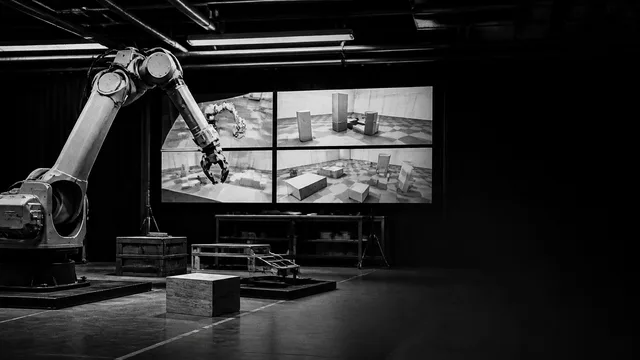
Nvidia Cosmos 3 Puts Physical AI Through Virtual Trials
Nvidia's Cosmos 3 links language, video and robot action, but its near-term value may lie in ranking policies before costly real-world robot safety tests.

Netflix Used AI in 300 Titles. Here's What That Means.
Netflix disclosed AI use in roughly 300 titles in its Q2 2026 earnings. We break down what that number actually tells us — and what it doesn't.

Applied Computing Bets $20M on AI for Oil and Gas
Applied Computing raised $20M to build a foundation AI model for oil, gas, and petrochemical plants. Here's why that's more complicated than it sounds.