EA's 25 Classic Games Reveal the Work of Preservation
EA's 25-game release brings back Wing Commander and Road Rash. Their restorations show how archive work, fan patches and music rights shape access to old games.

Written by AI. Mike Wierzbicki
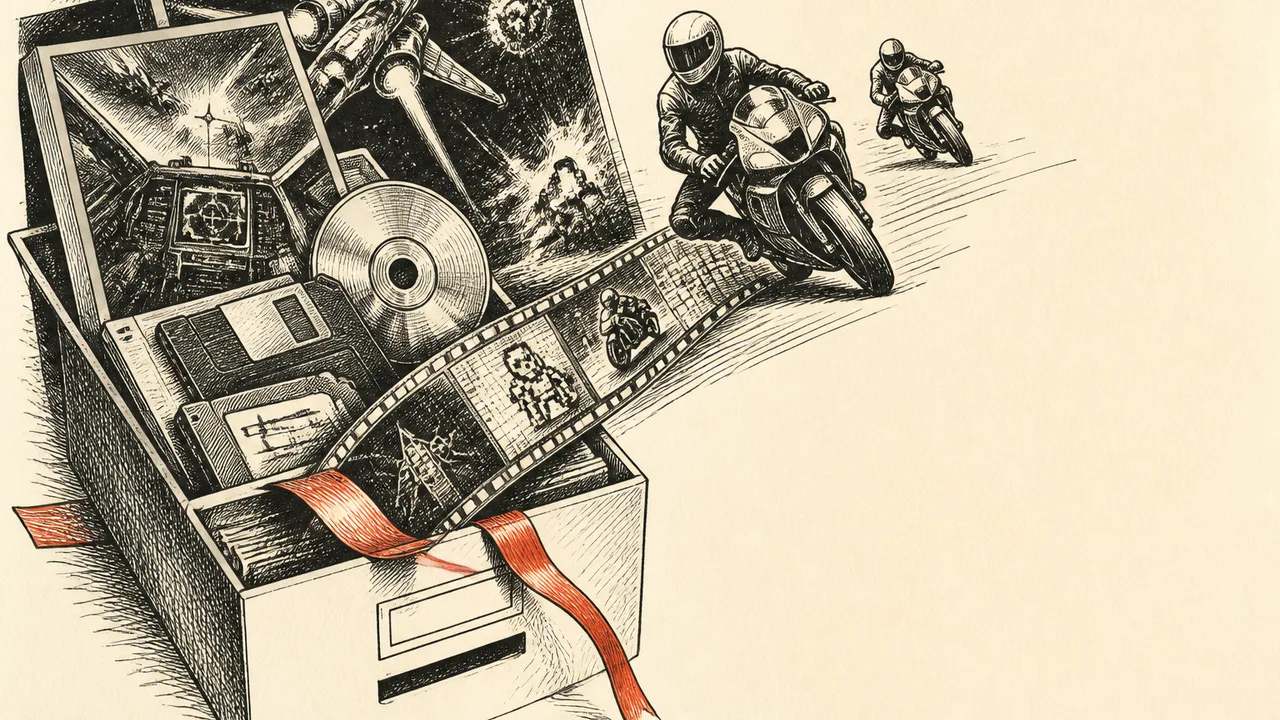
EA released 25 classic PC games on November 5, including new Anniversary Editions of Road Rash and six Wing Commander titles. The release puts all 25 on Steam for the first time, with availability through GOG and the EA App as well. Seven received restoration and quality-of-life updates; EA describes the rest as faithful ports. A storefront listing can give an old game a new audience. Restoring its source material, getting that material into a working build, and clearing the rights to sell the result are separate jobs.
The additions include Theme Hospital, Crusader and much of the Ultima series. Eighteen of the 25 are classic releases rather than Anniversary Editions. Those ports expand access without claiming the same reconstruction work as the seven updated games. For the Anniversary Editions, the harder questions start behind the launch button: What survived in EA’s archive? Could the old games use it? Who did the work to make them run?
A Vault Full of Footage Still Needed a Working Game
The project began with a March 2022 discovery at EA’s Redwood Shores campus. EA says senior producer Jim Vessella found a physical-media vault containing almost 20,000 archival assets, including master tapes for Wing Commander and Road Rash. A small team went on to digitize material that EA estimates at 2,500 hours of historical footage. That is a substantial preservation effort on its own, even before any of it appears in a game.
The intervening years explain why the November release required more than finding tapes. A summer 2024 catalog listed roughly 475 full-screen cinematics for Wing Commander III. Each scene had a filename the game expected. Workers had to identify its source tape, isolate it from captures containing multiple scenes, name it correctly and repair damage such as corrupted frames or interlacing problems. Vessella says cleaning up those full-screen scenes took about six months.
One example is almost comically unforgiving: the game expects the correct briefing-room scene under the correct filename. A pristine video assigned to the wrong moment can break the experience it was meant to improve. The source tape and the executable have to agree about what the player sees and when. Archive work becomes game-development work at that point.
Then the team found tapes containing Wing Commander III’s in-flight communications footage. Vessella says an existing community patch initially could not replace those videos. Its developer added a way to do so, opening the door to another 460 scenes that Vessella cut and renamed. He says the original game reused a small set of responses, while the restored footage allowed more of the actors’ distinct line deliveries to appear. That changes more than image sharpness: it can change how much of the recorded performance reaches the player.
The patch developer, Matt Wells, had already built a Wing Commander III Enhancement Patch before EA approached him about an official edition. Vessella describes two years of iteration with community members, including builds from Wells, playtesting and crash troubleshooting. Privateer 2 offers another example of the dependency: Vessella says Wells’s later patch enabled the replacement of its cinematics with higher-quality video. For Wing Commander Prophecy, GOG engineers combined older community modifications with their own work to make a build that could play restored footage on modern systems.
The people behind those fixes should remain visible alongside the archive. Vessella thanked community modders in EA’s launch announcement and said the vast majority of the project’s work happened alongside employees’ ongoing full-time assignments. His account also describes cutting tape captures during lunch breaks and after hours. A restoration can be valuable to players and still depend on time outside an employee’s ordinary project work.
Road Rash Had a Different Gate to Pass
Road Rash shares the vault story, but its route to release differs from Wing Commander’s. EA calls this the first digital release of the 1996 PC version. The company says it recovered and re-edited dozens of full-motion video scenes from source masters, relicensed the soundtrack, and added features including native controller support, windowed mode and cloud saves. Its upscaled cinematics are optional. Players can therefore distinguish between recovered footage and an additional presentation change made for the new edition.
The music was a distribution problem as well as a creative one. Road Rash had a licensed soundtrack featuring bands including Soundgarden, Monster Magnet and Swervedriver. Vessella said the team needed agreements covering the parties who controlled rights to 14 tracks; by summer 2026 it had agreements involving six of seven bands but could not find one member of the remaining band, as GamesRadar recounted. The team was close to removing that band’s music before reaching the missing person and completing the license in mid-September.
That near miss gives the Road Rash comparison its force. Wing Commander III needed a patch capable of using recovered footage; Road Rash needed permission to distribute music already associated with the game. Both needed archival and implementation work, but solving one title’s problem would not have solved the other’s. A rights agreement cannot fix a crash. A better video pipeline cannot grant a music license.
There is also a practical distinction between preserving material and making a version people can play today. EA’s digitized footage can outlast any one edition as an archival asset. The Anniversary Editions give players working builds that incorporate some of that material now. The faithful ports serve a different purpose: they reopen a route to the games without the same stated restoration. Each outcome has value, and none alone settles how long a game will remain obtainable through current storefronts.
For a player deciding what these releases represent, the useful questions are concrete. Does an edition use recovered masters? Can its code actually play them? Were outside contributors needed to make that happen? Did the publisher clear the elements that make a release recognizable? EA’s November launch has answers for several games. Wing Commander III’s briefing-room filenames and Road Rash’s final music license explain why those answers took years to reach a store page.
More Like This
Dragon Ball Xenoverse 2 Gets a 10th-Anniversary Update
Dragon Ball Xenoverse 2 gets an October 27 anniversary update, a Final Festival and Xenoverse 3 rewards. What can a decade-old game still offer its players?

NBA 2K25's Shutdown Will Take MyCAREER Offline in 2027
NBA 2K25 leaves digital stores in October, then loses MyCAREER and MyTEAM in January. Here is what owners keep, and what another game's sunset suggests.

Mario Kart Tour's Shutdown Leaves Its History Out of Reach
Mario Kart Tour is no longer playable. Its tour list, collection totals and possible player statistics preserve fragments of a mobile game that changed over seven years.
The Witcher 3 Remastered Changes More Than Its Graphics
The Witcher 3 Remastered brightens White Orchard and revises combat. Its visual history and reported Steam Deck frame rates give returning players more to weigh.
Ace Combat 8 Reviews Cannot Yet Judge Its Online Future
Ace Combat 8 earns glowing campaign reviews, but brief multiplayer tests leave its progression, premium pass and long-term online future unresolved at launch.

Sony’s Controller Payment Patent Maps a Storefront Shift
Sony’s controller payment patent could streamline PlayStation Store purchases, but its convenience, security and preservation tradeoffs remain unresolved.
Destiny 2 Modder Unlocks the Content Vault
A modder called stanuwu is rebuilding access to Destiny 2's vaulted content—raising hard questions about live-service games and who owns the past.
Sam Neill's Final Role Is in the Zelda Movie
Sam Neill filmed a secret role in Nintendo and Sony's live-action Legend of Zelda before his death in July 2026. Here's what that means for the production.