Destiny 2 Modder Unlocks the Content Vault
A modder called stanuwu is rebuilding access to Destiny 2's vaulted content—raising hard questions about live-service games and who owns the past.

Written by AI. Sarah O'Brien
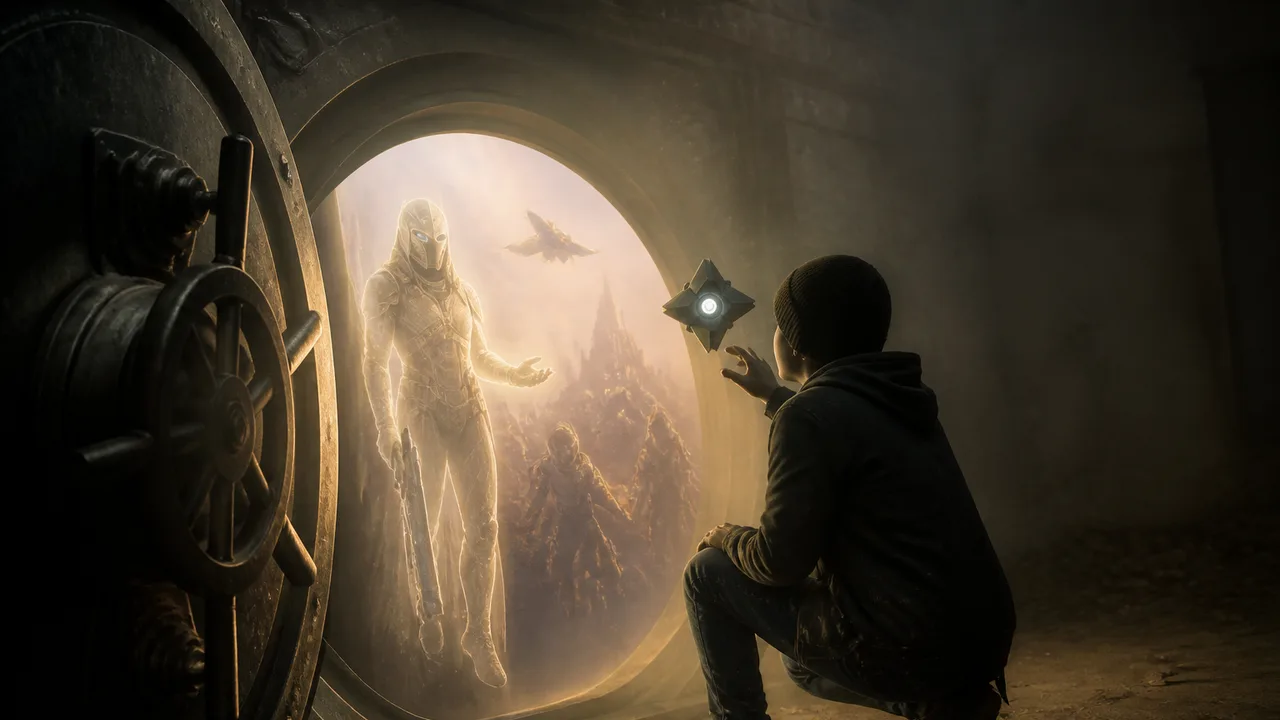
Six years ago, Bungie made a decision that still rankles a significant portion of its player base: it announced the Destiny Content Vault. Starting in 2020, according to Kotaku, large portions of old Destiny 2 content—story missions, locations, entire campaigns—would be removed from the live game and become unplayable. Some of it was content players had paid for.
Now a modder is doing what Bungie hasn't: building a door back in.
A developer going by stanuwu has created a fan-made tool that makes it possible to revisit vaulted Destiny 2 spaces. According to Game Luster, that includes environments like the Leviathan raid map, gone from the live game for six years. The work involves tinkering with old game builds to access content that still technically exists somewhere in Destiny 2's architecture—it just isn't surfaced to players through any official means.
The Destiny community's reaction, by all available accounts, has been considerable. That's not surprising. What's worth examining is why this particular act of technical archaeology is landing so hard, and what it clarifies about the live-service game model that everyone in this industry has been debating for the better part of a decade.
The vault was never really a vault
The name "Destiny Content Vault" did a lot of rhetorical work. Vaults suggest safekeeping—temporary removal, not deletion. The implication embedded in the branding was that the content would wait somewhere, dormant but intact, available again someday.
What players experienced was something closer to a permanent door closing. The story missions they'd played through, in some cases the campaigns they'd bought as discrete expansions, disappeared. Gone not because the servers couldn't support them or the files were corrupted, but because Bungie made a structural decision to manage the game's growing footprint by rotating content out of the active build.
The preservation problem this creates is not unique to Destiny 2—it's endemic to the live-service model. Games designed to evolve are also games designed to forget. But Destiny 2's scale makes it a particularly vivid case study. This is a game with years of accrued story content, multiple full expansions, raids built by teams of dozens. The vaulting decision wasn't about trimming side content. It was about removing substantial portions of a game that had been sold piece by piece to its audience.
What stanuwu's work actually represents
It would be easy to read this story as a fan-service moment—nostalgic players reclaiming beloved spaces, modding community to the rescue, feel-good ending. That frame undersells what's actually happening here.
What stanuwu is building is closer to archival reconstruction than nostalgia project. PC Gamer noted that the work is "more promising as a preservation tool"—a characterization that gets at something the community-response framing misses. Preservation isn't about sentiment. It's about maintaining access to cultural artifacts that would otherwise become inaccessible. By that standard, stanuwu's tool is doing genuine archival work, regardless of the motivations behind it.
The method matters here. Working with old game builds to surface content that remains technically present in the game's files is meaningfully different from reconstructing something from scratch. The data exists. The environments were built. What's been removed is the routing—the in-game pathways that let a player navigate to those spaces. stanuwu is rebuilding the routing, not the content itself.
That technical distinction has implications for how we think about what "lost" means in this context. The Leviathan raid map hasn't degraded. It hasn't been deleted. It's sitting in a build, intact, inaccessible through normal play. That's a preservation scenario that looks very different from, say, a game whose servers have been shut down and whose code was never archived anywhere. The challenge with Destiny 2's vaulted content isn't bit rot or corporate neglect in the traditional sense—it's intentional inaccessibility. And intentional inaccessibility is, in some ways, a harder problem for preservationists to argue around, because it involves active choices by a rights holder who still controls a live product.
The ownership question nobody has cleanly answered
When Bungie vaulted content players had paid for, it exposed a tension that the games industry has been quietly hoping players wouldn't press too hard: what exactly are you buying when you buy a live-service game expansion?
The terms of service answer is clear: you're purchasing a license to access content, not ownership of that content, and the licensor can modify or remove access. The player expectation, shaped by years of marketing, is different. You bought Destiny 2's early campaigns. You paid for the Red War. You paid for content that is now gone.
This isn't a Bungie-specific problem. Live-service games from multiple studios have sunset content, shut down servers, or restructured their offerings in ways that retroactively changed what players owned. What makes Destiny 2 notable is the scale and the specificity—Bungie gave the removal mechanism a name, packaged it as a feature, and continued charging for new content while older paid content became inaccessible.
The legal framework for challenging that is thin. Players don't own their save data, their progression, or their purchased licenses in any way courts have been willing to defend. The advocacy question—whether they should—is live, and organizations like the Video Game History Foundation have been pushing on it for years, though this particular story doesn't bring them directly into the picture.
What stanuwu's work does is sidestep the legal question by making it practical. If the data exists and someone can build a tool to access it, the conversation about what players are "owed" becomes somewhat academic. The content is there. Someone is providing access to it. What Bungie does about that, if anything, will be instructive.
The modder as de facto archivist
There's a pattern in gaming history that recurs reliably enough to be worth naming: when institutions fail to preserve their own output, individuals step in and do it anyway. The difference in 2025 is that "individuals" often means sophisticated technical communities capable of doing work that looks less like hobbyist tinkering and more like professional archival practice.
stanuwu's project sits in that tradition. The tool in development—still not released as of this writing, per Game Luster's reporting—would give players structured access to vaulted spaces rather than just a chaotic poke around broken geometry. That's not modding in the classic sense of altering a game to add new content. It's closer to building a reading room: a controlled environment for engaging with existing material that the official institution has closed off.
The institutional parallel is uncomfortable in a specific way. Archives don't typically ask permission from copyright holders before processing their collections—they operate under legal frameworks designed to balance creator rights with the public interest in cultural preservation. Games don't have those frameworks. The DMCA's Section 1201, which prohibits circumventing technological protection measures, creates genuine legal exposure for preservation work that would be routine in any other cultural domain. The exemptions available to libraries and archives are narrow and hard to invoke for games still under active commercial exploitation.
So stanuwu is doing archival work without archival protection. That's the needle being threaded here, and it's one that preservationists across the industry watch carefully every time a project like this surfaces. Not because they're hoping for legal confrontation, but because each case helps define where the practical boundaries are.
Whether Bungie treats this as a threat or an asset—or simply ignores it—is an open question. A rights holder with a generous interpretation of player goodwill might recognize that a community-built tool for accessing discontinued content is generating enthusiasm for a game that needs it. A rights holder more focused on control over its IP might see the same tool differently. Bungie has not, to the knowledge of sources available here, publicly commented on stanuwu's project.
The content is still there, somewhere in the files. Someone built a key. What happens next is genuinely uncertain—and that uncertainty is, in itself, a fairly clear statement about where game preservation stands in 2025.
More Like This

Piracy Is Now the Only Game Preservation Plan
Frank Cifaldi of the Video Game History Foundation says piracy is the only real game preservation method left. Sony's disc exit made the argument harder to ignore.
Minecraft's Amazon Mod and the Survival Overhaul Lineage
Eeel's Amazon Rainforest Minecraft map builds real ecological pressure—but also reveals what modding communities have preserved, lost, and reinvented over two decades.

Epic Games Built Lore, a Version Control System for Games
Epic Games released Lore, an open-source version control system built in Rust for large binary assets. Here's how it compares to Git and Perforce.
War for Westeros Delayed to 2027: A Smart Call or a Risk?
PlaySide Studios has pushed War for Westeros to early 2027. Here's why that delay might be the smartest move a small studio could make with this IP.
Do You Need a Game Design Document? A History Weighs In
Imphenzia says a one-page GDD is all you need. The history of game documentation—and what gets lost without it—says the stakes are higher than that.

Xbox Disc-to-Digital Program Could Launch This August
Leaked documents point to Xbox's disc-to-digital conversion program launching in August 2026. Here's what it does, what it doesn't, and what's still unclear.
What Minecraft 26.2 Removes and What You Can Keep
Minecraft 26.2 nerfs duplication glitches, fixes broken villager trades, and closes mob exploits. Here's what changes and what carries over.
WoW Midnight's Economy and the Memory Stored in Icons
A WoW streamer's gold-making stream revealed something unexpected: twenty years of item iconography living as folk knowledge inside a player community.