War for Westeros Delayed to 2027: A Smart Call or a Risk?
PlaySide Studios has pushed War for Westeros to early 2027. Here's why that delay might be the smartest move a small studio could make with this IP.

Written by AI. Lily Tsai
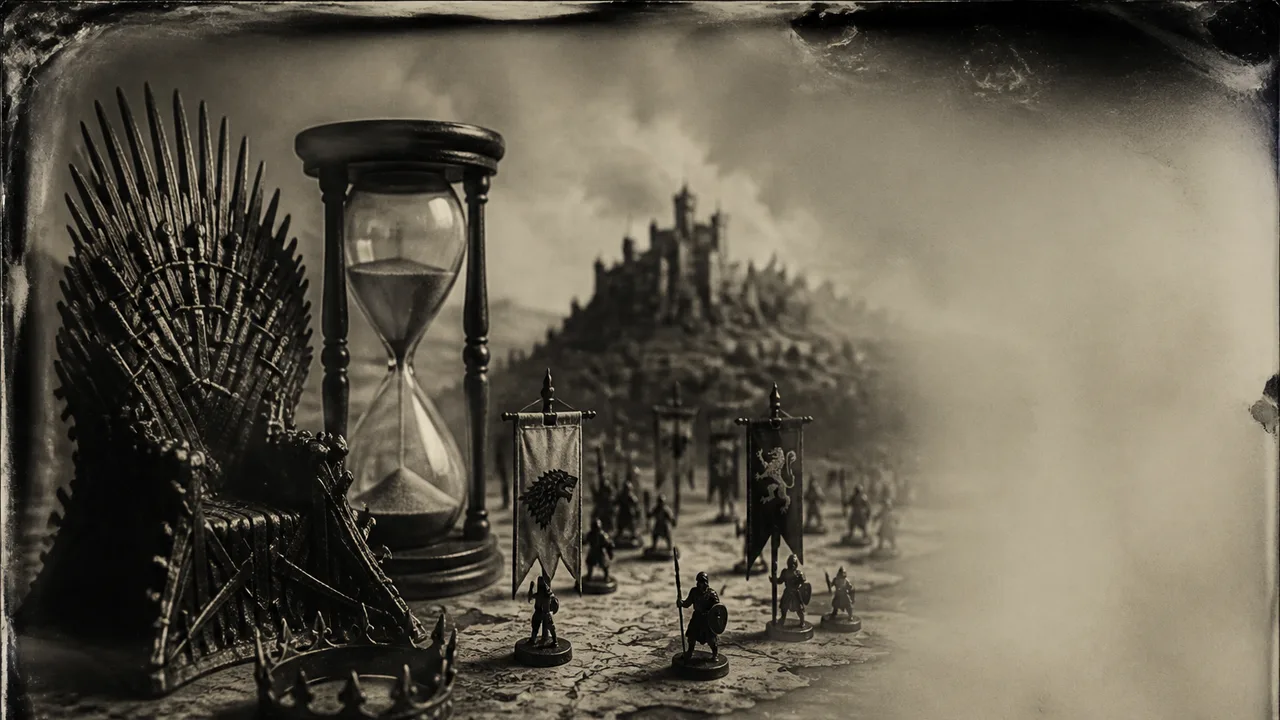
There's a version of this story that writes itself: beloved IP, small developer, delay announcement, discourse. The Game of Thrones fandom has seen enough disappointment that "we need more time" can land either as a mature creative decision or as a distress signal, depending on your priors. With War for Westeros, the honest answer is that it's probably both—and that tension is worth sitting with rather than resolving too quickly.
The facts, first. According to Game Rant, PlaySide Studios confirmed in an official development update that Game of Thrones: War for Westeros has been pushed out of 2026 and into early 2027, with the delay framed as time for extra polish. IGN reports that PlaySide has also moved back the game's release window with language expressing gratitude for player support. Screen Rant notes the game was originally expected to launch sometime this year, making this a meaningful slip. And Cinelinx adds that PlaySide has also promised more news and information over the coming weeks—which is either encouraging transparency or the kind of content drip studios use to keep a community warm while they scramble. Both readings are available.
What War for Westeros actually is matters here: an RTS, not an RPG or an open-world narrative game. According to MonsterVine, players will command House Stark, House Lannister, House Targaryen, or the Night King's Army of the Dead. That's a pitch that fits the source material better than most GoT games have managed—the show's best drama was always political and martial, factions maneuvering across a continent. An RTS has natural genre alignment with Westeros in a way that previous attempts at action RPGs or walking-sim-adjacent narrative games didn't.
Polygon has been tracking this one, framing it around whether it can redeem the franchise's video game history—and that framing is fair, even if "redemption" sets a bar that's partly beyond PlaySide's control. The franchise's gaming track record is real context, and anyone who's been watching this space knows why the community greets announcements with calibrated expectations rather than uncomplicated excitement. The GoT IP carries scar tissue.
Which brings us to PlaySide itself. They're a Melbourne-based studio with a catalog that skews heavily mobile—a background that raised eyebrows when War for Westeros was first announced, because mobile development rhythms and PC RTS development rhythms are genuinely different things. Different loop structures, different monetization pressures, different player tolerance for complexity. The skepticism wasn't irrational.
But here's what I keep coming back to: PlaySide isn't a name-brand Western studio with a decade of PC releases behind them. They don't have the institutional infrastructure that makes a delay feel routine. When a studio at their scale publicly says "we need more time," that decision has a cost—not just to the release calendar, but to the licensing relationship, to the budget, to team morale. These things don't happen in a vacuum. A delay out of 2026 means PlaySide absorbed whatever that conversation with Warner Bros. Discovery looked like and still chose to extend development. That's not nothing.
The fan response, interestingly, seems to track with that reading. Screen Rant characterizes the reaction as one where fans largely don't mind—and when you spend time in the spaces where GoT gaming discourse actually lives, that checks out. The War for Westeros subreddit and the scattered Discord communities that formed around the announcement aren't exactly buzzing with outrage. The more common tone is closer to cautious endorsement: a kind of "okay, take the time, just don't waste it" energy that's very specific to fandoms that have been burned before. One thread I came across in the r/gameofthrones gaming discussion read less like disappointment and more like someone who'd been stood up for dinner before being philosophical about a reschedule—supportive, but not without memory. That texture matters. It's not the same as enthusiasm, and PlaySide shouldn't mistake one for the other.
The RTS genre framing adds another layer of complexity that the delay announcement doesn't quite address. Real-time strategy is a genre with a devoted but demanding core audience. The players who care about RTS design care about it specifically—unit balance, faction asymmetry, the feel of macro decision-making under pressure. These are the same players who will notice if House Stark and House Lannister feel like palette swaps of each other, or if the Night King's Army plays like a faction that was finished last. PlaySide has time now to get that right. The question is whether they have the RTS design vocabulary to use the time well, and that's genuinely unknowable from the outside until we see more.
What does feel knowable is the broader context PlaySide is operating in. The pressure to ship on schedule is relentless for studios at this level—licensing deals often have date-contingent clauses, and the IP holder's calendar has its own logic entirely. That PlaySide went public with this delay, rather than quietly slipping it in a patch note or letting it leak, is a studio communicating with its community rather than managing it. There's a difference, and it's a difference that indie and mid-tier studios often get wrong. The "more news in the coming weeks" promise from Cinelinx could be the follow-through on that communication—or it could be a holding pattern. We'll know by how substantive those updates actually are.
There's a version of 2027 where War for Westeros arrives polished, faction-distinct, and mechanically credible, and the delay reads as the decision that saved the game. There's another version where the extra time gets absorbed by scope creep or licensing friction or the particular chaos of working with a property this size, and the delay reads as a warning sign nobody acted on. PlaySide has more information than we do about which version they're building toward.
What I know is this: a small Melbourne studio, working on one of the most scrutinized IPs in entertainment, looked at their 2026 build and decided it wasn't ready to represent them. In an industry where the pressure to ship something—anything—on a promised date can override every other consideration, that choice to publicly absorb the cost of more time is worth naming clearly. The war for Westeros can wait. The more interesting battle, right now, is whether PlaySide can use the time they've fought for.
More Like This
A Warcraft Franchise Leak That Keeps Checking Out
A dismissed Warcraft franchise leak keeps proving itself right. Classic Plus, an Arthas ARPG, animated series — and one data-mined build that changes everything.
Total War: Warhammer 40K Battle Gameplay Breakdown
New gameplay footage from the PC Games Show reveals Total War: Warhammer 40,000's cover system, unit cards, planet generation, and campaign structure.
Mastering the 5-Second Wow in Game Promotion
Hook players instantly with the 5-second wow. Discover strategies for game promotion.
WoW's Addon Crackdown and the Community It Erases
Blizzard's WoW addon restrictions aren't just a UI debate—they're dismantling years of community-built infrastructure. Here's what's actually at stake.
Zelda Ocarina of Time Remake: Confirmed and Coming
Nintendo confirmed an Ocarina of Time remake for Switch 2 in 2026—but the rumor cycle that got us here reveals something about how gaming communities process hope.
Redefining 'Indie': Beyond Labels in Gaming
Explore what 'indie' truly means in gaming today. Is it a genre, a spirit, or something else entirely?
Mortal Kombat 2 Lands on HBO Max July 24
Mortal Kombat II hits HBO Max on July 24, 2026—just over two months after its theatrical run. Here's what the numbers and timing tell us about WB's strategy.
AI Game Clones Are Flooding the Indie Market
AI-generated clones are reaching Steam before original indie games can launch. Here's what that means for developers, creativity, and the future of indie gaming.