Democracy Means Five Different Things at Once
Johnny Harris maps the five dimensions of democracy, from electoral competition to citizen deliberation, and the trade-offs that connect them.

Written by AI. Margaret "Maggie" Holloway

Photo: AI. Mei Fujimoto
James Madison would not have called the United States a democracy. In the 1700s he defined democracy as a system where people meet and exercise government in person, the direct assembly model of ancient Athens, and he reserved the word republic for the representative arrangement we actually live under. That definitional gap is where Johnny Harris starts his latest video, I don't get democracy, and it turns out to be the right place to start, because nearly every argument about democracy in American life is an argument between people using the word differently.
A Word that Means Whatever You Want It To
Harris opens with a montage of politicians, pundits, and protesters all defining democracy to suit themselves: democracy means choice, democracy means equal access to power, democracy means you shut up. The confusion is measurable. A 2024 survey he cites asked ordinary citizens what they consider necessary for a country to be a democracy. Free elections topped the list, unsurprisingly. But gender equality, civil rights, state aid for the unemployed, and taxing the rich all ranked close behind. As Harris puts it, people often use democracy as a term that means whatever they think is good government.
His way out of the fog comes from V-Dem, short for Varieties of Democracy, a major academic research project that scores every country in the world annually. V-Dem's scholars treat democracy not as a binary but as five measurable dimensions. Harris unpacks each one, and the framework holds up better than most definitions precisely because it admits the concept is contested.
The Five Dimensions
Electoral democracy is the thin definition, the bare minimum. The word's Greek root just means the people rule, but that raises immediate questions: which people, governing how, and how would you know? The modern answer is that the people rule by choosing who rules. That requires real competitive elections, broad and equal voting rights, and a free press, because a choice made without available information is not a choice. Russia holds elections, and Putin wins, but his serious opponents end up imprisoned, exiled, or dead, so political scientists file the country elsewhere. North Korea and the old German Democratic Republic also held elections and also called themselves democratic; the Marxist-Leninist framing of the word means a party that represents the working class, not one that wins power through competition.
Liberal democracy answers the wolves-and-sheep problem. Harris quotes the famous line often attributed to Benjamin Franklin, that democracy is four wolves and a lamb voting on what to have for dinner. Franklin never said it; the first known use was a 1990 newspaper column. But the underlying fear is legitimate when a majority faces no constraints. The liberal in liberal democracy comes from early 1800s liberalism, meaning individual freedom protected by constitutional limits, rule of law, and rights no government can violate. Harris takes a useful detour here: liberalism split in the industrial era when some liberals decided the unregulated market itself was the threat to freedom. That is why Australia's Liberal Party platform reads like a free-market manifesto while Canada's Liberal Party talks about equality and human dignity.
Egalitarian democracy takes on the practical version of a right. Harris interviewed a Harvard professor who made the point that a right on paper with no way to exercise it is a fake right. One vote per person, yes, but super PACs in the United States accept unlimited donations, some billionaires give hundreds of millions of dollars, and most Americans give nothing at all. Egalitarian democracy asks whether material conditions, from housing and food to whether your employer gives you election day off, actually allow equal participation. It is the tradition most hostile to oligarchy.
Participatory democracy holds that representation cannot mean handing over power and then shutting up. Protesting, joining a union, showing up at a city council meeting, petitioning a school board, voting on ballot initiatives in California or Switzerland: all of it is citizens governing between elections, telling leaders what to do rather than merely choosing them.
Deliberative democracy is the hardest one, and the most interesting. Before citizens decide, they should engage with each other, hear expert evidence, and understand the lived experiences behind opposing views.
The Problem of the Informed Voter
Harris confronts the most common YouTube objection head on: the claim that the average voter is too ignorant for democracy to work. Often supported by a quote attributed to Winston Churchill, which, as far as anyone can trace, comes from a 1992 message board post. The serious version of the argument is legitimate, and Harris meets it with a nearly 50-year-old survey that still looms over the field. Respondents were asked whether the 1975 Public Affairs Act should be repealed. Sixteen percent said yes, eighteen percent said no, and two thirds had no opinion. The act did not exist.
The takeaway, in Harris's framing, was that cold opinion polling captures no real opinions at all. The problem is a design problem: people asked to weigh in without information, time, or structure produce noise. As he says, "It's that you're not really getting real opinions at all."
Ireland's 2016 citizens' assembly is his answer to that design problem. Ninety-nine randomly selected citizens, chosen the way we choose juries, met over several weekends on one of the most divisive questions in Irish politics: the constitutional ban on abortion. They heard evidence, questioned experts, argued, and much of it was streamed publicly. They did not all agree in the end, but the country watched ordinary people work through the issue, and the subsequent referendum broke a deadlock that party politics could not. Harris is careful about the limits: the organizers chose the experts, chose whose stories were heard, and chose what evidence was presented. The assembly recommended; the nation decided. Those vulnerabilities are the right questions to ask of any deliberative body.
The Trade-Offs Nobody Mentions
The video's most honest stretch comes near the end, when Harris admits the five dimensions work against each other as often as they harmonize. Maximize participation, and the town meetings fill with retirees and the wealthy, the people with time to attend, which undercuts egalitarian democracy. More majoritarian rule cuts against minority rights. The dimensions are ideals in tension, and any given society can be highly democratic on one and weak on another, which is why V-Dem scores countries on all five rather than a single index.
Even the foundation is contested. Harris treats electoral democracy as the base of the cube, the piece without which nothing else counts. But some scholars argue that electing representatives has produced a permanent politician class, an oligarchy in all but name, and that selecting leaders by lottery, sortition, might be more democratic. Harris calls the maximalist version one of the worst ideas he has heard, then concedes the deeper point: maybe elections are one piece of the cube rather than its foundation.
Where the Argument Leaves You
The Stanford Encyclopedia of Philosophy frames the oldest tension in this field bluntly: either citizens participate substantially in public deliberation at the expense of everything else, or society functions because most people do not participate in governing. V-Dem's five dimensions are one attempt to map that tension rather than resolve it, and as the overview on Wikipedia notes, comparable frameworks like the Democracy Matrix build their own taxonomies from the same scholarly debates. There is no settled definition, only better and worse ways of being precise about which version of democracy you mean when you defend or mourn it.
That precision may be the video's most useful product. When someone says democracy is in trouble, the follow-up question is now available: which dimension? Competitive elections? Rights? Equal power? Participation? Deliberation? Harris ends on something like faith, the belief that people can make good choices if given information and a genuine chance to listen to each other. Whether that faith survives contact with the trade-offs is the question each country answers annually, whether it intends to or not.
More Like This
Ray Dalio's Framework for Tracking Empire Decline
Ray Dalio argues empires follow measurable, repeating cycles of rise and fall. His framework deserves scrutiny—and raises questions relevant to today's geopolitics.
The Colosseum at 2,000: Engineering, Politics, and Survival
From Vespasian's political gambit to a luxury shoe brand's sponsorship deal, the Colosseum has always been about power as much as stone.
Ros Atkins on Communicating Clearly Under Pressure
BBC's Ros Atkins explains how to strip out obstacles to understanding, build effective strands, and make communication feel personal to your audience.
Venice Is Sinking and Emptying at the Same Time
Venice faces two accelerating crises: rising seas and a vanishing population. Neither MOSE nor a €5 tourist fee comes close to solving either one.
Colombia's Ituango Dam: Ambition Meets Disaster
Explore the failure of Colombia's Ituango Dam, a $4BN project that faced engineering, political, and socio-economic challenges.
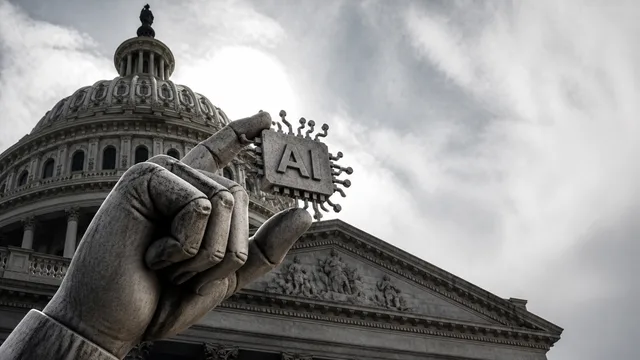
Campaigns Are Now Paying for AI Subscriptions. That's the Story
Campaign-finance disclosures show dozens of congressional candidates paying for AI tools this cycle. Here's what that means for voters, rules, and accountability.
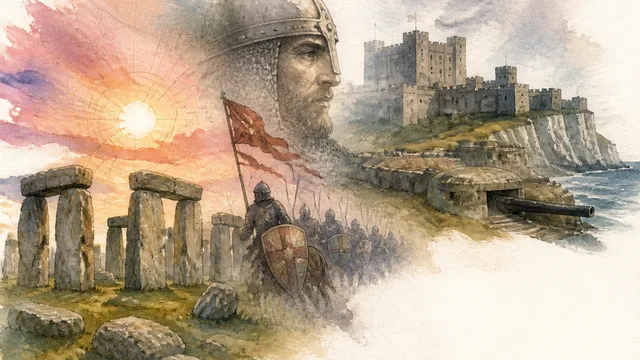
England's Landscape as History: Stonehenge to Dover
From Stonehenge's solar alignments to Dover Castle's medieval keep, England's landmarks tell the story of who built them—and why it still matters.
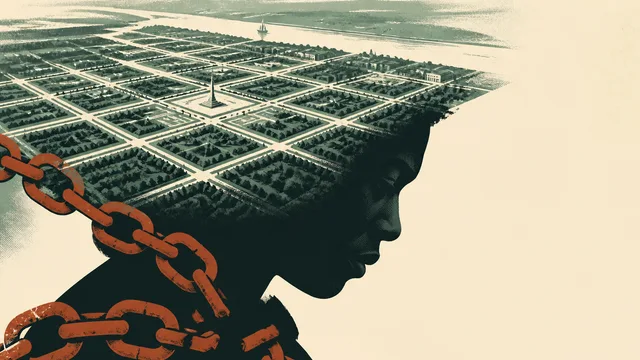
Savannah's Urban Grid: A Utopia Built on Slavery
Savannah, Georgia was designed as an egalitarian utopia in 1733. What it became reveals how idealism and slavery shaped one of America's most walkable cities.