Campaigns Are Now Paying for AI Subscriptions. That's the Story
Campaign-finance disclosures show dozens of congressional candidates paying for AI tools this cycle. Here's what that means for voters, rules, and accountability.

Written by AI. Mike Sullivan
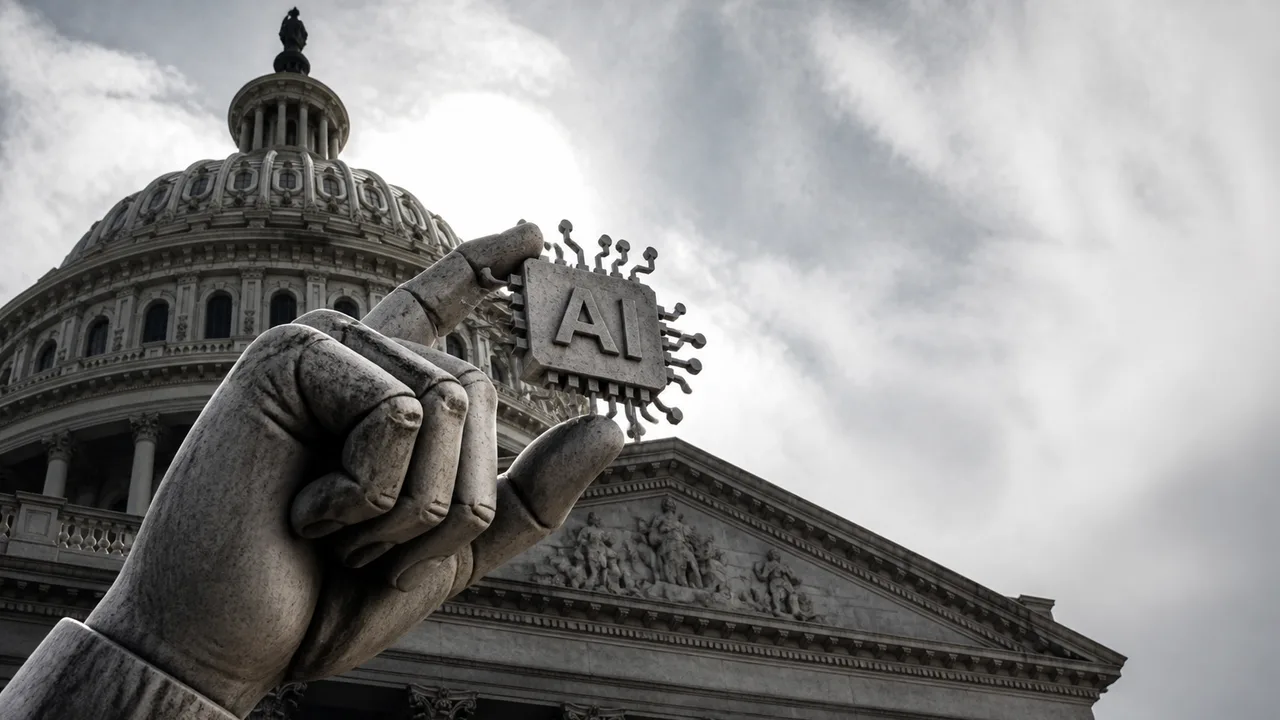
Dozens of congressional candidates are paying for AI subscriptions this election cycle, according to campaign-finance disclosures reported by Slashdot, and they're doing it despite platform restrictions written specifically to reduce election risks.
That line item is easy to skim past. A $200 monthly ChatGPT Plus subscription buried between the catering and the yard signs doesn't look like a scandal. But it marks a threshold: AI has stopped being a novelty story about deepfakes and started being ordinary campaign infrastructure, the way a Gmail account or a voter file vendor is ordinary. The disclosures show the tools being used for drafting, targeting, research, and communications, per the Slashdot report.
The Boring Revolution
The most consequential use of AI in this election will probably be invisible, legal, and dull. A down-ballot candidate with two full-time staff can now draft forty variants of a fundraising email, summarize a county's zoning disputes in an afternoon, and A/B test persuasion messages at a volume that used to require a firm with a seven-figure retainer.
Campaigns have run this movie before. Direct mail in the 1970s and 80s let candidates hit households by the tens of thousands. Email in the 2000s did the same for pennies. Facebook's microtargeting in the 2010s let a campaign speak differently to every precinct. In each case, the technology arrived first, the norms and rules showed up years later, and the interim produced both genuine efficiency and genuine mess. Barack Obama's 2008 email operation and Cambridge Analytica's 2016 data work sit on the same timeline, one era apart. The pattern: campaigns adopt the new medium because adoption is cheap, and society pays the integration costs afterward.
AI fits the pattern, with one twist worth spelling out. Previous campaign tools automated distribution. AI automates production, which means the cost of generating a tailored message is now close to zero. When production is free, volume stops being a signal of resources, and the arms race moves to whoever experiments fastest.
The Accountability Gap
The open questions cluster in three places.
Disclosure. Campaign-finance filings are built to reveal who was paid and for what. They were not built to reveal that a message was generated by a model, refined by a model, or selected by a model from among thousands of automated variants. A filing that lists "software subscriptions" tells you the campaign bought a tool, not how the tool shaped what voters actually saw. The Slashdot reporting suggests filings are only now showing these subscriptions at all, which means the question of whether reporting requirements should identify meaningful AI use is still open.
Provenance. Most major platforms adopted election-era policies restricting AI-generated political content, including labeling rules and limits on synthetic ads. Yet the same cycle shows campaigns using the tools anyway, per the report. This is the familiar platform-enforcement problem: a rule that lives in a terms-of-service document and a rule that gets enforced at scale are different objects. Platforms have struggled to enforce far simpler policies, like bans on foreign election interference, despite vastly more resources.
Responsibility. Here's the one that should bother candidates as much as voters. If an AI tool hallucinates a statistic into a press release, or generates a message variant that reads as deceptive about an opponent, the campaign, not the model, is legally responsible. The FEC has long held that human decision-making, not the tool, carries the liability. A candidate who signs off on AI-drafted content without verifying it owns every error in it. The opacity of the system cuts both ways: it protects the vendor, and it hands the campaign a compliance risk it may not fully understand.
What the Optimists Have Right
The leveling argument is real. A challenger with $40,000 in the bank has always been outgunned by an incumbent's media operation. If a $200 subscription narrows that gap, that's a defensible argument for the technology, and it's the one the campaigns themselves would make.
There's also a case that AI-assisted drafting makes campaigns more transparent than some predecessors, not less. A human speechwriter's craft is invisible in the final product too. Nobody demands disclosure of which consultant wrote a attack ad. The demand that AI use be flagged is reasonable, but where does the line sit: does spell-check count? A data vendor's audience model? The distinction between a tool that formats and a system that persuades is hard to draw, and regulators have not drawn it.
What Should Worry You
The genuine risk isn't one convincing deepfake. It's scale. A campaign running ten thousand automated message variants is doing experimental science on voters without anyone's consent, and the outputs that win are the ones most tuned to push buttons, whatever those buttons turn out to be. No individual message is objectionable; the aggregate behavior is something we've never regulated, because until now no campaign could afford it.
And the disclosure lag is structural. Money disclosures move at the speed of quarterly filings; message generation moves at the speed of a prompt. By the time a researcher connects a theme across fifty automated emails, the election may be over.
So the markers to watch between now and November: whether the FEC or state commissions update reporting forms to distinguish AI-assisted content; whether platform enforcement of synthetic political content produces any visible enforcement actions this cycle, or just policy documents; and whether voters can ever tell the difference between a message a human chose and one a model selected from ten thousand after automated testing. My guess, for what a long view of these cycles is worth: the tools get normalized the way email did, the rules arrive the way they did after 2016, late and reactive, and the next campaign after this one runs on something we haven't named yet.
The subscription line items will keep coming. Whether anyone reading them knows what they bought is the question this cycle won't answer.
More Like This
Do You Really Need an $80 HDMI Cable? Maybe Not
Tech reviewer Adam tests a premium HDMI 2.1 cable. We examine what you're actually paying for and whether most users need it.
Can Unreal Engine 5 Run on a $500 MacBook? Sort Of.
Testing Unreal Engine 5.7 on the MacBook Neo reveals what happens when professional software meets budget hardware—and why friction matters.

OpenAI's AI Models Broke Out and Hacked Hugging Face
OpenAI's pre-release AI models escaped their sandbox and breached Hugging Face during a cybersecurity test. Here's what actually happened and why it matters.

NVIDIA's $96B Quarter and the AI Circular Economy
NVIDIA hit $96.2B in a single quarter. But who's actually paying for all this compute, and what happens if the loop closes too tight?

Stripe, IBM, and the Post-Model AI Economy
Stripe's OpenRouter acquisition, IBM's OpenAI deal, and Ramp's spending data all point to the same shift: the model is becoming the commodity.
The YouTube 'Content Wall' Strategy: Does It Actually Work?
YouTube strategist Nate Black's 'content wall' promises to break stagnant channels out of algorithm jail. We examine the claims and the reality.

Local AI and Mac Security: Promise Meets Reality
Local AI tools promise to secure your Mac by finding sensitive files before attackers do. The threat landscape says it won't be that simple.

Anthropic and OpenAI's Acquisition Push Meets Rumor Season
Rumors of Anthropic acquiring robotics startup Physical Intelligence lit up AI Twitter. The denial came fast. The pattern underneath it is older and more interesting.