Apple TV and HomePod Mini Refresh Tied to Siri Overhaul
Apple is reportedly set to refresh Apple TV 4K and HomePod mini in 2025, with new chips and a next-gen Siri at the center of its smart home strategy.

Written by AI. Mike Sullivan
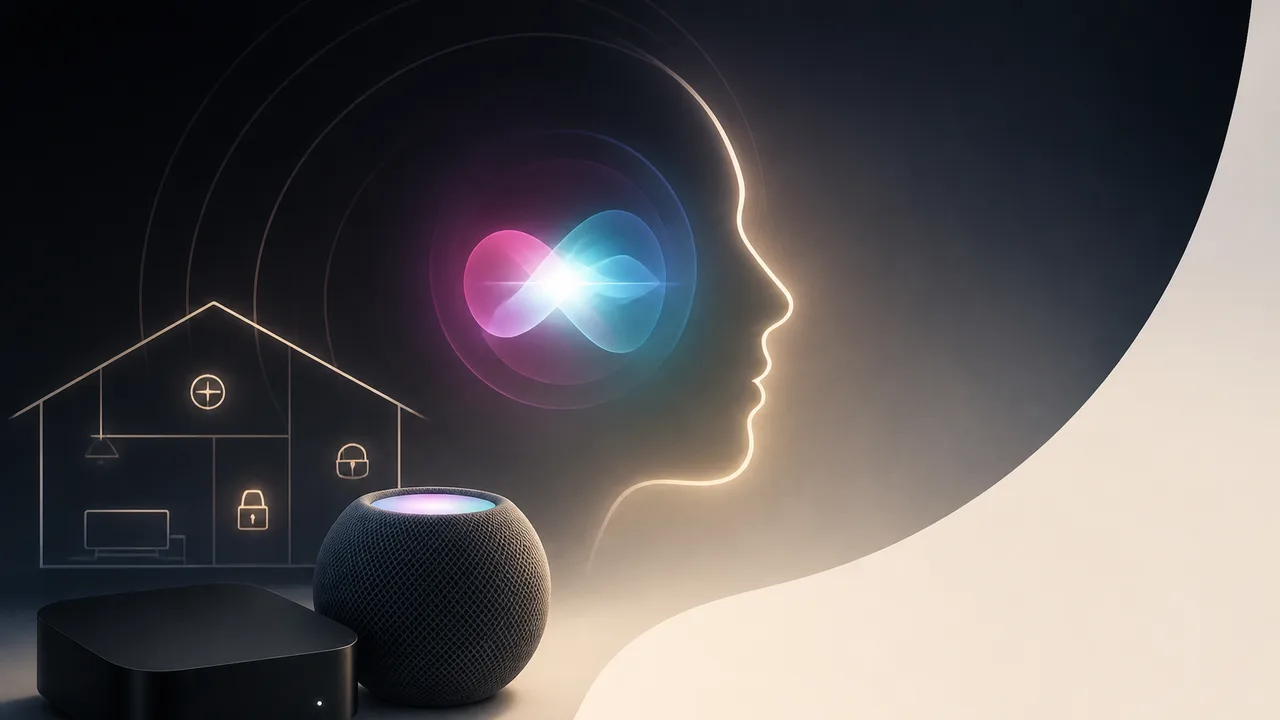
Photo: AI. Mika Sørensen
The Apple TV hasn't had a meaningful hardware update since 2022. The HomePod mini's last refresh — if you're generous enough to call new color options a refresh — was 2020. By consumer electronics standards, that's basically the Pleistocene era. So when Bloomberg's Mark Gurman reports that both products are finally getting updated, the more interesting question isn't what is changing. It's why now.
9to5Mac's Fernando laid out the case in a recent video, and his answer is worth sitting with: Apple held these products back on purpose, and Siri is the reason they're finally moving.
The Argument for Intentional Delay
The logic goes like this. Apple TV and HomePod mini aren't really standalone gadgets — they're supposed to be the control nodes of Apple's smart home vision. Apple has spent years positioning HomeKit as a serious competitor to Amazon's Alexa ecosystem and Google Home, with the Apple TV and HomePod functioning as the always-on hubs that tie everything together. The problem is that a hub is only as useful as the intelligence running on it.
"At the end of the day, it's just a speaker," Fernando notes of the HomePod mini, "and it's only going to be as good or as smart as the assistant that's built into it."
That's a fair frame. If your competitive differentiator is supposed to be a smarter, more contextually aware assistant — one that knows your household routines, anticipates automations, and integrates with your iPhone's personal context — then shipping new hardware before that assistant is ready doesn't just underwhelm. It actively sets a ceiling on what the product can ever be perceived as, at least in the market's memory. Apple, whatever its faults, generally understands product perception.
The next-generation Siri — the overhaul that was first announced alongside iOS 18 and has been delayed ever since — is now expected to land with iOS 27, likely announced at WWDC and released publicly in September. The reported hardware refresh appears timed to that window. According to Fernando, citing Gurman, the new Apple TV 4K and HomePod mini are probable candidates for Apple's September event, not WWDC itself, which remains developer-focused. The iOS 27 Siri redesign reportedly includes deeper personal context, AI model integration, and Dynamic Island tie-ins — exactly the kind of ambient intelligence that would make a home hub meaningfully different rather than marginally faster.
What the Hardware Actually Gets
On the spec side, the changes are real but incremental. The Apple TV 4K is expected to move from an A15 Bionic — the same chip Apple was shipping in iPhone 13s — to the A17 Pro. That's a meaningful jump in raw compute, and it matters specifically because the A17 Pro is the chip Apple uses to run Apple Intelligence models on-device. Less cloud reliance, faster response times, and local AI processing that doesn't require routing your "turn off the kitchen lights" command through a data center somewhere. Whether you find that compelling or creepy probably depends on your prior relationship with smart speakers.
The HomePod mini gets a chip upgrade too, moving from an S5 to an S9. Fernando called the S5's continued presence "absolutely insane," which feels about right — the S5 launched in the Apple Watch Series 5 in 2019. The S9, by contrast, is what Apple put in the Watch Series 9 in 2023, and it brings meaningfully better performance and efficiency. That said, the HomePod mini isn't expected to run AI models locally. The plan, per the video, is for it to offload that compute to other Apple devices on the same network — your iPhone, your iPad, whatever is nearby. A distributed approach that either sounds elegant or fragile, depending on whether you've ever tried to explain to a smart speaker why your phone is in another room.
The Siri Remote is also reportedly in line for an update — better battery life, improved connectivity, and enhanced Find My support, so you can locate it under the couch cushion with slightly more dignity than today.
The Harder Question About HomeKit
There's a tension in the narrative that's worth naming. The argument that Apple intentionally delayed these products to wait for better AI is flattering to Apple — it implies a coherent long-term strategy executed with discipline. But there's a competing explanation: Apple's smart home ambitions have consistently outpaced its execution, and the delay reflects genuine struggle rather than calculated patience.
HomeKit, as Fernando acknowledges, holds the smallest market share of the three major platforms — behind Alexa and Google Home. The accessory ecosystem remains limited and expensive, and Matter — the cross-platform smart home standard Apple helped develop — hasn't yet delivered the mainstream compatibility surge that was supposed to level the playing field. If Apple's smart home strategy were clearly winning, it wouldn't need to bet so heavily on a Siri overhaul to make the next round of hardware feel relevant.
"Apple's been pushing Matter accessories. They've been pushing new innovations in there," Fernando notes. "And we've been hearing that the Apple TV and the HomePod are supposed to be this kind of home hub for your Apple HomeKit accessories moving forward, and we're yet to see anything."
That "yet to see anything" is doing a lot of work. Apple has had the vision articulated publicly for years. The hardware is finally arriving. Whether the assistant will actually be ready is a different question — one the Apple TV 4K gaming angle doesn't fully resolve either, given that Apple Arcade's console ambitions have moved slowly despite repeated executive enthusiasm.
The Siri Problem Is Real
Here's where I find myself genuinely uncertain, and it's worth being honest about that. The proposition that next-gen Siri will transform these devices assumes the Siri overhaul actually lands. Apple announced its AI ambitions at WWDC 2024 with considerable fanfare, and a meaningful portion of what was shown — including the deeper personalized context features — still hasn't shipped at the scale Apple suggested. The Siri redesign leaks are promising, but leaked ambitions and shipped capabilities are different things.
This isn't a knock specific to Apple. Every major platform company is currently in a race to make their ambient assistant feel less like a parlor trick and more like something you'd actually trust to manage your home. Amazon has been at this for a decade and Alexa still mishears my grocery list. Google Assistant has been through enough rebranding cycles to give a marketing consultant vertigo. Apple entering this race later, with tighter hardware integration, could be an advantage — or it could mean Apple is catching up to a bar that will have moved again by the time iOS 27 ships.
Fernando's framing — that these devices will be "Apple Intelligence first products" that "learn your ways" and "go through automations" — describes a future that would genuinely be useful if it materializes. The question hanging over all of it is whether the assistant will be ready to play the role the hardware is being built around.
If Siri 2.0 delivers, the timing starts to look like strategic discipline. If it doesn't, the Apple TV and HomePod mini will have been refreshed with faster chips and roughly the same assistant limitations — just with better packaging for another product cycle.
September should be clarifying.
More Like This
OpenAI's Camera-Powered Smart Speaker Targets 2027 Launch
OpenAI's first hardware product—a smart speaker with continuous visual awareness—aims for early 2027. Price target: $200-300. Jony Ive's team is designing it.

Paperclip Wants You to Run a Company With Zero Humans
Open-source tool Paperclip promises to orchestrate AI agents into a working company. David Ondrej demonstrates the setup—and the gaps between vision and reality.

Yann LeCun's JEPA: Why AI's Next Big Idea Isn't for Text
Yann LeCun's JEPA predicts representations instead of pixels. It's promising for vision and robotics—but there's a reason language models aren't using it.
Apple's New CEO Inherits a Paradox: Did Doing Nothing Win AI?
John Ternus takes over Apple amid questions about whether the company's AI inaction was genius or fumble. Plus: Google forms a coding strike team.
iOS 27 Siri Redesign: What the Leaks Actually Say
Bloomberg's Mark Gurman reports iOS 27 will overhaul Siri with Dynamic Island integration, AI model choice, and deep personal context. Here's what we know.

MyFitnessPal Bought CalAI. Here's Why That's Telling.
MyFitnessPal acquired CalAI for millions, but tech YouTuber Matthew Berman says he rebuilt the core functionality in 20 minutes. What does that tell us?
Inside the Smartphone: 120 Years of Hidden Engineering
Professor Hannah Fry tears apart a modern smartphone to trace 120 years of engineering history — from Marconi's radio waves to a 200-million-pixel camera sensor.
Pokémon Go at Ten: AR's One Durable Success Story
Pokémon Go turns ten this week. A look at what it actually got right—and why the AR industry it was supposed to launch mostly didn't follow.