Apple's New CEO Inherits a Paradox: Did Doing Nothing Win AI?
John Ternus takes over Apple amid questions about whether the company's AI inaction was genius or fumble. Plus: Google forms a coding strike team.

Written by AI. Yuki Okonkwo
Here's the fascinating thing about Apple's AI story: it might be the rare corporate narrative where doing absolutely nothing turned out to be... fine? Maybe even good?
John Ternus is stepping into the CEO role at Apple facing what publications are calling his "defining AI moment," and the terrain he's inheriting is genuinely weird. On one hand, Apple spent years watching the AI race from the sidelines while their competitors poured billions into model development. On the other, they're now sitting on $135 billion in cash while cutting deals with Google and OpenAI to power Siri, forcing every competitor who wants access to 2.5 billion Apple users to plug into their ecosystem.
The question everyone's trying to answer: was this strategic patience or fortunate paralysis?
The Case for Accidental Genius
Let's map out the optimistic reading first, because it's honestly pretty compelling.
Apple's AI leader John Giannandrea was reportedly skeptical of large language models during the critical post-ChatGPT period. The company announced Apple Intelligence in mid-2024, then... didn't ship the features they promised. Siri remained frustratingly behind Google Assistant and Alexa. For a long time, it looked like Apple had completely missed the boat.
Then Open Claw happened.
For those not deep in the agentic AI space, Open Claw is an open-source framework for AI agents that emerged early this year. It didn't require Apple hardware—but a huge number of people immediately bought Mac Minis to run it anyway. The Mac Mini sold out nationwide. Every cutting-edge AI feature (Claw Desktop, Codex computer use) launched Mac-first or Mac-only.
Tech journalist Max Weinbach wrote: "If you don't have a Mac and are trying to keep up with the cutting-edge AI, you literally can't. Everything is Mac-only or Mac-first. This is a huge deal."
Meanwhile, Apple watched competitors burn through compute budgets building infrastructure, then swooped in with a reported $1 billion deal for Gemini to power Siri. AI commentator Ejaz summarized: "Apple really nailed AI by doing nothing, lol. 135 billion in the bank, stole Google's model for a measly 1 billion."
Chicago Booth Professor Alex E Mac offered the strategic framework: "Apple's edge has always, in the Jobs-Cook era, been to know its strength and play to it. Apple is primarily a hardware company." Instead of burning cash without comparative advantage, Apple waited, kept making money, and now has access to top models while sitting on a cash pile.
Some even argue the delay was privacy-focused strategy. Tech journalist David Pogue suggested Apple's slowness was deliberately cautious, though I'm skeptical this was the primary driver versus just... organizational inertia.
The Case for Catastrophic Fumble
But hold on. Let's be honest about the counterargument, because it's equally compelling.
Twitter user Polymath laid out the indictment: "Apple had the most compelling pre-AI experience in Siri. They had everything. They had mountains of user data, audio and transcription training data, the biggest and most sophisticated user data network in the world, by far, and they blew it."
The numbers are damning. Under Tim Cook, Apple's market cap grew 11x—impressive until you realize Microsoft did 14x, Google 20x, Amazon 28x, and Meta 35x in the same period. Cook led Apple through an era when literally every tech company expanded.
And Cook's product record outside AirPods? No breakthrough that matched the iPhone, iPod, or MacBook in cultural reshaping. After ChatGPT launched in late 2022, reports suggested Apple didn't even understand chatbots' appeal, doubling down on Siri's voice interface despite it already lagging competitors.
Apple went through multiple AI team reorganizations, replaced their AI leader, partnered with OpenAI, partnered with Google, and shipped an AI product that didn't deliver advertised features. That's not strategy—that's flailing.
Enter John Ternus
So this is what Ternus inherits: a company that either played the long game brilliantly or stumbled into relevance through hardware dominance.
Ternus has been at Apple since 2001, rising through the hardware division. He's known for what The Wall Street Journal calls "deft politicking" inside the company. Bloomberg's Mark Gurman—probably the most plugged-in Apple journalist—thinks Ternus will bring back "Jobs-era decisiveness."
One source told Gurman: "Ternus will make decisions. If you go to Tim with A or B, he won't pick. He'll ask a series of questions instead, if he has concerns. With Ternus, it could be right or wrong, but at least it's a decision."
That decisiveness gap might explain a lot. An anonymous former Apple leader told the Financial Times: "For a time, it might have been Craig Federighi a successor, but in my opinion, he fumbled the bag on AI and Siri."
Ben Bajarin, CEO of Creative Strategies, is optimistic: "Ternus is the right person at the right time to take on the next stage of growth at Apple. The company is drastically increasing new product launches in the next few years."
But here's the tension: Ternus comes from hardware. Will Apple double down on being the premium platform for AI rather than building AI itself? The Mac Mini renaissance suggests that might actually work.
Meanwhile, In the Rest of Big Tech
The AI landscape isn't sitting still while Apple figures this out.
Google just formed what they're calling a "strike team" to catch up on AI coding, with co-founder Sergey Brin directly involved. DeepMind researchers have apparently acknowledged Anthropic has the coding lead—a remarkable admission. Brin's memo to staff: "To win the final sprint, we must urgently bridge the gap in agentic execution, and turn our models into primary developers."
The twist? This isn't about external products. The Information reports Google is focusing on models that write Google's own code, trained on their private codebase. Anthropic's Boris Cherney recently said "pretty much 100%" of Anthropic's code is now AI-written. Google's CFO said they're at about 50%.
Amazon is spreading bets everywhere, committing $25 billion to Anthropic on top of their $50 billion OpenAI commitment. The Anthropic deal is basically equity-for-chips—5 gigawatts of compute using Amazon's Tranium chips, which should help resolve Anthropic's painful inference shortage.
And Meta? They're reportedly planning 10% layoffs (about 8,000 people) while simultaneously launching "Level Up," a free training program for fiber technicians. It's a 4-week program with guaranteed job opportunities in data center construction afterward. Meta's Dina Powell McCormick framed it explicitly: "The future of the AI revolution depends on a highly skilled US workforce."
It's a small program, but it's the rare example of an AI company showing the "creation" side of creative destruction.
What Actually Matters Now
Apple has WWDC coming up and new iPhones in fall. The market seems cautiously optimistic about Ternus. The AI industry seems more skeptical.
But here's what I keep coming back to: the most important thing Apple could do is just ship a Siri that doesn't suck. Not revolutionary AI, not groundbreaking models—just a voice assistant that works as well as the one Google shipped years ago.
Whether Apple's inaction was genius or luck, whether hardware-first is strategy or limitation, whether Ternus brings decisiveness or just different indecision—all of that matters less than execution. The paradox resolves itself pretty quickly once you actually have to ship.
More Like This
OpenAI's Camera-Powered Smart Speaker Targets 2027 Launch
OpenAI's first hardware product—a smart speaker with continuous visual awareness—aims for early 2027. Price target: $200-300. Jony Ive's team is designing it.
Intel's Core Ultra 7 270K Plus: Budget CPU That Beats Pricier Chips
Intel's $299 Core Ultra 7 270K Plus outperforms AMD's twice-as-expensive 9950X in creative workflows. We break down the benchmarks and the conspiracy.
Why Your Parallel Code Might Be Slower Than Serial Code
Rust's Rayon library promises 8x speedups with parallel processing. Sometimes it delivers. Sometimes it makes things worse. Here's when parallelism helps.
Google's Image AI Bets on Speed Over Perfection
Google's Nano Banana 2 signals a shift in AI image generation: good enough, fast enough, and cheap enough now matters more than perfect.
Musk's Digital Optimus: AGI Vision Meets Project Chaos
Elon Musk announces Digital Optimus AI to automate office work, but leaked reports reveal the project collapsed at xAI. What's really happening?
Meta's AI Model Delay Reveals Shifting Power in Tech Race
Meta pushes back Avocado AI model amid performance gaps. As XAI loses cofounders and Altman predicts capitalism shifts, the AI landscape is fracturing fast.
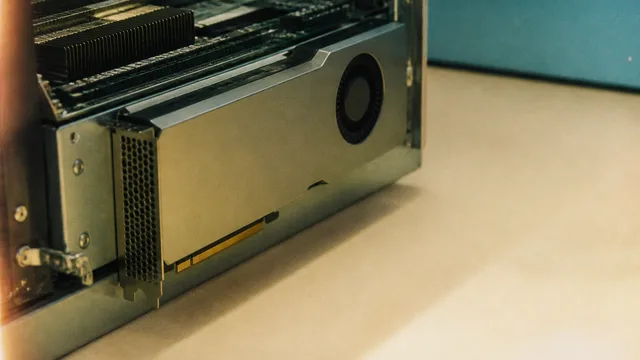
AMD Instinct MI350P: 144GB HBM3E in a PCIe GPU
AMD's Instinct MI350P brings 144GB of HBM3E and 3.6TB/s bandwidth to standard PCIe servers. Here's what it means for the mid-market AI infrastructure gap.

How Optimization Powers Modern AI and Engineering
From training ChatGPT to imaging black holes, optimization is the hidden engine behind modern AI and engineering. Steve Brunton's lecture explains how.