The Battle of Cannae at True Scale
A new Unreal Engine 5 simulation of the 216 BC Battle of Cannae forces scholars to rethink Hannibal's tactics and the limits of ancient military history.

Written by AI. Helen Papadopoulos
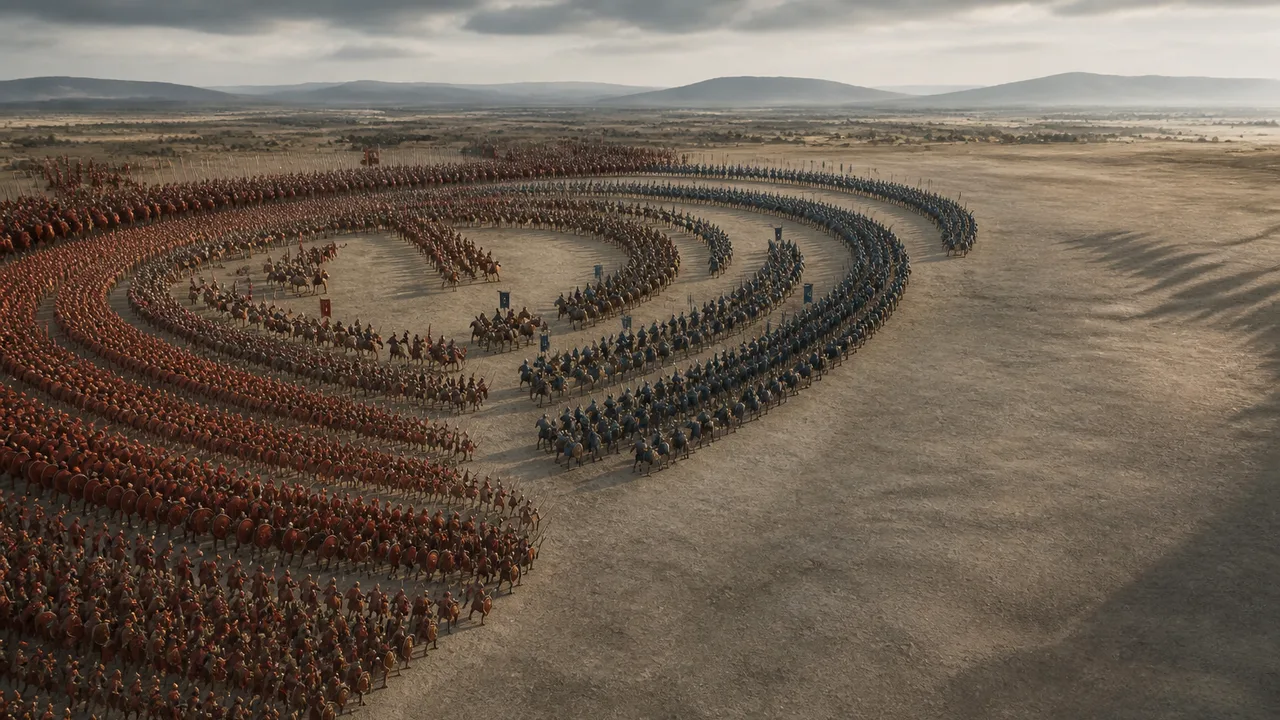
Photo: AI. Hayden Cross
The textbook version of Cannae is one of the most satisfying stories military history has ever produced. Hannibal, outnumbered nearly two to one, lures an overconfident Roman army into a crescent formation, allows the center to bend inward like a closing fist, and destroys 70,000 men in a single afternoon. Clean. Geometric. Inevitable. Generations of commanders from Napoleon to Patton studied it as a masterclass in encirclement. The problem, as a new documentary from Invicta makes uncomfortably clear, is that the clean version may be mostly a product of diagrams drawn at a scale that hides everything that actually mattered.
The Invicta team, working with military historian Dr. Adrian Goldsworthy and using Unreal Engine 5 to model the battle at its actual physical dimensions, has produced what is plausibly the most detailed visual reconstruction of Cannae ever attempted. What they found when they ran the numbers in true scale is not a neater version of the textbook story. It is a considerably messier, stranger, and in many ways more interesting one.
Start with the sheer arithmetic of the battlefield. The simulation places roughly 136,000 troops across a front exceeding three kilometers. Walking from one end of that formation to the other would take a modern person over forty minutes. A Napoleonic-era cannon fired from one flank could not reach the troops on the other. Seen from above in the simulation, the armies are not tight blocks on a map. They are the equivalent of a small city arranged for mutual destruction across agricultural land — with all the drainage ditches, boundary walls, animal pens, and uneven ground that implies.
That ground matters more than the ancient sources let on. Polybius and Livy, the two principal accounts, describe formations and outcomes. They do not describe the experience of 70,000 men attempting to march in coordinated fashion across working farmland toward an enemy who wanted to kill them. As Goldsworthy notes in the documentary, "real landscapes, particularly farmland, are not like carefully mown football pitches or bowling greens. There will be little undulations, little humps and bumps... tracks, walls, boundary stones, perhaps hedges, trees, vines." None of this appears in the literary record, because none of it was visible at the scale the ancient historians wrote from. But it would have been brutally apparent to the soldier whose maniple veered left around a ditch while the one next to his veered right.
This is where the Invicta simulation does something genuinely useful beyond spectacle. By forcing every assumption into actual physical space, it reveals which received ideas about Cannae survive contact with geometry and which quietly dissolve.
Take the famous crescent. In most textbook diagrams, Hannibal's center bows dramatically forward before inverting under Roman pressure into a deep concave trap. The simulation suggests the crescent was almost certainly far shallower than those diagrams imply — perhaps only eighty-five meters of depth at the maximum bow across a nearly two-kilometer front. Drawn at the scale of the battlefield, it barely registers as a curve. Goldsworthy is characteristically precise on why this matters: "The probability is that this is rather less dramatic and shallower than many diagrams will show. But then diagrams need to emphasize." Diagrams, in other words, are lies made in service of legibility. The simulation offers a corrective.
The inversion of the crescent — the Carthaginian center retreating under Roman pressure until it concaves, funneling the legions into a pocket — is similarly complicated by scale. For that inversion to match the dramatic version in the sources, the center would have needed to fall back hundreds of meters without disintegrating. Goldsworthy and the model agree this is unlikely. A shallower retreat, accompanied by the pulsed, attritional rhythm of actual close-quarters combat — not Hollywood duels, but brief violent exchanges followed by separation, rest, and re-engagement — makes far more sense. The Romans pushed the center back. But probably not far, and probably not fast.
The cavalry engagements are similarly humanized by the true-scale rendering. On Cannae's western flank, Hasdrubal's Gallic and Iberian horsemen outnumbered their Roman counterparts by more than two to one. They did not, as cinematic convention suggests, charge as a unified mass. As Goldsworthy explains at some length, massed cavalry packed together does not fight — it stampedes. The Pompeian cavalry at Pharsalus, several thousand strong, was routed by a comparatively small infantry force partly because it lost the ability to maneuver. Effective ancient cavalry operated in dispersed squadrons with gaps between units, the organizational logic resembling those English Civil War engravings more than anything from a fantasy film. The simulation models this accordingly, which changes how we understand Hasdrubal's remarkable feat after the western flank collapsed: rather than rallying a victorious mob for a two-kilometer transit across the battlefield, he was more likely wheeling prepared reserve units that had been held back specifically for that purpose.
On the eastern flank, the Numidians fought an entirely different kind of engagement — hit-and-run harassment against the allied Roman cavalry, designed not to break them outright but to exhaust and frustrate over hours of skirmishing. The simulation gives this its proper weight. It was not an exciting phase of the battle; it was the military equivalent of psychological waterboarding, the Numidians refusing to close, darting away from Roman countercharges, and slowly bleeding the allied equites of coherence and will.
What strikes me as most valuable in the Invicta approach — and the most underappreciated contribution of collaborating with Goldsworthy — is the insistence on command opacity. Consuls Paulus and Varro each commanded a cavalry wing, which meant neither had visibility over the main infantry engagement once the battle started. Goldsworthy is blunt: "It's going to be very hard for anybody to see all of it. It's a big army. You're on a fairly flat plane. You don't have a vantage point." The Roman formation, intentionally deepened and compressed to concentrate mass, made this worse. There was no room for staff officers to ride through the maniples. The command-and-control apparatus that a Roman army normally relied upon was structurally compromised by the very formation the consuls had chosen. Hannibal, by contrast, deployed his forces in shallower, more open order. He and his brother Mago could ride between units, assess the battle line, communicate with troops. The Carthaginians could see their own battle. The Romans largely could not.
There is a location problem, too, that the simulation dramatizes rather than resolves. We do not know with certainty where on the Apulian plain Cannae was fought. The Aufidus River, which anchored one flank, has moved repeatedly over two millennia. Goldsworthy visited the site in the late 1990s armed with every scholarly map he could find — 19th century, 20th century, modern Italian — and found the river in a different position on each of them, and in yet another position still when he looked up from the maps. Archaeology has not settled the question; finds that might relate to the battle may be confused with medieval engagements in the same area. The simulation's own creators end up favoring the eastern plains hypothesis, which provides more room for the armies, while Goldsworthy argues for a narrower position between the river and the hill bearing the town — a confined space that would, he contends, have made good strategic sense for a Roman army trying to negate Hannibal's cavalry advantage. Both interpretations are live. Neither is proven.
That tension — between the impulse to visualize definitively and the honest acknowledgment that the evidence is irreducibly uncertain — is the productive friction running through the entire documentary. The Invicta simulation does not claim to have solved Cannae. It claims to have mapped, in genuine physical terms, what we know, what we can reasonably infer, and where the comfortable narratives break down under pressure from arithmetic and geography.
What the model cannot tell us is what it felt like to be a Roman soldier somewhere in the middle of that formation on the morning of August 2nd, 216 BC — surrounded on all sides by tens of thousands of comrades, unable to see the front, unable to hear orders over the roar, unable to know whether the plan was working. The largest army Rome had ever assembled, reduced by its own formation to a dense, nearly leaderless crowd waiting to find out if mass alone was enough. We know it was not. But we're still working out exactly why.
More Like This
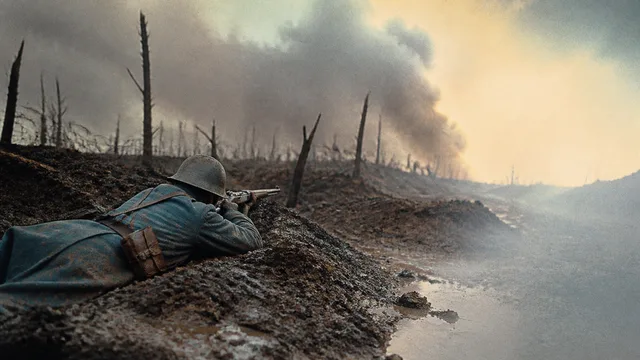
The Battle of Verdun: Attrition, Leadership, and 300,000 Dead
Ten months, 300,000 dead, and less than five miles of ground changed hands. Epic History's Verdun series examines what that arithmetic actually meant.
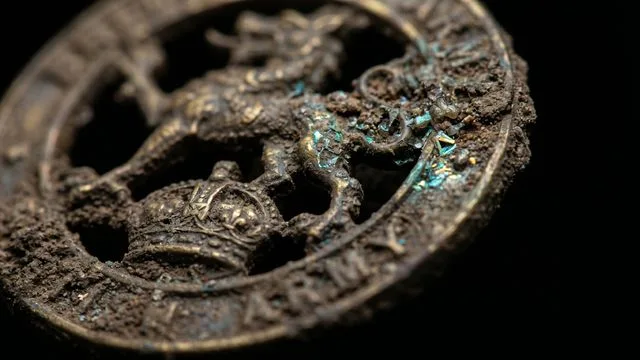
WW1 Trench Life: What the Western Front Was Really Like
From Pals' Battalions to the Vickers gun, a new documentary unpacks the grim machinery of survival on the WW1 Western Front in unflinching detail.
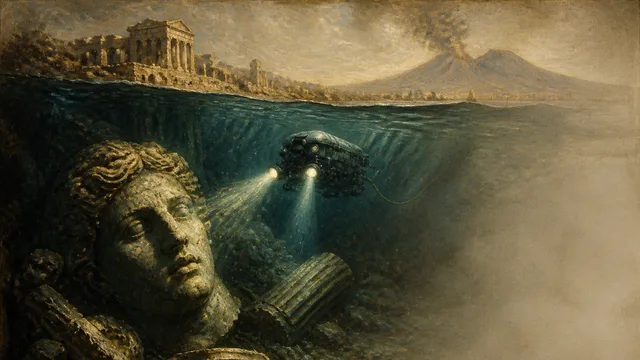
Baiae: The Sunken Pleasure City of Ancient Rome
Beneath the Bay of Naples lie the ruins of Baiae, Rome's most scandalous resort. New 3D scanning reveals what volcanic geology buried and the sea swallowed.
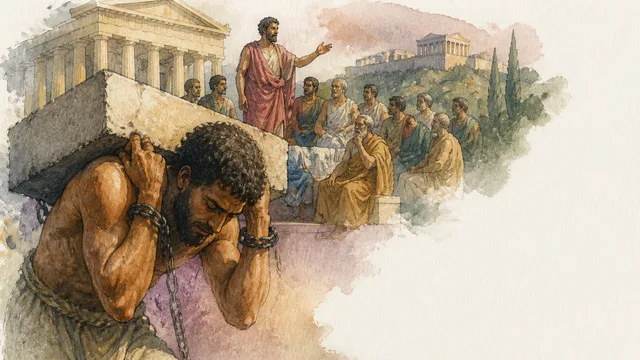
Daily Life in Ancient Greece: Beyond the Marble Myth
Ancient Greece gave us democracy and philosophy—but also silver mines that killed enslaved workers. A look at who really built the "golden age."
Waco Siege: Ancient Echoes in Modern Tragedy
Explore the 1993 Waco siege through the lens of ancient cult dynamics and modern law enforcement challenges.
Rome vs. Carthage: The Punic Wars Unveiled
Explore how Rome's conflicts with Carthage shaped ancient empires through strategic innovations and legendary leaders like Hannibal and Scipio.
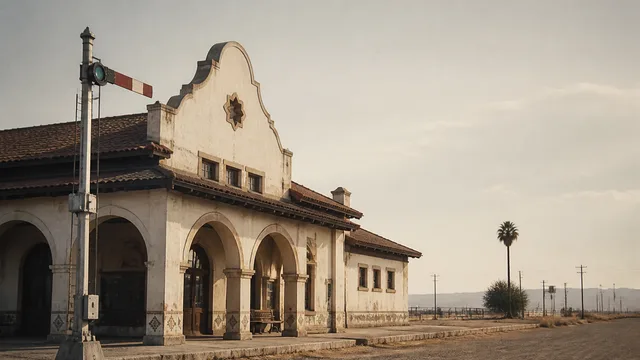
Casa del Desierto: Barstow's Forgotten Harvey House
Barstow's Casa del Desierto is a stunning 1911 Harvey House in the Mojave Desert—and one of America's least-visited Amtrak stations. Here's why it still matters.
Medieval Knights: The Gap Between Code and Conduct
Medieval knights lived by a strict code of chivalry—and routinely broke it. A look at the real training, politics, and moral failures behind the armor.