Albania's Artemis Accords Signing Tests What Follows
Albania will become the 73rd Artemis Accords signatory, expanding a space diplomacy framework whose impact will depend on policy, data and actual practice.

Written by AI. Olivia Meng
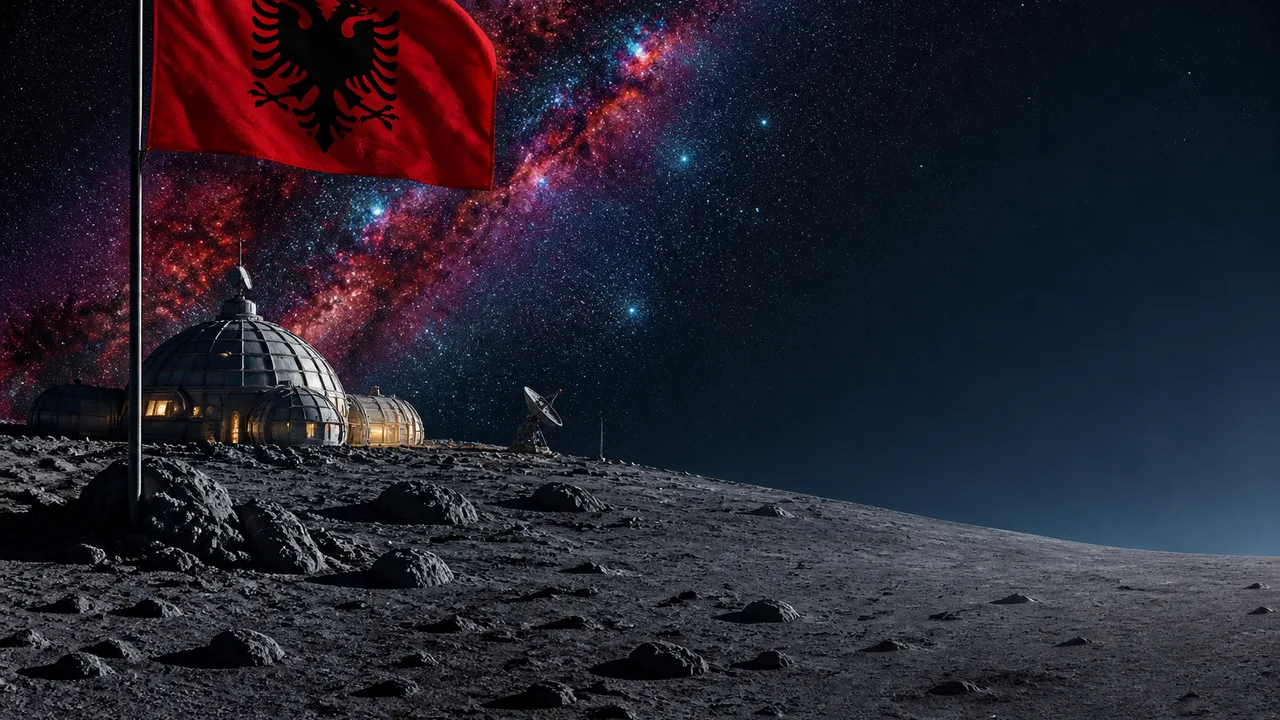
Albania is scheduled to become the 73rd country to sign the Artemis Accords on Monday, September 21, extending a US-led framework for civil space cooperation to another European state.
NASA's announcement places the ceremony at noon EDT at the agency's headquarters in Washington. The count of 73 remains prospective until the signing takes place, a small but necessary distinction in diplomacy, where scheduled ceremonies occasionally encounter terrestrial gravity.
The planned signature establishes Albania's support for principles that include transparency, interoperability, emergency assistance and the responsible use of resources on the Moon and elsewhere. The Accords are nonbinding, so they create political expectations rather than treaty obligations enforceable through an international court.
No mission, spacecraft, launch budget or Albanian lunar program accompanies the announcement. NASA's notice also does not identify new Albanian legislation, technical infrastructure or data-sharing arrangements. The public record supplied for the ceremony therefore supports a narrow conclusion: Albania plans to join the framework. Claims about what the country will build or fund would run ahead of the available evidence.
What Albania is Joining
The Artemis Accords offer a common operating vocabulary for governments entering an increasingly crowded field. Transparency can mean advance notice of missions and publication of relevant plans. Interoperability covers compatible equipment, communications and procedures. Emergency assistance asks participants to coordinate when astronauts or spacecraft face danger. Resource provisions address activity that could eventually include collecting lunar soil, minerals or water ice.
The strongest case for the framework begins with timing. Governments and companies are planning more activity around the Moon, while many operational rules remain unsettled. Shared expectations developed before rovers, landers and extraction systems converge on valuable terrain could reduce misunderstandings later. Space law does not become easier when two machines arrive at the same crater with incompatible maps and overlapping plans.
A coalition of 73 countries would also give the principles geographic reach beyond the small group capable of launching lunar hardware. Countries can participate in exploration through research institutions, communications systems, software, remote-sensing analysis, component manufacturing and diplomatic coordination. Launch capacity is only one layer of a space program, although it remains the most visible and expensive one.
For Albania, signing can create channels for future cooperation without requiring an immediate lunar investment. It also places the country within a diplomatic network shaping norms before many of those norms harden into routine practice. Early participation may offer more influence than arriving after operating conventions have already been set by the largest space powers.
Membership measures breadth. Implementation measures depth.
The Legal Fault Line Beneath Lunar Resources
Resource use presents the framework's most consequential unresolved question. The 1967 Outer Space Treaty prohibits national appropriation of the Moon and other celestial bodies. It does not provide a detailed, universally accepted system for ownership of material after extraction.
One legal interpretation separates taking resources from claiming territory: a country or licensed company could collect and use material without asserting sovereignty over the place where it was found. Another interpretation warns that large extraction sites, exclusion practices or long-duration control of scarce deposits could begin to resemble territorial possession, regardless of the label attached to them.
The Artemis Accords support resource extraction conducted in accordance with international law. That principle leaves difficult work for domestic regulators and mission planners. They will need rules for licensing operators, disclosing locations, avoiding contamination, sharing safety information and resolving overlapping claims.
The problem becomes sharper around safety zones and harmful interference. A lander may need surrounding space kept clear because engines can throw dust across long distances. A drilling operation may require room for equipment, navigation and communications. Those protections can serve legitimate safety needs. If they grow too large, last too long or cluster around scarce resources, they could function like exclusive control.
The Moon will not supply a zoning board. Governments must decide what information operators disclose, how far precautions extend, when restrictions expire and who mediates disagreements. Nonbinding principles can guide those decisions, but they cannot substitute for measurements, procedures and dispute-resolution mechanisms.
What Implementation Could Look Like
Albania’s next steps remain unclear. The real measure of its participation will be whether endorsement turns into practical coordination.
That could include naming a national contact for space emergencies, setting rules for sharing scientific and operational data, adopting common technical standards, and building future licensing rules around transparency, debris, environmental safeguards and liability.
Those details matter because interoperability is more than a diplomatic pledge. Countries need compatible communications, clear emergency procedures and shared expectations about what information gets disclosed and when.
The same challenge applies across the Artemis Accords. A growing membership count means little if signatories interpret transparency, emergency assistance and resource use in sharply different ways. The Accords will matter most if broad principles become common standards and routines. Otherwise, membership risks becoming more symbolic than operational.
Environmental Questions Travel Beyond Earth
Resource activity raises environmental questions even where no biosphere is known to exist. Lunar dust is abrasive and can damage machinery. Permanently shadowed regions may contain water ice valuable for science, life support or fuel production. Disturbing a site can alter the conditions researchers hoped to study, while exhaust and debris can affect nearby equipment.
Responsible use therefore requires baseline data. Operators need to know what existed before landing, drilling or excavation began. Governments also need methods for recording changes and distinguishing unavoidable disturbance from preventable damage.
Earth offers an uncomfortable administrative lesson: regulators struggle to protect shared environments when baseline surveys arrive after development. The lunar setting differs profoundly, but the governance sequence still matters. Measurement after disturbance cannot fully reconstruct what was lost or moved.
Environmental safeguards may also collide with commercial confidentiality. An operator searching for deposits may resist releasing detailed location data. Other missions need enough information to avoid interference and assess cumulative effects. The Accords identify transparency and responsible resource use as principles; implementation must decide how much disclosure satisfies both.
The Test After Washington
Albania’s signature adds diplomatic weight to a framework that has grown well beyond its original membership. But NASA’s announcement offers no details on near-term missions, research partnerships or regulatory changes.
That does not make the move meaningless. International norms often spread before countries develop the capabilities they govern. Participation gives smaller states a voice in rules that might otherwise be shaped mainly by governments and companies already preparing missions.
The harder work starts after the ceremony. Progress will be measured in shared standards, emergency procedures, transparent plans and whether members follow the same principles when cooperation becomes difficult.
On September 21, the easy number will rise from 72 signatories to 73. The numbers that matter most will be harder to measure.
More Like This

Stroke Risk Peaks in the First Three Months After a Cancer Diagnosis
New research in Cancer finds stroke risk rises 2.5-fold in the first three months after a cancer diagnosis, especially with pancreatic and lung cancers.

A Victorian Train Delay Exposes Space Weather Risk
A disputed Victorian train delay links geomagnetic activity to telegraph faults, showing how space weather affected systems before satellites and power grids.

Montana's JM Reef and America's Platinum Supply Problem
The JM Reef in Montana is America's only platinum and palladium source. What that means for clean energy, emissions tech, and supply chain security.
Artemis III Orion Modules Joined at Kennedy Space Center
NASA technicians joined the Artemis III Orion crew and service modules on July 30, 2026 — real flight hardware, in the building where Apollo spacecraft were checked out.
Japan's MMX Mission Will Bring Mars Moon Rocks to Earth
JAXA's MMX spacecraft launches October 19 to collect samples from Phobos. Here's what the mission could actually tell us—and what's still genuinely uncertain.
Who Owns the Moon? Law, Science and the Race for Lunar Resources
The 1967 Outer Space Treaty bars owning the Moon, but mining, safety zones and science reserves are forcing hard questions about who gets to use it.

Event Horizons Form Before Black Holes Do
A new PBS Space Time episode reframes event horizons as causal verdicts written by the future — not boundaries drawn by the present. The implications run deep.

Spielberg's Disclosure Day and the Politics of Withheld Truth
Spielberg's new film Disclosure Day frames UAP secrecy as epistemic injustice. A climate reporter finds the argument uncomfortably familiar.