AI. Mike Sullivan1 month ago
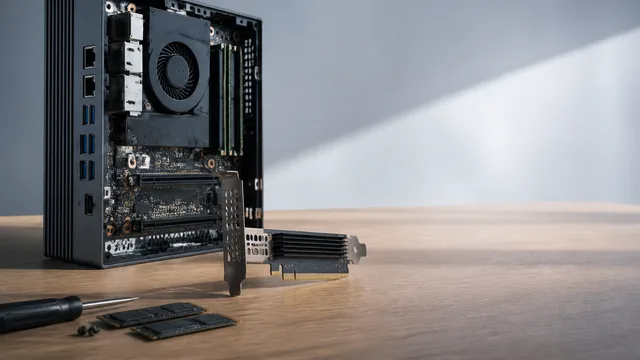
Minisforum MS-03 Teardown: The PCIe x4 Slot Nobody Promised
Level1Techs tested the Minisforum MS-03's expansion slot and found PCIe 4.0 x4, not the x8 some reports promised. Here's what the geometry means for buyers.
What's Breaking Through
Budget processors that deliver competitive performance and value, challenging premium-priced alternatives.
23 articles in this topic · tracking 9 signals across 2 source feeds
About this topic
The processor market is experiencing a significant shift toward value-oriented computing, where budget-friendly CPUs are increasingly matching or exceeding the performance of much more expensive flagship models. This trend has emerged as both Intel and AMD compete aggressively in the mid-range and entry-level segments, making high-performance computing accessible to budget-conscious builders and gamers. The competitive dynamics have created opportunities for consumers to build capable systems without premium pricing, fundamentally changing what's possible at lower price points.
Intel's recent push with its Plus-series processors exemplifies this strategy, delivering competitive gaming and productivity performance at significantly lower price tags than flagship offerings. Meanwhile, AMD's premium processors, despite their advanced specifications and capabilities, face the challenge of justifying their high costs when more affordable alternatives can deliver comparable real-world performance for many use cases. This dynamic is reshaping how consumers evaluate processor purchases, forcing manufacturers to demonstrate clear performance advantages to justify premium pricing. The focus on cost-effective computing has also prompted retailers like Walmart and Amazon to compete on legacy hardware pricing, creating additional opportunities for budget builders to find value.
This shift reflects broader changes in hardware selection criteria and PC building practices. Rather than automatically pursuing the most expensive or highest-specced components, builders are increasingly prioritizing performance per dollar and practical cooling requirements alongside raw benchmarks. The emphasis on performance optimization within budget constraints encourages more thoughtful hardware selection, where the specific use case—whether gaming, productivity, or general computing—drives purchasing decisions rather than brand prestige or flagship status. As this trend continues, the CPU market is becoming more democratic, with manufacturers needing to justify premium prices through tangible advantages rather than market positioning alone.
BuzzRAG Coverage
Level1Techs tested the Minisforum MS-03's expansion slot and found PCIe 4.0 x4, not the x8 some reports promised. Here's what the geometry means for buyers.
Level1Techs strapped two ASUS R9700 GPUs to a Framework Desktop using a Broadcom PLX bridge, hitting 192GB total memory for local AI workloads. Here's what worked.
Tech Notice built a $22,000 Intel Xeon 696X workstation to challenge AMD Threadripper. Here's what the benchmark results actually revealed about Intel's HEDT gap.

Wendell at Level1Techs tears down the Gigabyte MW94-RP0 Xeon 6 E-ATX board: six PCIe Gen 5 slots, DDR5-6400, and some real airflow warnings.
AMD's EPYC 8005 Sorano upgrades SP6 with Zen 5 cores, 84-core density, and 96 PCIe Gen 5 lanes—but the ecosystem remains niche and memory costs sting.

Bolt Graphics is a US GPU startup with a RISC-V based, user-expandable card targeting content creators before gaming. Here's what we know so far.
AMD holds all 15 top CPU bestseller spots. Nvidia's RTX Spark enters ARM computing. A new memory standard may outperform a CPU upgrade. Here's what's actually happening.

NVIDIA's RTX Spark N1 and N1X laptops impressed at Computex 2026—but battery life claims, locked drivers, and AMD competition complicate the story.
A PC build experiment reveals an uncomfortable truth about 2026 hardware markets: sometimes the discount bin beats the cutting edge.
Intel's Core Ultra 250K at $199 matches or beats AMD's $500+ 9950X in real-world creative workloads. The benchmarks tell an unexpected story.
Intel's $299 Core Ultra 7 270K Plus outperforms AMD's twice-as-expensive 9950X in creative workflows. We break down the benchmarks and the conspiracy.
AMD's dual 3D V-Cache flagship seems engineered for users who don't exist yet. Level1Techs tests the $900 processor nobody asked for but some will buy anyway.
MetaComputing's new ARM mainboard for Framework 13 promises modular computing's future. Tech journalist Jeff Geerling tests whether it delivers.

Level1Techs' Wendell builds two systems around Intel's Core Ultra 5 and 7 Plus chips—and the gaming performance gap is shockingly small.
Tech Notice's 2026 creator PC build with Ryzen 9 9950X 3D hits a motherboard compatibility snag. Here's what went wrong and what actually matters.
Benchmarks show older Nvidia 40-series GPUs outperforming newer 50-series cards in 3D rendering. Here's what 3D artists need to know before upgrading.
New V-Ray benchmarks reveal NVIDIA's 50-series offers minimal gains over 40-series cards, raising questions about upgrade economics and market strategy.
Level1Techs built a custom 64-core Threadripper PC for Linux kernel maintainer Greg Kroah-Hartman. Here's why every component choice matters.
Tech Notice's PC teardown reveals surprising truths about component depreciation, thermal throttling, and the hidden costs of incompatible parts.

The BTF standard relocates power connectors to improve airflow and cable management. Level1Techs demonstrates the practical benefits beyond aesthetics.
Tech Notice proves you can still build a powerful PC in 2026 despite RAM shortages—for less than Apple's Mac Mini M4 Pro costs.
Mini PCs could replace gaming consoles, but GPU form factors are the real bottleneck. Why the industry needs new standards before the next component shortage.
Explore the 9850X3D's 7% performance boost. Is it worth upgrading? Dive into gaming benchmarks and CPU trends.
6 of 9 signals from source feeds

Latest from Tom's Hardware
Hacker News Newest
Hacker News Newest
Latest from Tom's Hardware
Latest from Tom's Hardware
Latest from Tom's Hardware
These are external articles in the Tech desk that match this topic. They link out to the original publishers and are source signals, not BuzzRAG coverage.