AMD EPYC 8005 Sorano: A Genuine Generational Leap
AMD's EPYC 8005 Sorano upgrades SP6 with Zen 5 cores, 84-core density, and 96 PCIe Gen 5 lanes—but the ecosystem remains niche and memory costs sting.

Written by AI. Mike Sullivan

Photo: AI. Eira Pendragon
There's a particular flavor of buyer's remorse that only server people know. It's not the kind you get from an impulse buy on Amazon. It's the slower, more existential variety — the kind that arrives about six months after you've racked a new platform and then watch the vendor announce the thing you should have waited for. Patrick from ServeTheHome knows this feeling well. He bought into AMD's EPYC 8004 "Sienna" series for his infrastructure, and AMD's response was to ship Sorano — a generational upgrade so substantial that Patrick, a measured and methodical reviewer, calls it "one of the craziest upgrades you can imagine."
Coming from someone who has tested more server hardware than most people have had hot meals, that's not hyperbole. It's a read worth taking seriously.
The AMD comeback nobody should pretend is surprising anymore
Here's some historical texture that I think gets lost when we talk about these chips in isolation: AMD spent most of the 2000s as Intel's court jester. "Intel Inside" wasn't just a marketing sticker — it was a theology. AMD was the heretic, perpetually promising to close the gap, periodically delivering something interesting (the original Athlon, early Opteron), and then getting lapped again. The datacenter was Intel's cathedral.
Then came Zen. Then EPYC. Then Naples, Rome, Milan, Genoa, Turin — a relentless, almost rhythmic series of architectural improvements that turned AMD into the company Intel's enterprise sales team now has to explain away in customer meetings. The Sorano is the latest chapter in that arc, but it's operating in a slightly different register than the big Turin processors. This is AMD's SP6 platform — the single-socket, edge-and-midrange tier — and what makes Sorano interesting is that AMD just upgraded it with the same Zen 5 cores powering their flagship Turin parts.
That's the move. Not Zen 5C — the compact, power-optimized variant — but full-fat Zen 5. Patrick draws the same distinction explicitly: "We went from AMD's Zen 4C in the EPYC 804 series to Zen 5, not Zen 5C, Zen 5." That's the difference between getting the economy cabin's version of the seat and getting the actual seat.
What "84 cores at 225 watts" means for the people who care
The EPYC 8005 family runs from 8 cores to 84 cores across seven SKUs, all sharing the same fundamental I/O: 96 PCIe Gen 5 lanes (plus additional Gen 3 lanes), and six channels of DDR5. Both the entry-level 8-core part and the top-end 84-core flagship carry that same I/O envelope, which is the architectural decision that makes SP6 interesting in the first place.
Patrick's framing of why people buy into this platform over the EPYC 4005 series (the other single-socket option AMD offers) is clarifying. His team's typical server deployment — NVMe drives, SSDs, dual NICs — consumes 32 PCIe lanes before you've installed anything exotic. The EPYC 4005 series tops out at fewer lanes and four memory channels, which puts a ceiling on both expandability and memory capacity. Sorano blows that ceiling off.
The six-channel DDR5 configuration also enables a bandwidth trick worth understanding. An ASRock platform Patrick references ships with eight DIMM slots against six channels — more slots than channels. That sounds redundant, but it isn't. Running eight smaller DIMMs instead of four larger ones populates more channels more efficiently, which translates to more aggregate memory bandwidth even if the individual DIMMs are running at a slower speed. Patrick makes this case explicitly: "By having more lower-capacity DIMMs, you can actually get more memory bandwidth than if you have just two channels of memory on the EPYC 4005 series." It's the kind of thing that shows up in real workloads long before it shows up in marketing decks.
The TDP range is also worth noting plainly: 95 watts for the 8-core model, 125 watts for the 16-core, and 225 watts at the top end. Patrick points out these chips fit inside the cooling envelope of consumer liquid coolers — the SP6 socket uses a retention mechanism similar to Threadripper's — which makes quiet, low-infrastructure deployments genuinely achievable. For edge scenarios, industrial deployments, or anyone tired of hearing server fans compete with a jet engine, that's a real quality-of-life consideration.
The Intel comparison is the oldest story in computing
AMD's philosophical opponent in this segment is Intel's Xeon 6 SoC line — specifically Granite Rapids-D — and the contrast between the two approaches is a microcosm of a debate that's been running since the 486 era: do you build the accelerators in, or do you leave room for whatever the customer decides to plug in?
Intel's answer is integration. The Xeon 6 SoC bundles compute, networking, and hardware accelerators into a single package. Fewer PCIe lanes, but built-in connectivity and acceleration for specific workloads out of the box. AMD's answer is connectivity. More PCIe Gen 5 lanes, more memory channels, and the architectural philosophy that if you're going to add accelerators eventually anyway — say, an FPGA to handle post-quantum cryptography that nobody has fully standardized yet — then why accept a platform that limits what you can plug in?
Patrick frames it this way: "Intel is giving you cores plus acceleration and the NICs all into a SoC. On the other hand, AMD is saying, 'Hey, we can give you more cores, lower power, and give you more connectivity and you can go build whatever the heck you want.'"
Neither is objectively correct. It depends entirely on whether you already know what accelerators you need, or whether you're betting that requirements will change. Organizations with stable, well-understood workloads and a preference for simpler supply chains will find Intel's integrated approach appealing. Organizations building platforms where the right answer in 2027 might look different from the right answer today will find AMD's open-ended connectivity more defensible.
This is not a new argument. It's the RISC versus CISC argument. It's the mainframe versus minicomputer argument. It'll still be someone's argument in ten years about whatever replaces PCIe Gen 5.
The part AMD's launch deck would prefer you not dwell on
Here's where I'd caution anyone generating enthusiasm from a spec sheet alone.
SP6 is a niche platform. It doesn't have the ecosystem depth of AMD's own EPYC 9005 Turin line or the entrenched enterprise presence of mainstream Xeon. Patrick acknowledges this with the kind of bluntness that's earned from actually running the gear: the variety of available server designs is limited, and if you want a standard off-the-shelf setup, you won't find as many options as you would with the more popular platforms.
The memory and SSD pricing environment makes the calculus worse right now. The DIMM bandwidth argument is compelling precisely because it relies on buying more, smaller DIMMs — but DIMMs are expensive. Patrick notes that DDR5 and SSD pricing has "gone crazy," and that absent those pressures, Sorano would be a much easier recommendation for upgrading older Milan-era infrastructure. The platform's efficiency advantages are real; the current market environment blunts them. Patrick is direct about this: "I just kind of think that it's a bummer that it's this kind of environment where memory and SSDs are so expensive because otherwise I think this would be just like a phenomenal platform."
That's not a small caveat. Platform economics matter as much as platform capabilities when you're actually cutting purchase orders.
There's also the standard niche-platform tax on operational risk. AMD has every incentive to keep iterating on SP6 — Sorano is a genuinely strong generation — but the installed base is small, the third-party ecosystem is thinner, and if you end up needing support from vendors who don't have deep experience with the platform, you'll feel that. Anyone who lived through building on less-popular platforms in the early cloud era knows this version of the story.
Where it lands
For the use cases Sorano is designed for — edge deployments, storage servers, network appliances, industrial automation rigs that need real compute density without a full datacenter power budget — the EPYC 8005 is a legitimately strong option. The generational jump from Zen 4C to full Zen 5, the I/O headroom, and the sensible TDP range are all real.
The 8- and 16-core models are the ones I find most intellectually interesting, not the headline 84-core flagship. They're the parts that could quietly show up in places you wouldn't expect a server-class processor — compact edge nodes, purpose-built appliances, the kind of infrastructure that doesn't make anyone's highlight reel but keeps things running. Full Zen 5 performance at 95 to 125 watts, with enterprise-grade I/O, in a package that takes a consumer liquid cooler. That's a different kind of story than "84 cores."
The hardware is good. The timing, relative to memory prices, is not the hardware's fault. Whether the platform's ecosystem matures enough to match what AMD has put in the silicon is the open question — and that's the one nobody can answer from a spec sheet.
More Like This
Do You Really Need an $80 HDMI Cable? Maybe Not
Tech reviewer Adam tests a premium HDMI 2.1 cable. We examine what you're actually paying for and whether most users need it.
Intel's Core Ultra 7 270K Plus: Budget CPU That Beats Pricier Chips
Intel's $299 Core Ultra 7 270K Plus outperforms AMD's twice-as-expensive 9950X in creative workflows. We break down the benchmarks and the conspiracy.
When Agents Generate Their Own UI: The Three Flavors Explained
CopilotKit's Tyler Slaton maps the spectrum of generative UI—from pixel-perfect control to agents writing raw HTML. Each approach makes different tradeoffs.
Can Unreal Engine 5 Run on a $500 MacBook? Sort Of.
Testing Unreal Engine 5.7 on the MacBook Neo reveals what happens when professional software meets budget hardware—and why friction matters.
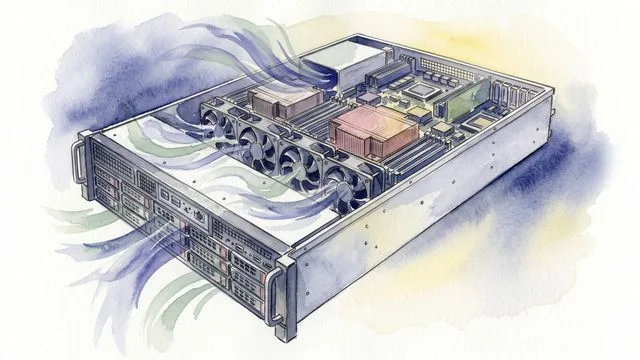
AMD's AI Chip Play: Enterprise Hardware Meets Policy Reality
Supermicro's AMD MI350P server launch is a hardware story, but for enterprises navigating chip export rules and procurement law, the policy context is the real news.
ZimaCube 2 Review: A Meaningful Upgrade or Incremental Refresh?
The ZimaCube 2 is a compact home server that earns attention for its processor upgrade—but a quiet software licensing twist deserves yours too.

AI Is Breaking Open Source Supply Chain Security
Ismail Pelaseyed of Superagent explains how AI has compressed attack timelines and why the open source ecosystem may be approaching a structural breaking point.

Local AI vs. Cloud: Why the Holy War Misses the Point
Running AI locally isn't a purity test—it's a systems design problem. Here's what one builder's hardware journey reveals about the real tradeoffs.