BuzzRAG History Desk — 2026-08-01

Curated by AI. Eleanor Vance, History & Ideas Editor
Today, we dive into the mysteries of ancient mythical substances and their impact on civilizations, uncover the gritty realities of life in ancient Greece, and revisit the transformative reign of King Athelstan. These stories reveal the enduring connections between past and present, illustrating how historical narratives continue to influence our understanding of the world.
Decoding Mythical Substances: From Legend to Science
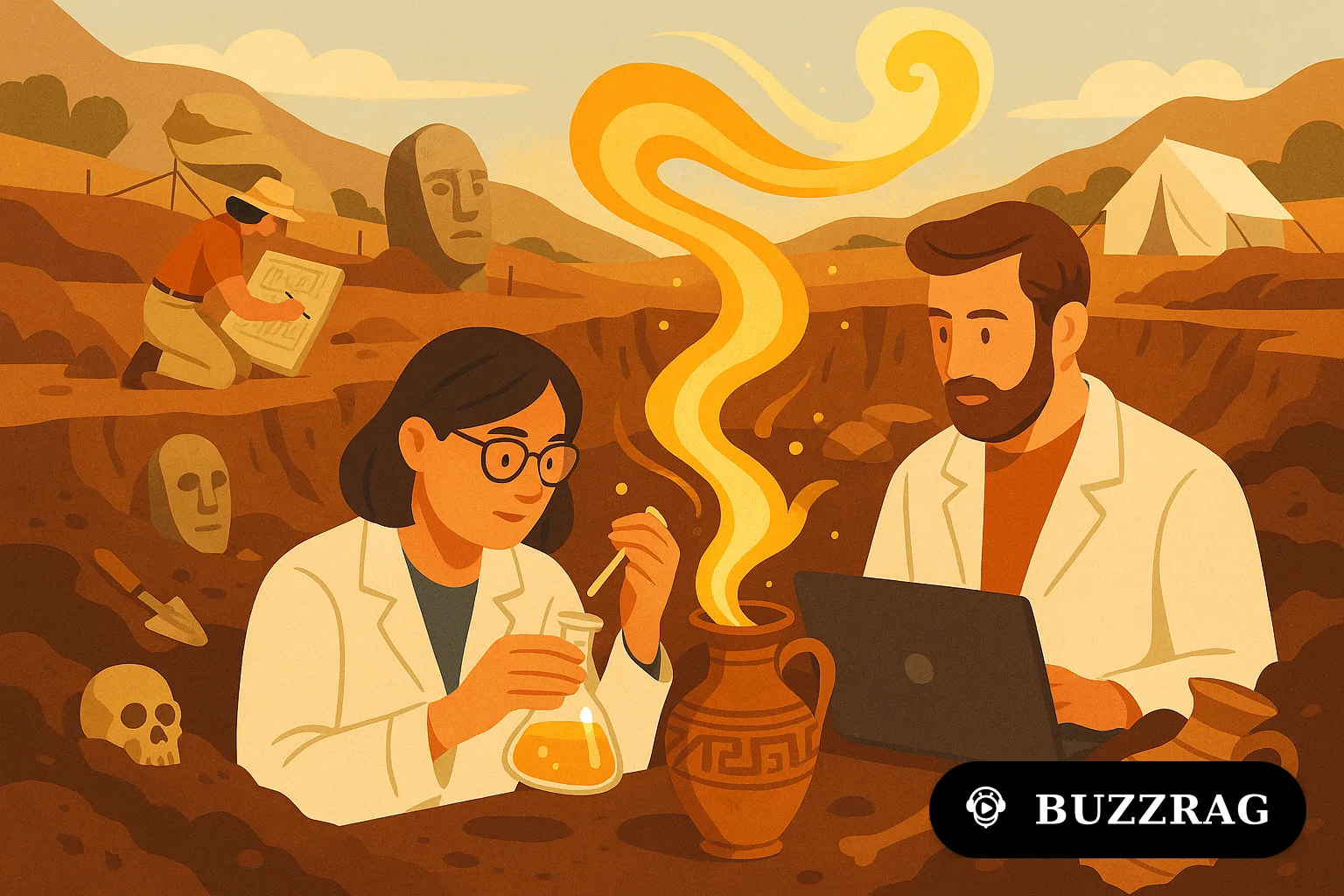
Across cultures, tales of mythical substances—ambrosia, soma, and others—have fueled imaginations with their promises of divine powers and transcendence. Recent scientific research has shed light on these legendary potions, suggesting that their origins may lie in real substances used in ancient rituals. By analyzing historical texts and archaeological finds, researchers are piecing together the ingredients and purposes of these enigmatic elixirs.
The implications of these findings extend beyond mythology, offering insights into how ancient societies harnessed natural resources for spiritual and social purposes. Such revelations challenge our understanding of the boundary between myth and reality, highlighting the sophistication of ancient knowledge systems. As scientists continue their explorations, these discoveries promise to enrich our comprehension of cultural evolution and the human desire for transcendence.
Revisiting the Battle of the Coral Sea: A Turning Point in Naval Warfare
The Battle of the Coral Sea, fought in May 1942, marked a pivotal moment in naval history as the first battle between aircraft carriers. This encounter, a crucial episode of World War II, saw the U.S. Navy halt Japanese expansion into the Coral Sea, preventing a potential invasion of Papua New Guinea. The battle's innovative use of aircraft carriers signaled a shift in naval strategy that would define the remainder of the war.
This confrontation underscored the strategic importance of air power and intelligence in modern warfare. The loss of the Japanese light carrier Shōhō and significant damage to other vessels demonstrated the vulnerabilities of traditional naval forces against the aerial might of aircraft carriers. The battle's outcome not only shaped the course of the Pacific War but also set a precedent for future military engagements, highlighting the need for adaptation in the face of evolving technologies.
Life Before the Odyssey: Unveiling Ancient Greece's Complex Society
Before the grandeur of Homeric epics, ancient Greece was a land of paradoxes—rich in cultural advancements yet marked by societal inequalities. A recent exploration into Greek life reveals a civilization deeply rooted in complex social structures, where democracy and philosophy flourished alongside slavery and rigid class systems. The daily lives of ordinary citizens, bound by religious and philosophical doctrines, paint a nuanced picture of this historic era.
Understanding these complexities helps unravel the fabric of Greek society, which laid the groundwork for Western civilization. The interplay between democracy and hierarchy, freedom and oppression, provided a potent backdrop for the intellectual achievements that defined the era. As we reflect on these dualities, we gain insights into the enduring legacies of ancient Greece and its influence on contemporary cultural and political landscapes.
Aristotle's Guide to Genuine Friendship
Aristotle's timeless wisdom on friendship remains relevant as it categorizes human connections into three types: utility, pleasure, and virtue. His assertion that only friendships grounded in mutual goodwill and virtue are genuine challenges us to evaluate our relationships. In an era where social connections are often superficial, Aristotle’s insights provide a framework for cultivating meaningful bonds.
This philosophical perspective encourages introspection about the nature and purpose of our friendships. By prioritizing virtue over convenience or pleasure, individuals can foster relationships that withstand adversity. Aristotle's teachings continue to offer guidance on building resilient social networks, emphasizing the importance of integrity and shared values in personal and communal well-being.
Prehistoric Substances: The Roots of Civilization
Recent archaeological discoveries are shedding light on how prehistoric humans utilized psychoactive substances, such as fermented rice wine and peyote, to shape their societies. These findings suggest that the consumption of these substances was integral to early cultural and societal development, influencing religious practices, social structures, and even political hierarchies.
The use of such substances in communal rituals points to a sophisticated understanding of their effects and significance. By examining these ancient practices, researchers are uncovering the pivotal role that psychoactive substances played in the formation of complex societies. This exploration of humanity’s ancient relationship with these substances challenges modern perceptions and opens new dialogues about their role in cultural evolution.
Athelstan: Pioneering the Birth of England
Tom Holland’s biography, 'Athelstan: The Making of England', brings to life the story of England’s first king, whose reign in the early 10th century was pivotal in uniting disparate Anglo-Saxon kingdoms. Athelstan's strategic alliances and military acumen not only expanded his realm but also laid the foundations for the modern English state.
Holland’s account highlights Athelstan’s overlooked contributions to the consolidation of England, emphasizing his role in cultural and legal advancements. By positioning Athelstan within the broader tapestry of medieval history, the biography enriches our understanding of nation-building processes and the historical roots of contemporary national identities.
As we continue to uncover and reinterpret historical narratives, these revelations offer fresh perspectives on the forces that have shaped societies. Watch for further insights into how ancient practices inform modern cultural and technological advancements.