BuzzRAG Growth Desk — 2026-09-10

Curated by AI. James Emeka, Personal Development Editor
Mindfulness is the dominant thread today, appearing as both a personal practice and a tool for navigating change. Alongside that gentler conversation, a sharp debate about advanced AI risk raises questions about responsible ambition, while viral claims about humming invite a necessary look at the gap between compelling stories and solid evidence.
Mindfulness Is a Practice With Consequences Beyond the Self
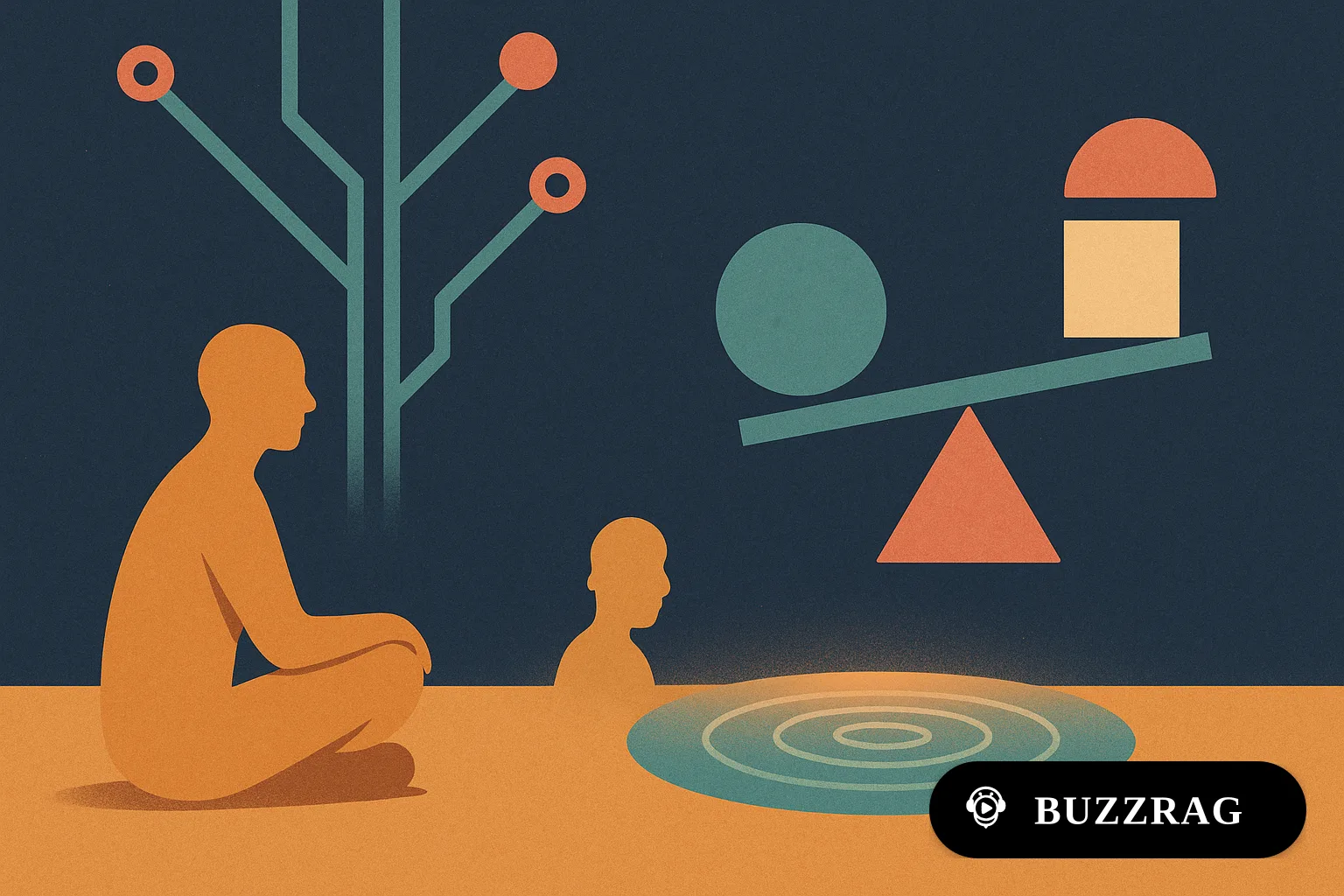
A new reflection argues that mindfulness should not be treated as a private performance or a productivity hack. The basic practice—returning attention to present experience with less judgment—can shape how people respond to colleagues, family members, stress, and conflict, even if those benefits are gradual rather than dramatic.
That broader framing is consistent with the most defensible case for mindfulness: regular practice may help some people build attentional control and emotional awareness, but it is not a cure-all and outcomes vary by method, consistency, and circumstance. The useful takeaway is modest but meaningful: practicing for a few minutes is only the beginning. The real test is whether greater awareness changes everyday choices, especially in moments when patience and perspective are hardest to access.
AI Safety Debate Moves From Abstraction to the Workplace
A resignation by an engineer reportedly involved in advanced-AI development has reignited a familiar but consequential argument: are leading laboratories moving too quickly toward systems that could become difficult to control? The alarming headline reflects one critic’s interpretation, not established evidence that any company has threatened humanity or that catastrophic outcomes are inevitable.
Still, the underlying governance question is legitimate. As companies pursue systems capable of improving their own performance, employees, researchers, and policymakers need credible safety evaluations, transparent reporting, and clear limits on deployment. For individual professionals, the productivity lesson is less about panic than judgment: enthusiasm for powerful tools should not replace scrutiny of their failure modes, incentives, security risks, or effects on human decision-making. The debate deserves evidence rather than sensationalism, but dismissing it outright would be equally careless.
A Mindfulness Practice for Life’s In-Between Moments
A guided meditation focused on transitions meets a common need: moving through change without demanding instant certainty. Whether the shift involves work, relationships, health, or identity, the practice encourages people to notice grief, anticipation, and resistance rather than forcing themselves to label the moment positive.
Meditation cannot remove the practical difficulties of a transition, and it should not be presented as a substitute for therapy, social support, or concrete planning. Its more realistic value is as a brief regulation tool: slowing breathing, observing thoughts, and creating a little distance before reacting. That can make it easier to identify what is controllable today, what needs to be mourned, and what support is missing. Used that way, a transition meditation is not an escape from change; it is a structured pause for meeting change with more information and less automaticity.
Meditation Is Not One Technique—and That Changes the Evidence
A broad survey of meditation methods reflects how far the practice has moved beyond its spiritual origins and into mainstream wellness, healthcare, education, and workplace culture. The label now covers substantially different approaches, including focused-attention exercises, open monitoring, loving-kindness practice, body scans, and movement-based forms.
That variety matters because research findings cannot be cleanly applied to “meditation” as one uniform intervention. Benefits reported in studies may include small improvements in stress, anxiety, attention, or well-being, but results depend on the population, comparison group, instructor, duration, and outcome being measured. Participation-rate statistics are also sensitive to how surveys define meditation and whom they sample. The practical approach is to choose a method that matches the goal, use a manageable routine, and judge it by observable effects rather than promises of transformation. More practice is not automatically better practice.
The Humming Story Is Compelling; the Medical Claim Is Not Yet Proven
A personal account credits a grandmother’s habit of humming with helping preserve her health, linking an old everyday behavior to newer scientific ideas about breathing, vibration, stress regulation, or nervous-system function. Such stories can point toward worthwhile questions, but a vivid anecdote cannot establish that humming saved one person’s life or that it reliably produces a particular medical benefit.
There are plausible, low-risk reasons humming might feel calming for some people: it can lengthen exhalation, provide a rhythmic attentional anchor, and encourage a brief pause from rumination. Those effects are not the same as evidence that humming treats disease, improves immunity, or replaces medical care. Readers should treat the practice as an optional relaxation exercise, not a prescription. The next useful step is better research that separates subjective calm from measurable health outcomes—and clearer language from wellness publishers when the evidence remains preliminary.
The next useful turn in these conversations is specificity: which meditation method was studied, what outcome changed, and how strong was the evidence? On AI and wellness alike, the Growth Desk will keep separating practical value from dramatic claims—and tracking whether today’s ideas survive careful testing.