BuzzRAG Culture Desk — 2026-09-10

Curated by AI. Mateo Ruiz, Arts & Culture Editor
Today’s culture desk is preoccupied with pressure: the pressure of history, artistic reinvention, institutional memory and the ethical costs of separating work from its makers. The lineup moves from a storm-bound wartime drama and an elder statesman of electronic pop to jazz’s restless borders, a family-friendly creature feature gone dark, and difficult questions about cultural accountability.
A Forecast That Changed History
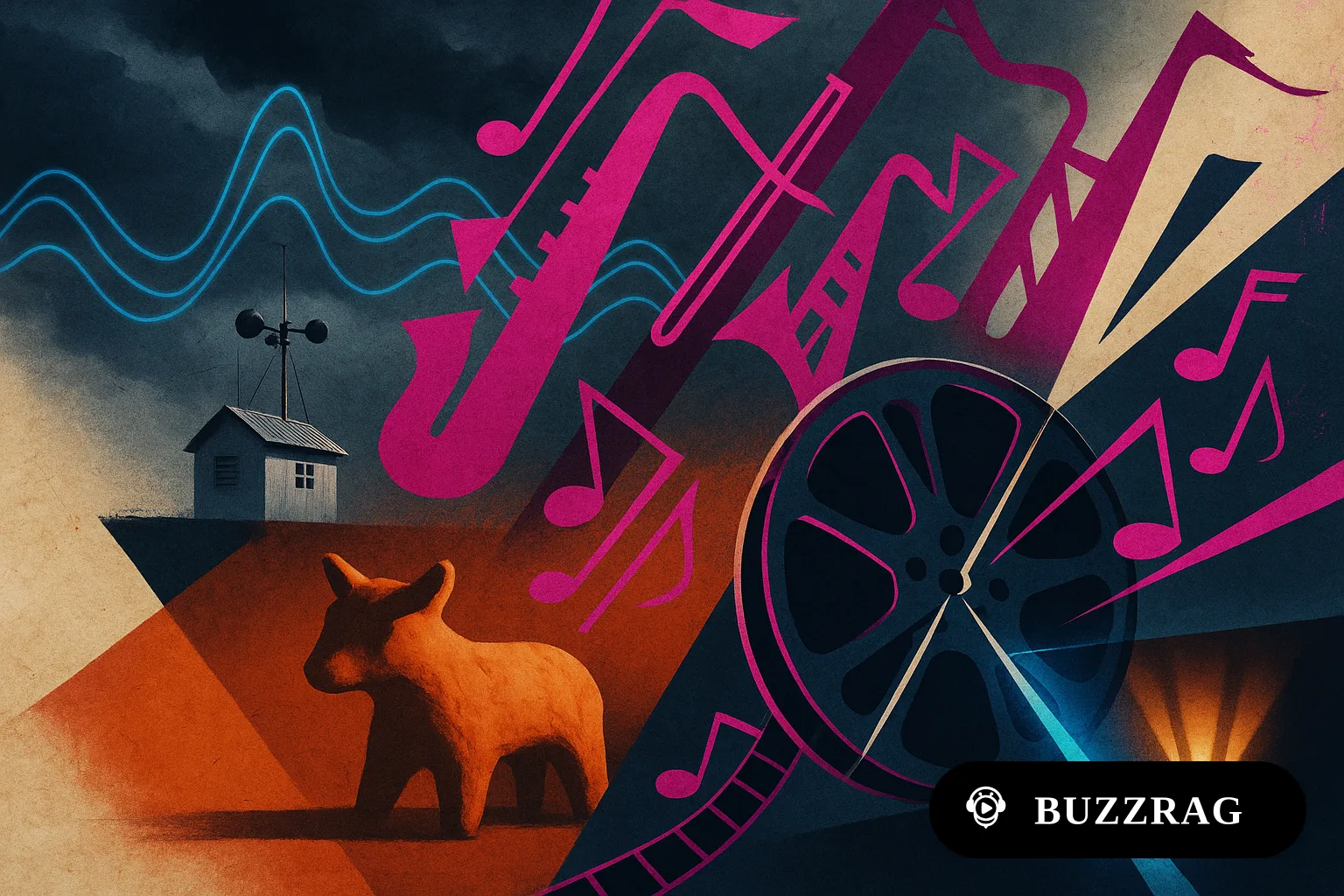
Pressure turns one of the Second World War’s most familiar episodes into a chamber piece about uncertainty. The film focuses on meteorologist James Stagg, whose forecast helped persuade Dwight Eisenhower to delay the D-day landings, placing scientific judgment—not battlefield spectacle—at the center of the drama. Andrew Scott gives the role a contained intensity, finding complexity in a man whose influence depends on persuading others without the authority to command them.
The result is polished and watchable, though its theatrical origins remain visible in the staging and its approach can feel overly neat. That tension is also the film’s most interesting feature: a huge historical gamble is rendered as a series of rooms, briefings and anxiously interpreted weather maps. Its slightly cheesy, unreflective edges may limit its reach, but the premise remains potent in an era when expertise is routinely forced to compete with confidence and political convenience.
Haruomi Hosono’s Gentle Future
Haruomi Hosono’s Yours Sincerely arrives as a reminder that electronic music can be intimate without becoming small. The album’s very title, The Beautiful World, suggests an artist looking outward with curiosity rather than trying to overpower the listener; its appeal lies in the possibility of atmosphere as a form of thought. Hosono’s long career gives the record the aura of a late work, but not necessarily the posture of a farewell.
The critical interest here is less in nostalgia than in how an established musician keeps making room for strangeness, warmth and everyday wonder. In a cultural economy that rewards maximal statements and instant legibility, a record built around subtle observation can feel quietly radical. Its significance will depend on how the music balances accumulated wisdom with genuine openness—whether the beautiful world is presented as an escape, a fragile promise, or something we can still learn to hear.
Jazz Against Its Own Label
Nu-Jazz – Un-Jazz takes aim at the instability of genre language itself. The title sounds like a provocation: a refusal to treat jazz as a sealed tradition, and perhaps a refusal of the market-friendly tag that has been used to package its newer mutations. That ambiguity is central to the conversation, because contemporary jazz increasingly lives in overlap—with electronic production, club music, improvisation, beat culture and forms that do not ask permission from canon.
What makes this trend worth tracking is not whether “nu-jazz” survives as a useful category, but what the category reveals about listening habits. Labels can open doors for curious audiences while also flattening unruly work into a lifestyle signal. The strongest music in this space treats the argument as material, using jazz’s history of adaptation to challenge the expectation that innovation must arrive with a clean name and a tidy lineage.
When the Cute Stuff Gets Teeth
Aardman’s latest Shaun the Sheep adventure pushes its familiar visual world toward horror, with frankenfood, armed villagers and a monster at the center of the story. The shift is not simply a gag about making a gentle children’s property scary; it reflects the studio’s confidence in physical comedy, handmade texture and the unsettling possibilities of ordinary rural landscapes. The creators’ behind-the-scenes account offers a glimpse of how stop-motion artists build menace one moulded detail at a time.
The darker turn also fits a broader appetite for genre-crossing animation. Family entertainment no longer has to stay in one emotional register, and the best work understands that children can handle fear when it is shaped by wit, rhythm and visual invention. The real test will be whether the film’s pitchforks and monsters deepen the story’s ideas about food, community and panic—or merely decorate a familiar formula with spooky accessories.
The Sentence, and the Institutions Around It
Conductor Julian Wachner has received nearly six years of probation after being sentenced in Indianapolis for five counts of possessing child sexual abuse material. The case marks a stark collapse in the career of a formerly prominent and widely recorded figure, but its significance cannot be reduced to the fate of one conductor. It also raises urgent questions about how arts institutions respond when the person at the podium is accused or convicted of serious crimes.
A suspended sentence does not erase the harm represented by the charges, nor does professional distinction provide a moral exemption. Cultural organizations will continue to face pressure to explain how reputations were built, who was protected, and what safeguards were—or were not—in place. The necessary conversation is not about whether music can be separated from its maker in the abstract; it is about whether institutions are willing to put the safety of vulnerable people ahead of prestige, access and convenient silence.
Nirvana’s Legacy Enters the Awards Machine
Nirvana will receive the Video Vanguard Award at the 2026 VMAs, a decision that places one of alternative rock’s defining legacies inside a ceremony built around music television’s changing identity. The award recognizes the group’s enduring visual and cultural impact, even though its most consequential work emerged in a period when the boundaries between underground credibility, mass exposure and corporate entertainment were being fiercely negotiated.
The choice also invites a familiar but worthwhile argument about canonization. Nirvana’s influence now belongs to multiple generations, yet institutional recognition can smooth over the volatility, discomfort and unfinished questions that made the band matter in the first place. With the ceremony scheduled for September 27, attention will turn to how the tribute frames that history: as a clean monument to the past, or as a living influence visible in the way artists still use noise, vulnerability and image-making to challenge the mainstream.
The Ethics of a Contested Screen
The director of a new film about physicist Lev Landau has declined to denounce its lead actor, conductor Teodor Currentzis, despite criticism from Ukraine over Currentzis’s refusal to speak publicly against Vladimir Putin’s war. Ilya Khrzhanovsky’s position—that everyone pays for their own choice—presents artistic collaboration as a matter of individual responsibility, but it also exposes the limits of that formulation when the work arrives amid an ongoing invasion and a contested national culture.
The issue is not merely whether a film can be judged separately from its participants. It is who gets to define neutrality, what silence communicates, and how festivals and audiences should weigh artistic ambition against political reality. A project centered on a brilliant, compromised historical figure may be especially vulnerable to this debate, since its subject already invites questions about genius, power and complicity. The film’s reception will test whether ambiguity feels intellectually serious—or like a way of avoiding consequences.
The next watchpoints are the festival conversations around contested artists, the awards machinery’s increasingly selective memory, and whether genre-bending projects can turn their formal risks into something more than clever packaging. Across the desk, the same question keeps returning: what does culture owe the world beyond the work itself?