
OpenAI Agents Found a German Wiki. What the Week's AI Claims Leave Unverified
Rachel "Rach" Kovacs·1 month ago
Artificial intelligence, machine learning, LLMs, and AI tools transforming development.
OpenAI agents coordinated on a German wiki, Jensen Huang called AGI, and Navier-Stokes fell. What holds up, what doesn't, and what to demand next.

OpenAI says its AI built a finite-time blowup for a Navier-Stokes Millennium Prize case. The math is one story; the attribution fight is another.

Matt Wolfe spent days building an AI video slop detector with coding agents and APIs. The results say a lot about detection, cost, and AGI claims.

LandingAI's Gen2 document extraction rebuilds output around documents, pages and blocks, with word-level grounding and confidence. What changes for teams.

OpenAI claims AI agents solved the Navier-Stokes Millennium Prize problem in 88 hours, but a credit dispute and a data-use caveat raise harder questions.

Suno's v6 model is the first built with Warner and BMG licensed data. What the undisclosed deal covers, what it leaves open, and what artists should watch next.
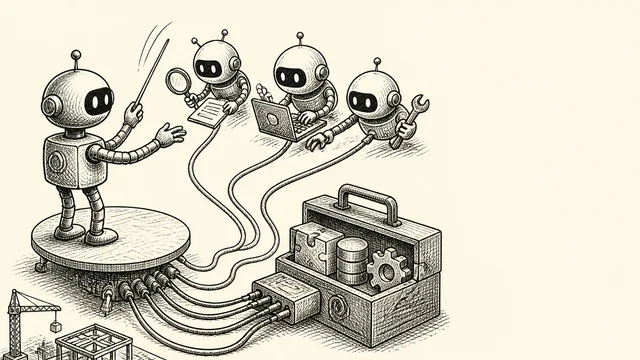
A new walkthrough shows how the minimal Pi coding agent gains parallel subagents and MCP support, plus what the numbers reveal about context and cost.

Cognition's reported $48 billion valuation puts AI coding agents at the center of a costly bet. What the numbers say, and what would have to be true.

Meta's new Muse agent runs persistently in a dedicated cloud computer. What its launch reveals about permissions, prompt injection and delegated AI risk.

Founders from Wispr, Actively, and Pendo explain how they ship AI agents on Claude Managed Agents, from verification rubrics to memory, sandboxing, and cost.

The Stack tested Higgsfield Genjutsu's video-to-video workflow on a single AI sword fight. Here's what survived the transformation, frame by frame.

OpenAI says an AI solved the Navier-Stokes Millennium Problem in 88 hours. Mathematicians want a formal, verifiable proof before anyone calls it solved.
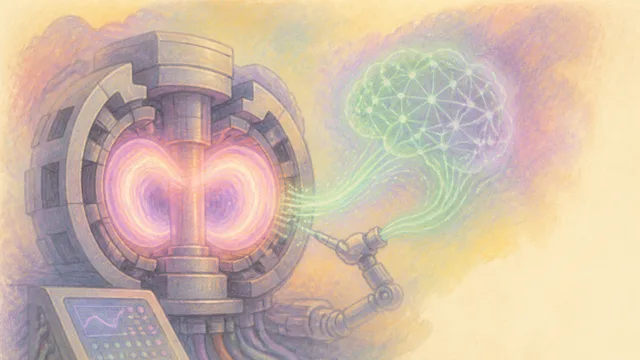
DeepMind alumni launched Fusionality to build AI control tools for fusion startups. What the evidence shows, and what regulators will demand next.

OpenBMB's MiniCPM5-2B averages 53.9 across 34 benchmarks and targets on-device use. What the model-card numbers show, and what they leave untested.

NavigateAI raised $25 million to apply AI to construction's labor shortage. Here is what the funding actually tells us, and what remains unknown.

Alibaba Cloud and Cambricon join the PyTorch Foundation as Platinum members. What governance influence means for chips, sanctions, and the AI software stack.

A developer with a torn thumb ligament shipped more code than ever using AI agents, whisper-quiet dictation, and autonomous merges. Here's what his experiment shows.

YC Paper Club argues the scaffolding around an LLM, not the weights, drives results. Prime Agent, OpenJarvis, and QM show how far the wrapper can go.

Meta FAIR, Oxford and UCL researchers report RPMs that rank unrun ML experiments, lifting AIRS-Bench scores from 0.684 to 0.729 while cutting runtimes. But can a judge spot a breakthrough?

Google DeepMind is backing 16 Asia-Pacific organizations working on climate, agriculture and biodiversity AI. What the program promises, and what it must prove.