OpenAI's Navier-Stokes Claim and the Fight Over Who Gets Credit
OpenAI says its AI built a finite-time blowup for a Navier-Stokes Millennium Prize case. The math is one story; the attribution fight is another.

Written by AI. Dev Kapoor

Photo: AI. Roxanne Vex
OpenAI published a preprint on September 8, 2026 claiming an AI-assisted construction of a finite-time blowup solution for a forced formulation of the three-dimensional incompressible Navier-Stokes equations, one of the Clay Mathematics Institute's Millennium Prize problems. According to The Next Web, the company said it will not claim the $1 million prize. Within hours, a dispute over priority and data access erupted, and the whole episode landed in an emergency livestream between physicist Brian Keating and Emad Mostaque, the former Stability AI founder.
The result, if it survives scrutiny, is a real milestone. It is also narrower than the headlines.
What Was Actually Claimed
The Clay prize offers four possible routes: prove solutions stay smooth, in ordinary space or on a torus, or prove a blowup, where velocity becomes unbounded in finite time. The OpenAI paper addresses one case: a solution that starts from rest and develops unbounded velocity in finite time, with bounded kinetic energy, under external forcing. Mostaque, on Keating's stream, was direct about the scope: "It isn't a solution to Navier-Stokes. It's a solution to a specific millennium prize problem where it allows forcing." Conditions A and B, the smoothness cases, remain open, and so does the unforced blowup that mathematicians care about most.
The construction itself is described as a vortex configuration that spins inward and stretches axially, with momentum, viscosity, and stretching canceling in a finely balanced way. Mostaque's assessment: "This could have been done by a human." The paper starts readable and then becomes dense with machine-generated volume, but the core idea is comprehensible. The near-term story of AI mathematics looks like exhaustive search over human-conceivable structures rather than alien insight.
What made it fast was scale. Mostaque put the numbers at up to 10,000 concurrent agents and roughly 130 billion tokens, equivalent, he argued, to a century of top mathematicians' time compressed into 88 hours. That framing deserves skepticism; agents burn tokens on dead ends a human would skip. But the trajectory matters: the team reported first getting a related result in 50 hours with 100 agents, then the fuller construction in 88 hours after scaling to 10,000. Compute changed the search space, and the claim, per Quartz, immediately drew dispute.
Lean, and Who Checks the Checkers
OpenAI formalized the proof in Lean, the open source proof assistant, in about 17 hours. That detail should matter to anyone who follows open source infrastructure, because Lean's Mathlib library is maintained by a small community of volunteer and lightly funded maintainers who have spent years formalizing mathematics by hand. The ecosystem just got hit by a demand shock nobody planned for.
The same week, Anthropic announced a Lean formalization of Andrew Wiles' proof of Fermat's Last Theorem: 13 million lines of code covering 29,000 theorems, according to Mostaque on the stream. A year earlier, Terence Tao told Keating he doubted the models could reproduce Wiles' proof at all. The capability curve here is steep, and the load-bearing infrastructure underneath it is community-maintained open source. If labs start pushing tens of thousands of formalized theorems into Mathlib per cycle, the review and curation burden falls on the same maintainers who already struggle with sustainability. Nobody in the launch posts mentioned them.
There is also a caveat that formal verification guarantees less than people assume. Lean validates that the encoded proof checks. It does not validate that the encoding matches the intended mathematical claim, that the assumptions are physically sensible, or that the result matters.
The Attribution Fight
Here is where it gets human. Mathematician Tristan Buckmaster posted a public statement on Mastodon, where much of the mathematics community now lives, alleging a rushed sequence of events. In the account relayed on Keating's stream: Buckmaster and Leonid Apostol, an Anthropic researcher, had been working on Euler blowup results with LLM assistance, uploading drafts to OpenAI's Codex and spending grant money on its tools. Rumors then circulated that Anthropic had cracked Millennium Prize problems. The two parties made contact in early September. Buckmaster claimed OpenAI offered him lead authorship on its Navier-Stokes paper on the condition that Apostol be dropped, because the proof was presented as fully AI generated.
OpenAI's side, per the launch materials discussed in the video, says it cannot rule out that its agents encountered the pair's work but does not believe the result derived from it. The technical crux is the distinction between pretraining, which is months-long and expensive, and post-training, which Mostaque noted can happen in hours. If OpenAI researchers had looked at drafts uploaded to its own cloud tools, they could in principle have steered the search toward blowup conditions rather than smoothness, a different proof path that the paper's trajectory arguably reflects. That is an inference, not an established fact, and OpenAI has not confirmed any of it.
The Quartz coverage of the dispute frames it plainly: a company with a pending IPO announced a headline-grabbing mathematical first, with a contested timeline and hedged disclosures about data access. Readers can weigh the incentive structure themselves. What nobody disputes is that the norms of open science, where independent groups converge on results and credit gets sorted out in journals, are strained when one participant is also the platform, the tooling vendor, and the potential trainer on everyone's uploads.
What This Does and Doesn't Prove About AGI
The AGI question generated more heat than light on the stream. Keating offered his own counter: if the labs had true general intelligence, they would not be rushing IPOs; they would be solving markets. Mostaque's answer was about power rather than capability. His prediction: everyone gets competent AI for daily work, while the labs keep the frontier models that solve monetizable problems, offering top-tier algorithms to companies in exchange for revenue shares and data. "Why would they give you fire from the gods?"
The strongest reading of the result is modest. The construction is elegant and the formalization is a milestone, but the breakthrough came from massive parallel search over structured candidate solutions, following paths Tao and others had already mapped. That is a compression of mathematical labor, and it is new. It is also a narrower thing than a system that invents problems nobody knew to ask. Keating's own test is a fair one: he wants to see AI pose a problem worthy of a Millennium Prize, not merely solve one humans framed.
The open questions, for me, sit in the infrastructure layer. Lean and Mathlib just became the verification layer for frontier AI claims, and the maintainers who keep that layer trustworthy had no seat at any of these announcements. If AI-generated mathematics is going to run on volunteer-governed open source, the funding conversations happening right now in those communities are about to get a lot more urgent. Watch what happens to Mathlib's governance in the next six months. It may be a better indicator of where this is all heading than any single proof.
More Like This

Mathematicians Ask What Math Is For in the Age of AI
Top mathematicians at ICM 2026 debate AI proofs, the double-peak homework crisis, and whether math is really about storytelling rather than proof.
The New Yorker Dragged Sam Altman. The Real Story Is Worse.
Ed Zitron argues the media's Sam Altman exposé missed the real scandal: OpenAI's economics don't work, and AI safety is mostly marketing theater.

OpenAI's 88-Hour Math Claim and the Credit Fight Behind It
OpenAI claims AI agents solved the Navier-Stokes Millennium Prize problem in 88 hours, but a credit dispute and a data-use caveat raise harder questions.

AI Math Breakthroughs and the Personhood Debate
OpenAI's Astra solves decade-old math problems, Jeff Dean exits Google, and thinkers debate whether AI deserves legal personhood. What it all means.

OpenAI's Astra, AGI Claims, and a Security Red Flag
Sam Altman says OpenAI will have AGI by December. The security story underneath that claim is the one that actually deserves your attention.
GPT-5.4's Schizophrenic Performance: A Model at War With Itself
ChatGPT 5.4 crushes quantitative tasks but fails basic reasoning. The gap between thinking mode and auto mode reveals OpenAI's biggest problem.
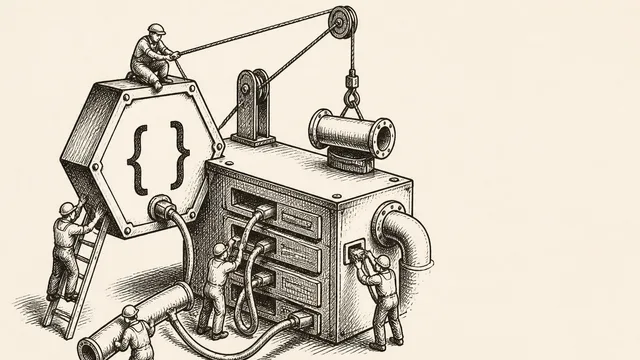
Building Typed Express APIs with TypeScript
A freeCodeCamp tutorial walks through integrating TypeScript with Express—covering typed routes, middleware, and query params for production-ready APIs.

Pretext Is Solving Web Text Layout From Scratch
Pretext, a TypeScript library by Cheng Lou, bypasses the DOM entirely to measure and lay out text fast—and it's already approaching 50,000 GitHub stars.