DeepMinds APAC Climate Accelerator Backs 16 AI Teams
Google DeepMind is backing 16 Asia-Pacific organizations working on climate, agriculture and biodiversity AI. What the program promises, and what it must prove.

Written by AI. Bob Reynolds
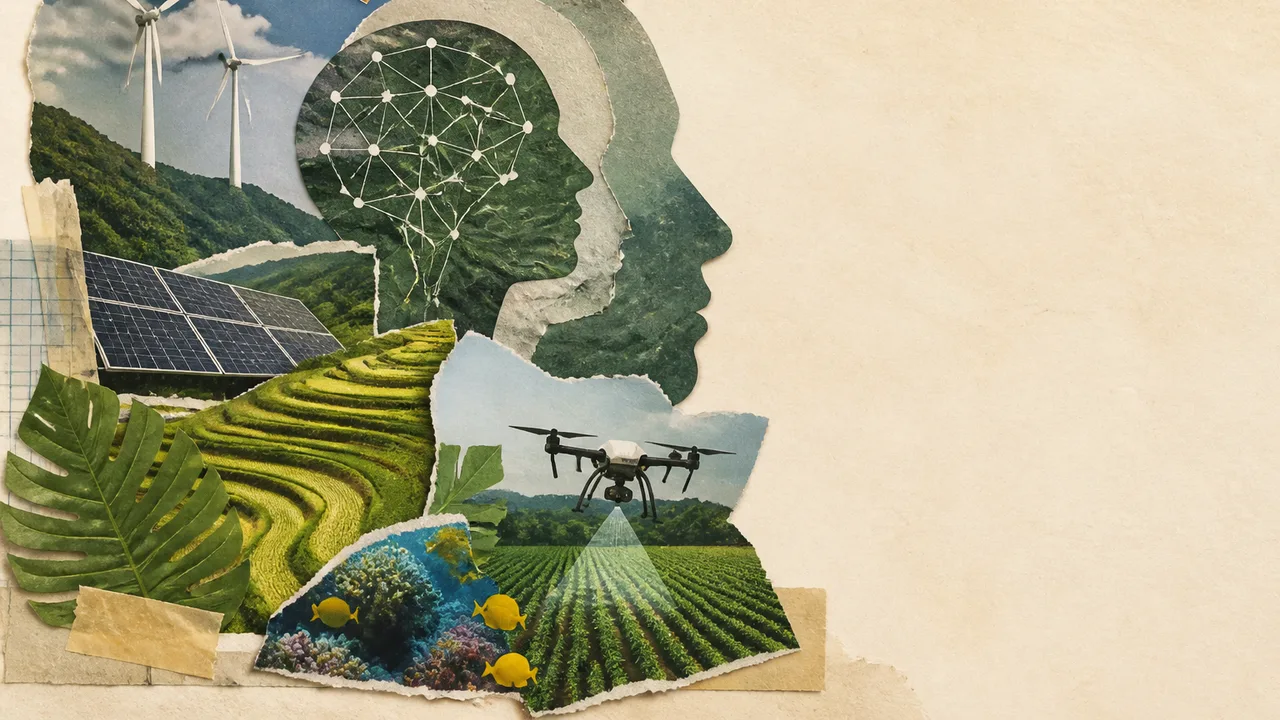
Google DeepMind is backing 16 organizations across Asia-Pacific through a new accelerator program focused on climate, agriculture and biodiversity, according to techbuzz.ai. The company announced the initiative on its own blog, saying it is launching the Google DeepMind Accelerator program in Asia Pacific to tackle environmental risks (see the DeepMind announcement).
Accelerators are a familiar format. Y Combinator ran its first batch in 2005, and nearly every large technology company now operates some version: seed money, mentoring, access to tools, and a demo day at the end. What makes this one interesting has little to do with the format. It has to do with where the money is going and what the funded teams will have to contend with.
Why the Geography Matters More than the Format
Climate AI, as a category, has been dominated by work in North America and Europe. Much of that work optimizes for problems those regions have good data about: satellite coverage, dense weather-station networks, digitized agricultural records. Asia-Pacific is a different operating environment, and the techbuzz.ai report is explicit about this. The region spans sharp differences in crops, weather systems, ecosystems, infrastructure and data availability.
A cyclone forecasting model trained on Atlantic hurricane data has limited use in the Bay of Bengal. A farm-management tool that assumes every field has soil sensors, reliable connectivity and a farmer with a smartphone will struggle across much of the Pacific islands and rural Southeast Asia. The projects DeepMind is funding will be working in places where the baseline data is thinner and the variability is higher. That is harder engineering, and it is also where the need is arguably largest. The region concentrates a large share of the world's smallholder farmers, its coral reef systems, its monsoon-fed agriculture and its coastal populations exposed to sea-level rise.
None of this guarantees the program will work. But it does suggest the selection of geography was the consequential decision, ahead of any choice about models or funding structure.
What the Announcement Does Not Say
The public record is thin, and it is worth being precise about what we know. The report from techbuzz.ai names the participant count (16), the focus areas (climate, agriculture, biodiversity) and the region (Asia-Pacific). It provides no funding totals, no deployment figures and no outcome measurements. It also does not clarify whether the participating projects rely on general-purpose foundation models, specialized models tuned to environmental data, or conventional machine learning of the sort researchers have used for crop yield prediction for two decades.
That last gap is more consequential than it might look. Climate AI is an older field than the current boom suggests. Regression models for yield forecasting, statistical downscaling of climate projections, and satellite-based deforestation detection all predate large language models by decades. When a 2026 announcement says "AI for climate," the word AI covers techniques that range from a simple decision tree to a frontier-scale multimodal model. The right tool depends entirely on the problem, and often the simpler one wins on cost, reliability and interpretability. Which end of that spectrum these 16 teams occupy shapes what they can actually deliver.
The Historical Pattern with Corporate Accelerators
Corporate accelerators have a mixed record, and honesty requires mapping both halves of the ledger.
The optimistic case: large companies do possess assets small teams cannot build alone. DeepMind's own environmental work, including its work on weather forecasting models, gives participants access to expertise and possibly compute and model access they could not otherwise afford. Google's cloud infrastructure and satellite data partnerships could shorten development cycles substantially. Some corporate programs have produced durable companies and, in a smaller number of cases, measurable public benefit.
The skeptical case: accelerator announcements are marketing. The number of participating startups is the metric a program can control; environmental outcomes are weakly correlated with it. Past corporate programs in this vein have, at times, produced press releases and little else. Companies select participants partly for public-relations value, and programs wind down when the news cycle moves on. There is a well-worn sequence here: announcement, cohort of hopeful logos, an anniversary blog post, silence.
I have no evidence this program will follow that sequence, and none that it will break it. The evaluation burden falls on what happens next, and the signals to watch are specific.
How to Judge Whether It Worked
A program like this succeeds if three conditions hold. First, its systems improve real decisions in the field: a farmer plants differently, a conservation agency dispatches patrols differently, a water authority releases reservoir water on better information. Tools that produce dashboards nobody acts on have failed regardless of model quality.
Second, the systems have to work with incomplete, locally specific data. APAC conditions will not be well represented in training sets assembled from global sources. Projects that ship models robust to missing sensors, irregular connectivity and language diversity will outlast projects that assume clean inputs.
Third, cost. The communities expected to use these tools, smallholder cooperatives, local conservation groups, provincial agriculture offices, operate on thin budgets. A tool that requires a subscription priced in US dollars or a persistent satellite uplink is a pilot, not a solution. Affordability at the point of use is the filter most academic-to-field AI projects have historically failed.
Against those criteria, the honest scoreboard for this program today reads: announced, with no public funding figures, deployment numbers or outcome measurements. The score will be written over the next two to three years, if anyone publishes it.
The Uncomfortable Questions for Big Tech Climate Programs
Two tensions sit underneath announcements like this one, and neither is a reason for cynicism on its own.
The first is the accounting question. Google's emissions have grown in recent years, driven largely by the energy demands of data centers powering, among other things, AI. Environmental accelerator programs sit alongside that growth, and observers will reasonably ask how the two balance. A company can fund 16 climate projects and still add emissions faster than its funded projects can offset decisions elsewhere. Both facts can be true at once, and neither cancels the other.
The second is the dependency question. Tools built on a single company's models and infrastructure create relationships that outlast the grant period. That can be fine, or even good, when the company keeps investing and the terms stay favorable. It becomes a problem when a community's flood-warning system depends on a product line that gets discontinued in a quarterly review. Anyone evaluating these projects, funders, governments, the communities themselves, should ask what happens to the tooling if Google loses interest.
What to Watch
The measurable markers are straightforward. Does DeepMind publish funding totals and participant details, or only the headline number of 16? Do cohort teams report deployment: named deployments in named places, with dates? Do any outcome measurements appear, yield changes, hectares monitored, forecast lead times, attributed to the tools? Do the projects' technical approaches get described at a level where a practitioner could judge them?
If the answers arrive over the next couple of years, this program will have contributed something the region's climate response can use. If the record ends with the announcement, that too is a data point, and a familiar one. Asia-Pacific will be living with climate volatility either way; the open question is whether 16 AI teams, backed by one of the world's largest technology companies, can build tools that survive contact with the conditions the region actually has.
More Like This
Anthropic's Claude Routines Targets No-Code Automation Market
Claude Routines lets users automate workflows with natural language instead of drag-and-drop builders. Is this the end of traditional no-code platforms?

AI-Powered Mobile Apps: Faster Development, Familiar Questions
Developer David Ondrej built a 3D iOS app in minutes using AI tools. The speed is real. The question is what happens when everyone can do this.
Private Satellites and AI Are Rewriting How We Watch Earth
Commercial satellite constellations and AI can track forests, ice and fires in near real time. The catch: who can audit the data, and who gets to see it.
Exploring Genie 3: DeepMind's AI World Builder
Genie 3 lets users create AI-generated worlds in real-time. We explore its features, limitations, and potential.

DeepMind WeatherNext 3 Brings 5km Hourly AI Forecasts
Google DeepMind's WeatherNext 3 delivers 5km resolution global weather forecasts refreshed every hour using live satellite data and weather station inputs.

Amazon's Gas Plant Bet Clashes With Its Climate Pledge
Amazon confirmed it's backing a massive Texas gas power plant that could become the US's biggest climate polluter — while still promising net-zero by 2040.

Loop Engineering: Building AI Agents That Improve Themselves
LangChain's Sydney Runkle outlines a four-loop framework for building reliable AI agents. The ideas are older than the branding suggests — and that's the point.

AI Observability Cuts Telecom Faults by 50 Percent
A New Zealand telco reports cutting IT incidents by 50% using AI-driven observability. Here's what that claim actually means—and what it doesn't.