Three Founders Explain How They Build AI Agents on Claude Managed Agents
Founders from Wispr, Actively, and Pendo explain how they ship AI agents on Claude Managed Agents, from verification rubrics to memory, sandboxing, and cost.

Written by AI. Marcus Chen-Ramirez
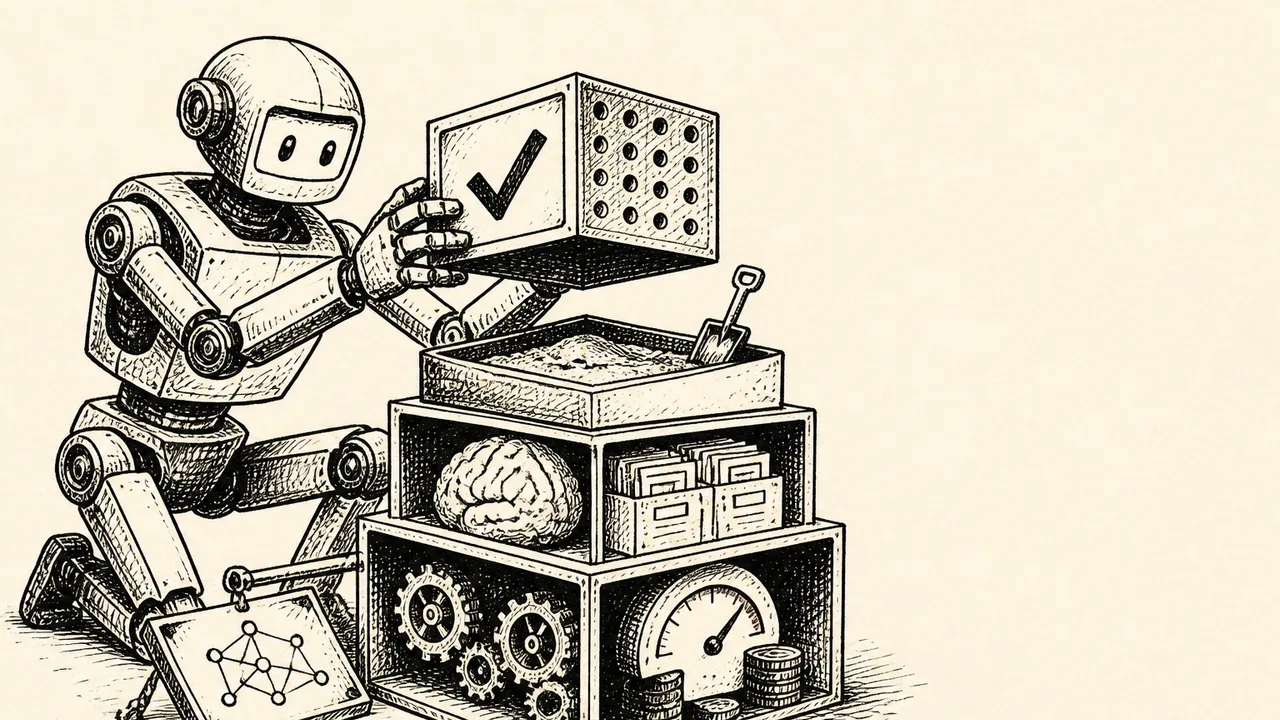
Photo: AI. Eira Pendragon
Wispr built the first version of its meeting assistant in a single day. Actively shipped a cross-account sales intelligence product, Watchtower, in two weeks. Pendo, the analytics vendor, now lets an agent read customers' source code, compare it to live telemetry, and submit pull requests fixing the gap.
All three companies build on Claude Managed Agents, Anthropic's platform for running autonomous agents on managed infrastructure. In a roundtable published on the Claude channel (34 minutes, posted this week), a company interviewer pressed three founders on what actually happened when they moved production workloads onto the platform. The video, How founders build on Claude Managed Agents, is vendor-produced, so treat the enthusiasm accordingly. But the operational details, and especially the complaints, are concrete enough to be worth mining for what agent development looks like in practice right now.
Buzzrag has covered the platform itself and its infrastructure layer before. What this roundtable adds is the customer side: who benefits, what hurts, and where the buy-versus-build line falls.
Three Products, One Pattern
The companies are distinct. Wispr builds meeting software that spans preparation, the meeting itself, and follow-up tasks. Actively runs an agent on every sales account, with Watchtower as a cross-account layer for questions like "what are the top five accounts I should work today?" Pendo's new agent integrates with source repositories, reviews pull requests, flags UX problems before merge, and files instrumentation PRs after merge, plus overnight batch jobs watching for funnel degradation.
The shared pattern is speed. Actively's founder reported going from idea to shipped customer product in about two weeks, with dogfooding over roughly a weekend. Pendo said it had a working solution in under two weeks after several teams had struggled with a homegrown effort. Wispr's founder described building the first version in a day, then scaling the user base "100 to 1,000x over the course of a few weeks." These are self-reported numbers from a vendor-produced video, so read them as best-case marketing-adjacent claims. Still, three independent companies converging on the same two-week figure is a data point about where the bottleneck sits: in the harness, not the model.
That matches the broader shift I've been tracking: the interesting engineering has moved from model intelligence to plumbing. Agentic infrastructure is increasingly what determines whether a product ships.
The Verification Trick: Don't Show Wrong Things
The most transferable idea in the video comes from Wispr, and it is refreshingly modest. Meeting briefs are only useful if they identify the right person; a brief about the wrong Tom is, in the founder's words, "almost destructive." The fix: run an independent verifier agent with a clean context window, grade the output against a rubric (correct LinkedIn? scannable format? right ordering of information?), and if verification fails, show the user nothing.
"You can just choose not to tell people something when you don't know if your information's correct," the founder said. "Help when you can and do not cause harm, or annoyance."
This inverts the usual agent demo culture, where showing something beats showing nothing. For proactive features, silence is a feature. The rubric includes UX criteria, not just factual ones: a five-page pre-read fails even if every fact in it is correct.
The honest caveat, which the founders surfaced themselves, is that verification quality is uneven. An independent agent can check whether a LinkedIn profile plausibly matches an email signature, but it is making a probabilistic judgment, not establishing ground truth. Wispr mitigates by running briefs 24 hours before the meeting, giving a long window for assessment. That works for scheduled meetings and breaks down for anything real-time.
Memory: The Part They Haven't Solved
Actively's memory architecture is the most interesting segment. Per-account agents run for the account's entire lifecycle and build detail that can be indexed and queried efficiently; that memory the company owns and customizes itself. A second layer, org-wide memory, captures company-specific concepts (how a sales team defines ownership, how forecasting works) learned through user interaction, and that layer runs on managed memory. The company's own Salesforce data is, in the founder's telling, "30 different fields that mean the same thing that were deprecated," so the system asks clarifying questions on first use and saves the answers.
Then came the admission that should concern anyone building stateful agents: "I don't think we found a good way to eval given memory." Offline evaluation against live, evolving external state remains unsolved. Pendo hit the same wall with third-party tool calls: evals that depend on a customer's Slack drift over time for reasons outside the company's control, and mocking a customer's Slack workspace is, in the founder's words, not a thing anyone is doing.
This is the gap between the marketing and the practice. Evals are presented as the reliability answer everywhere in this space, including in our coverage of why coding agents need structure. For stateful, mutating systems, the founders here could only describe partial workarounds: trajectory evals, real customer queries as test cases, partitioned eval cohorts for regressions and hard scenarios. None of them claimed a systematic solution.
Cost: The Quiet Leverage Question
The economics discussion was the least polished and therefore the most revealing. Managed agents carry a low infrastructure markup on paper, but the founders listed concrete constraints: no batch mode, coarse cost attribution, few levers. One founder estimated that batch processing would save 50 to 75% on their pre-meeting workloads. Another described the platform's cost structure as "kind of all or nothing" when fanning out across 500 accounts, forcing a switch to cheaper models for everything below the orchestration layer.
Latency is the sibling complaint: pre-warming sandboxes to cut cold starts isn't possible on managed infrastructure, so latency-sensitive products feel constrained. The honest summary from one founder: the platform works well when you need frontier intelligence on hard tasks that run for minutes. "For anything else there are not that many levers."
Note the structural irony: Anthropic hosts a roundtable with its own customers, and the customers use it to deliver a feature request list (batch mode, finer cost telemetry, pre-warmable sandboxes). That is either healthy feedback culture or a sign that the power balance in this relationship runs one way. Both readings are available; the video does not settle it.
The Buy-Build Line
The founders offered a consistent decision rule: buy when the harness is not your differentiator, build when it is, and buy while validating whether a product should exist at all, because the cost of an experiment is the time it takes to learn. Wispr flagged voice control as the case where it would likely roll its own harness. Pendo noted it had already migrated one homegrown system over to managed agents after its own infrastructure accumulated edge cases it could not keep covering.
The open question is what happens in year two. Pendo left homegrown infrastructure when it became a maintenance burden. The reverse migration, off managed infrastructure when cost and control demands outgrow it, has not happened yet for anyone on the panel, and they know it. As one put it, hopefully Anthropic ships the cost features before the math forces their hand.
That dependency cuts both ways. Startups are building product roadmaps on a platform whose pricing, batch support, and sandbox behavior can change with a release note. So is the fact that the infrastructure underneath those products now belongs to someone else.
More Like This

Claude Fable 5.1 Cuts AI Cache Costs by 75%
Anthropic's Claude Fable 5.1 cuts cache read costs by 75% and agentic work costs by 45%. Here's what that means for solo builders running on tight margins.

Claude's Managed Agents Could Reshape AI Automation Market
Anthropic's managed agents paired with Composio are positioning themselves as enterprise alternatives to open-source AI workflow tools.

GitHub Trending: Agents Get Memory, Ledgers, and a Price Tag
GitHub Trending Today #48 surfaces 35 projects on agent trust, memory, cost, and quality gates. Here's what developers are actually building, and why it matters.

Building AI Agents Without the Plumbing Nightmare
Anthropic's Isabella He walked developers through shipping a production incident-response agent in six functions. Here's what the architecture actually reveals.
AI Agents Are Building Their Own Social Networks Now
OpenClaw gives AI agents shell access to 150,000+ computers. They're forming communities, religions, and social networks—without corporate oversight.

Anthropic's Platform Bet: Open Ecosystem or Soft Lock-in?
Anthropic's Katelyn Lesse and Angela Jiang lay out a three-layer platform strategy—and a clear stance on open ecosystems versus walled gardens.

GPT-5.6 and the Shift from Token Spend to Output Value
OpenAI's Build Hour on GPT-5.6 makes a case for measuring AI by outcomes, not tokens. Here's what that actually means in production.

Google AI Teaches Quantum Computers to Learn From Errors
Google researchers have built an AI system that keeps quantum computers calibrated mid-computation. Here's what that actually means—and why it matters.