Zelda’s Ocarina Remake Raises a Better Dungeon Question
Ocarina of Time’s Switch 2 remake sold over 5.2 million copies in four days. Its Water Temple changes offer a sharper way to think about Zelda’s future dungeons.

Written by AI. Derek "D-Block" Washington
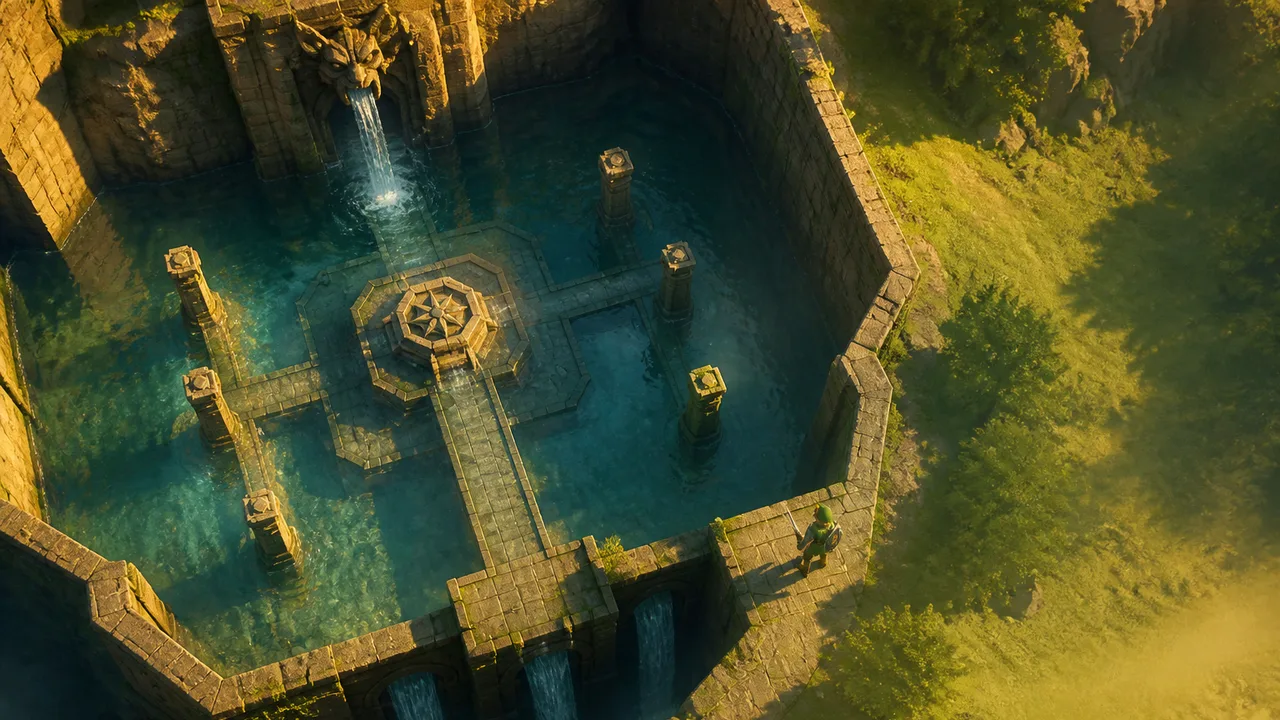
Nintendo says The Legend of Zelda: Ocarina of Time sold over 5.2 million copies worldwide in the four days after its November 5 launch on Switch 2. That figure includes physical and digital sales and comes from Nintendo’s internal data. It’s a huge opening for a remake of a 1998 game. It also arrives while Zelda fans are arguing about a much newer question: should the next adventure build around carefully directed dungeons or keep the open-ended approach associated with Breath of the Wild?
The sales figure gives that argument energy, but it cannot pick a winner. Nintendo is selling a full remake with reimagined visuals, orchestral music, voice acting, expanded cutscenes, and reworked camera and movement controls. Someone buying that package could be returning to a favorite, meeting it for the first time, excited by its dungeon structure, or interested in several of those things at once. The purchase records a choice of game, not a ballot marked “bring back the old formula.”
The more useful clue sits inside the Water Temple. Nintendo’s developers changed how players switch items and read the dungeon’s rooms. Those choices put a sharper question on the table: could a future Zelda keep the satisfaction of an authored, interconnected space while dropping the interface chores that made parts of the original exhausting?
The Dungeon Under the Microscope
The original Water Temple asked players to navigate a complicated underwater space while repeatedly opening a menu to change equipment. Producer Eiji Aonuma, who designed the original dungeon, said he wanted players to enjoy how different being underwater felt. He also acknowledged that frequent item toggling made it difficult to track your position and facing.
In the remake, players can swap items with the directional pad. Game director HokWai Ng also described replacing some walls that obscured orientation with lattice-style structures, letting players see into adjoining rooms. These are precise interventions. One reduces the time spent in menus; the other gives players more information about the space they’re trying to understand.
That’s a promising distinction for anyone who likes a dungeon that asks them to form a mental map. Getting turned around can be part of the puzzle. Losing your bearings because a wall conceals a useful sightline, then reopening a menu again and again to manage equipment, can interrupt the act of solving it. The redesign suggests a way to preserve spatial reasoning while cutting some of the work around it.
It also gives the “classic versus open world” debate a better vocabulary. “Classic” can mean a memorable route through rooms, obstacles, and discoveries. It can also bring along old controls and presentation decisions that players never needed to love as a package deal. The remake separates at least two of those ingredients. Its team kept a Water Temple to navigate and changed how Link interacts with it.
A future game could draw on that distinction without copying Ocarina of Time room for room. An open landscape and a tightly composed dungeon make different promises: one offers freedom in where to go, while the other can make understanding a place the central challenge. Whether Nintendo wants to put those promises in the same game remains an open design choice. The Water Temple changes show what such a discussion could focus on: the decisions players make inside a space, rather than the number of button presses between those decisions.
Why Zelda Changed Course
The affection for older dungeons has a history, and so does Nintendo’s move away from the older template. Kit Ellis, a former Nintendo of America marketing lead, recalled attending focus groups before Breath of the Wild where the feedback was that Zelda’s fan base was dwindling and the games were struggling to bring in new players. His recollection describes the concern people inside Nintendo heard; it is not the company’s underlying research data.
The commercial contrast helps explain why that concern enters today’s argument. Skyward Sword, the 2011 classic-styled entry, sold 4.15 million units, while Breath of the Wild reached 34.51 million. Those figures span different releases and reporting periods, so they cannot isolate game design as the cause of the difference. They do show why treating the pre-Breath of the Wild approach as an unchallenged commercial peak would flatten the series’ history.
Ellis’s account supplies another useful check on the argument. A player can miss the older style’s directed dungeons and still recognize why attracting people beyond an established audience was a serious concern. Likewise, the success of an open-ended game does not settle whether its audience would enjoy longer, more deliberately structured spaces. Nintendo’s new remake brings the earlier design back into view after that commercial turn. It doesn’t rewind the conditions that prompted the turn.
This is where the Water Temple becomes more interesting than a sales-chart showdown. Its adjustments address a question both a longtime player and a newcomer might encounter: can I understand what this room is asking of me without fighting the controls to do it? Keeping the puzzle while improving that conversation between game and player is one possible lesson from the remake. The 5.2 million buyers cannot tell Nintendo how much of the package they came for, but the developers’ changes identify design choices that can be examined on their own.
A Familiar Foundation, a Different Decision
There’s also a production precedent feeding speculation about what comes next. The original Majora’s Mask arrived less than two years after the Nintendo 64 Ocarina of Time and reused assets, character models, and systems from it. Former Nintendo marketing leads Ellis and Krysta Yang have speculated that the new remake could similarly provide a foundation for a Majora’s Mask remake. That possibility is their prediction, not an announced Nintendo project; the original pair’s short development interval is no timetable for a modern release.
The precedent is useful for a narrower reason. Reusing a technical foundation could let Nintendo revisit an older game, while deciding what the next mainline Zelda should feel like is a separate creative question. The original Majora’s Mask shows that a follow-up can grow from existing production work. The Switch 2 Ocarina shows developers revisiting the friction inside an existing dungeon. Neither decision forces Nintendo to choose a single template for every future adventure.
If the next Zelda puts players back inside a maze of locked routes and hard-won shortcuts, the real test won’t be whether its marketing calls that approach classic. It’ll be whether the challenge comes from learning the place, or from wrestling the menu on the way there.
More Like This
The Legend of Zelda Film Faces Its 2027 Adaptation Test
Nintendo's live-action Zelda film is due in 2027. As casting takes shape and Ganondorf rumors spread, its challenge is turning player exploration into cinema.
Two Nintendo Directs Are Coming, and Prediction Season Is Doing Its Thing
Nintendo has confirmed a September 8 Direct and a Zelda 40th anniversary showcase for September 9. Here's what's confirmed, what's speculation, and how to read it.
Ocarina of Time's Switch 2 Sales Record Has Clear Limits
Nintendo says the Ocarina of Time remake sold over 5.2 million copies in four days. Its release history and other Zelda launches put that Switch 2 record in context.
World of Warcraft: Forever Beta Opens With Optimism
World of Warcraft: Forever's beta has drawn positive early reactions. Progression, group play and time demands could shape its life after the opening hours.
Minecraft Comes to Nintendo Switch 2 on October 27
Minecraft lands on Nintendo Switch 2 on October 27 with Vibrant Visuals graphics and a digital upgrade path for existing owners. Here's what it means.
Dragon Quest Monsters: The Withered World Revealed
Square Enix's Dragon Quest Monsters: The Withered World drops December 3. Here's what the new creatures, Synthesis system, and platform bet actually mean.
CraftyMasterman Built a Working RGB TV in Minecraft
CraftyMasterman used Minecraft's new cushion blocks and copper bulbs to engineer a working RGB TV display with pure redstone. Here's how it works.

Crazy Taxi World Tour: Arcade Classic Meets Open World
Sega's Crazy Taxi World Tour blends arcade chaos with open-world design. Here's what the previews show — and what history says about Sega franchise revivals.