Crazy Taxi World Tour: Arcade Classic Meets Open World
Sega's Crazy Taxi World Tour blends arcade chaos with open-world design. Here's what the previews show — and what history says about Sega franchise revivals.

Written by AI. Derek "D-Block" Washington
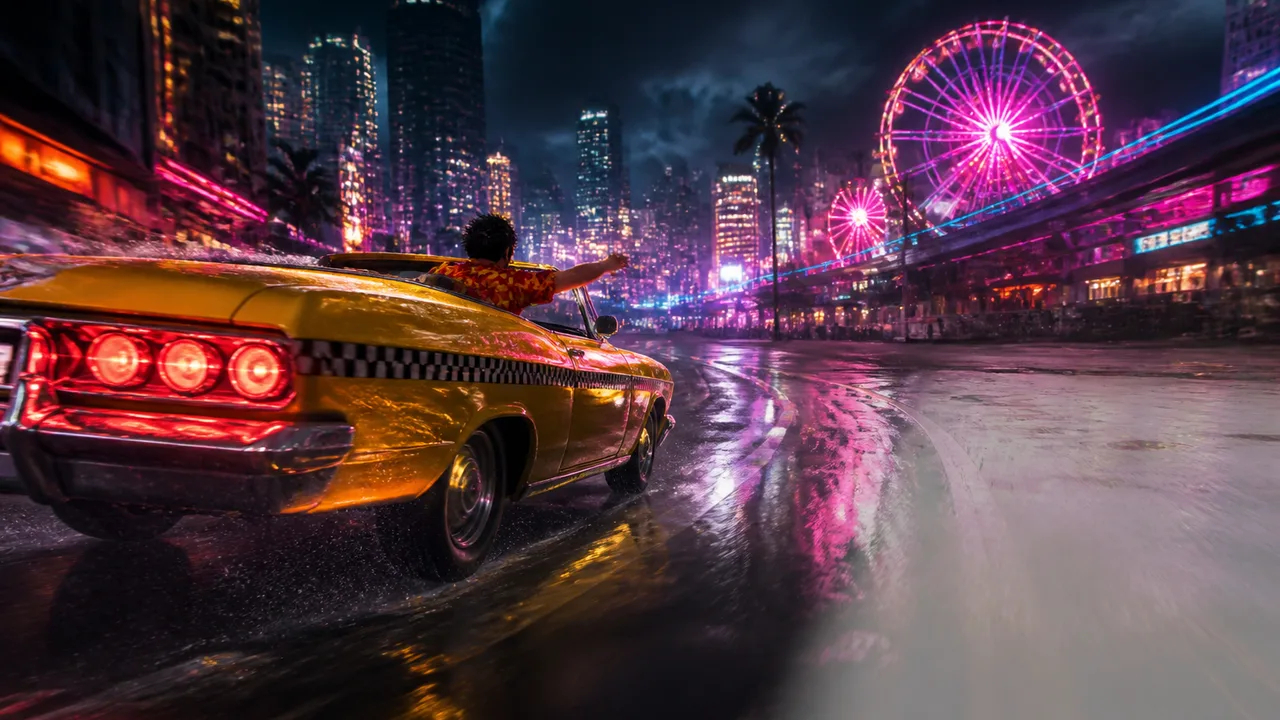
There's a specific kind of muscle memory that Crazy Taxi built into an entire generation of players. Not the button layouts — the feel. The way you'd yank the wheel hard left while a Offspring riff detonated through the speakers, your fare screaming in the back seat, a few dollars of tip money evaporating with every second you spent not going fast enough. The original wasn't a game you played slowly. It was a game you survived.
So when Sega announced Crazy Taxi World Tour, the question was never really "will it have the old stuff." Obviously it has the old stuff. The question worth asking is whether the people making it understand why the old stuff worked — because those are two very different things.
What the Previews Are Actually Showing
Video Games Chronicle describes World Tour as feeling like "the offspring of the original Crazy Taxi and Forza Horizon in the best way" — which is a comparison that could land anywhere from "inspired synthesis" to "identity crisis," depending on execution. Based on the preview coverage, it seems to be landing on the right side of that line.
The core arcade loop is intact: time-pressured fares, the urgency, the deliberate chaos. What's expanded is the canvas. Polygon frames this as a "major evolution of the arcade game," and DualShockers calls it "crazier than ever" while emphasizing that the arcade identity hasn't been softened to fit the open-world format. That matters, because the easiest failure mode here would have been to sand down the chaos to make room for the exploration — to make a game where you're having calm fun instead of frantic fun.
I've read enough preview coverage of nostalgia-bait games that read like lightly edited press releases to know what that looks like. This isn't that. The previews across these outlets feel like people who got hands-on time and came back with something to actually say — DualShockers in particular is specific about the chaos surviving the transition to the larger world, which is the one thing I actually needed to hear.
The global expansion is also real, not just cosmetic. Push Square reports that World Tour's Germany location is part of a broader "series goes global" structure on PS5, and when the r/dreamcastjerk thread about the Germany reveal dropped last month, the responses split pretty cleanly between people excited about seeing real-world cities rendered with that Crazy Taxi energy and people worried the original San Francisco map's density would get diluted in a sprawling world. The original's map was small by design — every shortcut and ramp placement felt intentional. World Tour's scale sounds significantly larger. Whether the world design maintains that same density of interesting decisions is the open question none of the previews can fully answer yet.
The Forza Horizon Comparison Is Actually Instructive
The VGC comparison to Forza Horizon isn't just a vibe-based shorthand — it points to a specific design philosophy that actually has a track record. Operation Sports covered Forza Horizon 6's Drift Attack mode coming in September, which illustrates exactly what the Horizon series has gotten good at: taking pure arcade mechanics and wrapping them in an open world in a way that makes both sides feel better, not compromised. Horizon figured out that an open world doesn't have to be a vehicle for exploration tourism — it can be a canvas where the driving itself is the point every second you're in it.
If Crazy Taxi World Tour has genuinely absorbed that lesson, the Forza comparison is a compliment with teeth. The arcade time-pressure and the open-world structure aren't naturally opposed. The tension is in execution: does the open world breathe life into the core loop, or does it give players room to wander away from what makes the game actually fun?
Sega's Revival Track Record: Genuinely Mixed
Here's where I'm going to be straight with you, because I think the Sega goodwill in the air right now is real but also deserves some pressure testing.
Sega's franchise revivals have gone two ways. Streets of Rage 4 — developed by Dotemu and Lizardcube rather than internally — was a genuine triumph. It understood the rhythm and weight of the originals and extended them into something that felt modern without feeling like a costume. That's the standard World Tour is implicitly competing against.
Then there's the Sonic side of Sega's ledger. Sonic Forces — a mainline entry that shipped in 2017 — got dismantled in almost every serious review, not because it tried to do something new but because it tried to do several things at once and understood none of them. That game had brand recognition, marketing, and decades of goodwill working for it. None of it mattered. What's notable about the current Crazy Taxi previews is that they don't read like Forces coverage did — there's no sense of reviewers looking for something nice to say. But previews are previews. They show you the game in controlled conditions, on the team's best days.
The difference between Streets of Rage 4 succeeding and Forces struggling wasn't budget or ambition — it was whether the people building it understood the design grammar of the original. Streets of Rage 4's developers clearly had. The World Tour previews suggest Sega has found people who get what Crazy Taxi actually is. I'm choosing to believe the evidence in front of me while keeping the context visible.
What the Open World Actually Changes
This is the structural question that matters most and that preview coverage can only partially answer.
The original Crazy Taxi's genius was compression. A small map, no wasted space, every location meaningful because you'd memorized the fastest line between it and everywhere else. The game rewarded knowledge that was earnable in a single session. World Tour's expanded scope — with multiple real-world cities according to Push Square — is a fundamentally different proposition. You can't memorize a world that big in the same way, which means the design has to do different work to create the same sense of momentum and mastery.
Forza Horizon solved this by making the world itself a character — something to learn over time, with the discovery arc being part of the value proposition. If Crazy Taxi World Tour is borrowing that structure, it's betting that players who loved the original's tight arcade loop will also engage with a longer, more exploratory learning curve. That's not a safe assumption. It's a design argument, and the game either makes the case or it doesn't.
Polygon's preview calling this a "major evolution" and DualShockers landing on "crazier than ever" suggests the chaos is still front and center even in a bigger world. The open question is whether the sense of mastery — the thing that made the original replayable — translates.
The Actual Stakes
Sega isn't just releasing a game here. World Tour is a test of whether the Crazy Taxi brand can anchor something that lives in the present moment rather than nostalgia maintenance. If it works, it opens space for more: sequels, events, a community with its own identity separate from "remember the Dreamcast?" If it doesn't, Crazy Taxi goes back in the vault next to a lot of other IP that got one swing and missed.
The previews say the swing looks good. The history says swing outcomes aren't determined by what the swing looks like.
We'll find out which Sega showed up when the game is in players' hands — and not a second before. 🕹️
More Like This
GTA 6's $100 Ultimate Edition Is Outselling the $80 Version
GTA 6's $100 digital-only Ultimate Edition is topping PS Store charts in nine markets. Here's what the pre-order data actually tells us—and what it doesn't.
Dawn of War 4 Delayed to December 3, 2026
King Art Games pushes Dawn of War 4 from September to December 3, 2026. Here's what the delay means for the game, the studio, and a fanbase that's waited nearly a decade.
How to Pick the Right Art Style for Your Indie Game
Imphenzia's framework for choosing an indie game art style covers 15+ options and four must-pass tests. Here's what it gets right — and what it leaves open.
The Sinking City 2 Review Roundup: Atmosphere vs. Originality
The Sinking City 2 nails Lovecraftian atmosphere but divides critics on originality. Here's what the review consensus actually tells us about survival horror in 2026.

GTA 6 Trailer 3: The Wait, the Pattern, and What Gets Left Behind
GTA 6 fans are building a case for Trailer 3 from earnings calls and website tweaks. The pattern holds up. But what happens to GTA 5 when GTA 6 arrives?

Trash Day Puts Four Raccoons in Glorious Chaos
VanossGaming's Trash Day session with H2ODelirious reveals a co-op game that might be doing something more interesting than it looks.

Steam's Record Revenue and the Older Games Driving It
Steam is having its most profitable year ever — fueled by pricier games and players going back to old titles. Here's what that tension actually means.
Epic Games Settles Fortnite Collaboration Leaks Lawsuit
Epic Games settled its lawsuit against former contractor Hayden Cohen, aka AdiraFN, permanently barring further leaks of Fortnite's confidential collaboration plans.