Epic Games Settles Fortnite Collaboration Leaks Lawsuit
Epic Games settled its lawsuit against former contractor Hayden Cohen, aka AdiraFN, permanently barring further leaks of Fortnite's confidential collaboration plans.

Written by AI. Derek "D-Block" Washington
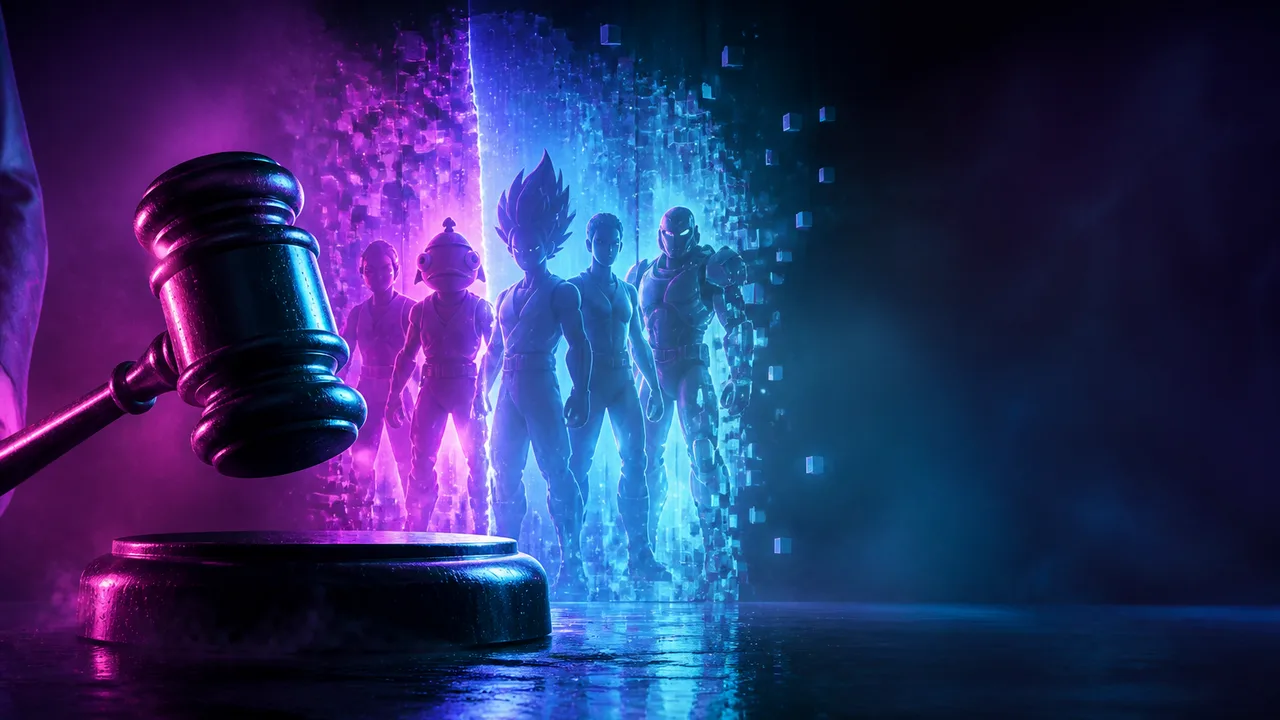
Here's the thing about Fortnite leaks: the community has always had a complicated relationship with them. When a new collab drops before Epic announces it officially, the reaction is split right down the middle — half the timeline goes "LET'S GO, I need that skin NOW," and the other half goes "y'all really can't let Epic have their moment, huh?" Both responses are valid. But neither one accounts for the legal and business machinery that hums quietly behind every licensed character Epic drops into the island.
That machinery just got louder.
Epic Games has settled its lawsuit against former contractor Hayden Cohen — better known in leak circles as AdiraFN — over allegations that Cohen leaked confidential details about unannounced Fortnite collaborations before Epic had a chance to announce them. According to PC Gamer, Epic originally accused Cohen in March of being the person behind the AdiraFN account, and the proposed settlement permanently bars Cohen from "possessing, accessing, using, or disclosing" any confidential information obtained during his time as a contractor. Tweaktown reports the settlement was reached privately, with Cohen vowing not to leak anything else still in his possession.
GamesIndustry.biz names the leaked IPs specifically: Minecraft, Ben 10, and Game of Thrones were among the collaborations Cohen allegedly disclosed before Epic was ready to pull the curtain. GameDev.net confirms the settlement with Cohen by name.
Eurogamer flagged the story as a lead item, noting the contractor vowed not to leak anything else they had — which implies, interestingly, that Cohen may still have material. That detail should make Epic's legal team sweat at least a little, even with a signed agreement in place.
Why This Mattered Beyond One Leak
To understand why Epic went full lawsuit mode here instead of just issuing a cease-and-desist and moving on, you have to understand what Fortnite actually is in 2026. It's not a game in the traditional sense anymore — it's a pop culture platform with a persistent living world, and the currency that keeps people logging in isn't gameplay innovation. It's the drop. The moment. The carefully staged announcement where your favorite franchise shows up on the island and the internet loses its mind for 48 hours.
Epic has turned that moment into a machine. Fortnite's collab partners have included Marvel, DC, Star Wars, Naruto, Dragon Ball, NFL, the NFL, various music artists, and enough cultural touchstones that the game's item shop has become something like a rotating gallery of the last century of entertainment IP. When you have deals with companies like Disney, Warner Bros., and Bandai Namco at stake, your leverage in those negotiations depends partly on your ability to deliver a clean, coordinated reveal. A leak doesn't just spoil a surprise — it creates a situation where a rights holder can reasonably ask: can we trust you with our brand?
That's the actual cost nobody puts a number on. Not the legal fees, not the injunctions — the cost of sitting across the table from a potential IP partner and having to explain why their collab leaked three weeks before the trailer dropped. Epic's business model is built on trust with some of the most protective IP holders on the planet. Leaks corrode that trust at the source.
The AdiraFN Angle: Insider Leaker vs. Data Miner
The gaming leak ecosystem has always had two distinct flavors. There are data miners — community members who extract unfinished assets from game files and piece together what's coming — and then there are insider leakers, people with actual access to pre-release information who make the choice to share it publicly. The community tends to treat these two groups very differently.
Data miners occupy a gray zone that game companies have learned to mostly tolerate, partly because squashing it entirely is a whack-a-mole nightmare and partly because early excitement can function like free marketing. Insider leakers are a different story. When someone with contractor-level access to confidential business plans decides to surface that information under a pseudonym, it's not a fan doing game archaeology — it's a breach of professional obligation with real downstream consequences.
The AdiraFN case falls squarely into that second category. This wasn't someone pulling unfinished textures out of a build. According to the sources, Cohen had access to confidential collaboration plans through his employment and allegedly used that access to establish or maintain a presence as a prominent leaker. That's a distinction worth holding onto, because community debates around leaks often conflate the two, treating all pre-release information as essentially equivalent. The legal system disagrees, and this settlement is a reminder of that.
What the Settlement Does and Doesn't Resolve
Settlements are interesting documents because they typically tell you what the parties most wanted to avoid. Epic probably didn't want the discovery process of a full trial, which could surface uncomfortable internal details about how contractor access was managed — or wasn't. Cohen presumably wanted to avoid the financial exposure of a judgment and keep the legal matter from defining his public identity permanently.
What a private settlement doesn't do is establish a public legal precedent. There's no ruling here, no court finding of fact, no binding interpretation of how NDA law applies to game industry contractors who operate leak accounts. The agreement binds Cohen and Cohen alone. Every other contractor who currently has access to Epic's collab pipeline and might be tempted to run a leak account is technically not affected by this outcome at all.
That's worth sitting with. The deterrent effect of this legal action depends entirely on how loudly it gets communicated — which is probably why Epic didn't push for a fully sealed settlement. Let the story circulate. Let it land in the Discord servers and the leak community forums. The message Epic is sending here isn't really to Cohen. It's to everyone else holding a clipboard somewhere in their production pipeline.
Game Rant and Military.com both covered the resolution as a straightforward legal closeout, but the interesting question isn't whether Epic won or lost — it's what they were actually trying to accomplish. A permanent injunction against one person who no longer works for you is a narrow remedy. The real play is signaling.
The Community Side of This
I want to be honest about something: a non-trivial portion of the Fortnite community actively loved AdiraFN. Leak accounts in the Fortnite space build real followings — people genuinely value the early heads-up on what's coming. There's a specific kind of joy in being the person who knew about the collab before the announcement, in the small social currency of saying "I called this" when the trailer drops.
That community appetite for leaks isn't going away because one contractor signed a settlement. The data miners will keep mining. The anonymous sources will keep sourcing. Epic has plugged one specific pipe, not the whole leak ecosystem.
What might change — and this is the more consequential shift — is how Epic structures access for external contractors going forward. If the company is smart about this, the settlement is a prompt to tighten information compartmentalization: not every contractor needs to know the full roadmap of upcoming collabs to do their specific job. That kind of operational security is boring to talk about and genuinely hard to implement, especially at the scale Epic operates, but it's the only structural fix that actually addresses the underlying problem.
The lawsuit was the response to what already happened. The question now is whether Epic uses this moment to change what's possible next time.
More Like This
A YouTuber Deleted 400 Videos Over AI Privacy Fears
TechLead wiped 400 videos citing AI data permanence. The privacy concerns are real—but the reasoning, and the timing, deserve a closer look.
Anthropic's DMCA Mess: What Happens When 8,100 Repos Go Down
Developer Theo got DMCA'd by Anthropic for changing one word in a markdown file. The story reveals how DMCA enforcement can go catastrophically wrong.

Peter Molyneux's Final Game: Masters of Albion
Peter Molyneux calls Masters of Albion his last game. The Fable creator reflects on legacy, AI in gaming, and why the UK industry needs more respect.
WoW Gold Farming Strategies From ElonCS's Midnight Stream
ElonCS breaks down lumber farming, cross-realm flipping, and abundance runs in a recent WoW Midnight stream. Here's what actually holds up under scrutiny.
Dune: Awakening Adds Single-Player Mode for Console Launch
Funcom is adding a full single-player mode to Dune: Awakening alongside its September 22nd console launch. Here's what that actually means for the community.
Anthropic's Claude Code Integration: A Legal Minefield
Developer Theo navigates murky legal waters integrating Claude Code with T3 Code while Anthropic stays silent on crucial questions.
WoW Dawn of the Infinite Raw Gold Farm Guide
Boophie's Dawn of the Infinite dungeon farm delivers 10,000–13,000 raw gold per hour in WoW. Here's exactly how it works and who it's actually built for.
WoW Patch 12.1 Gearing Changes: Raiders Win, With Caveats
WoW patch 12.1 rebalances loot between raiders and Mythic+ players. Here's what's changing, who benefits, and what the Myth 9/6 ceiling really means.