Xbox Workers Push Back as 1,600 More Jobs Loom
Xbox workers are organizing across six studio locations as 1,600 more jobs hang in the balance. Here's what the unions are demanding—and what it means for gaming.

Written by AI. Jordan Mercer
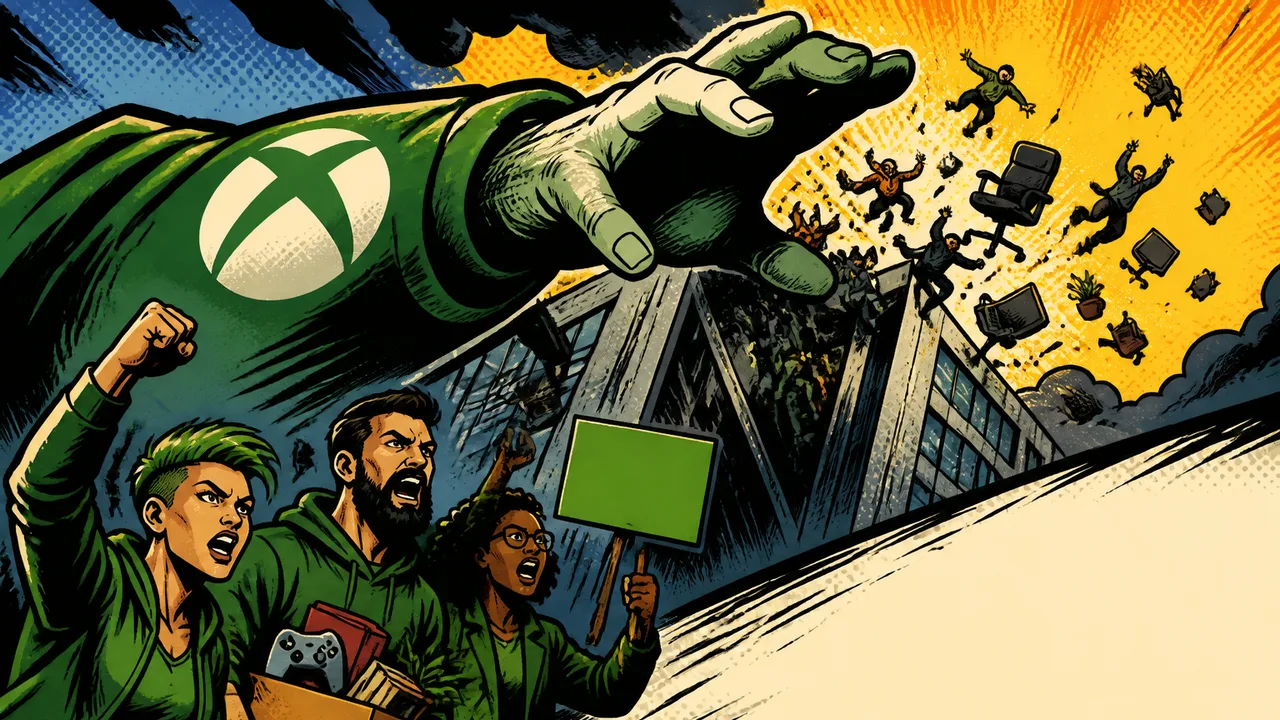
Photo: AI. Marco Velez
You probably didn't grow up dreaming of working at a game studio so you could get laid off after shipping a critically acclaimed product. But that's the industry a lot of people are graduating into right now, and the Xbox situation — 1,600 jobs already gone, another 1,600 still queued up — is a pretty stark demonstration of what that market actually looks like.
This isn't abstract industry news. If you've ever thought about working in games, or you already do, or you just play them and care about who makes them, the worker response happening across Xbox's studios right now is worth paying attention to.
The Weird Geometry of These Layoffs
The most structurally unusual thing about Xbox CEO Asha Sharma's announcement wasn't the scale — it was the specificity. Announcing a concrete number for future cuts, rather than a vague "structural reform" process, is genuinely strange corporate behavior. Skill Up's analysis of this framing cuts to something real: you only put a number on future layoffs if you already know whose names are in that drawer. And if you already know, the logical question is why wait?
The answer, as Skill Up lays out, almost certainly has to do with Xbox's near-term release schedule. Halo: Campaign Evolved launches July 28, per Xbox Wire. Gears of War: E-Day is confirmed for October 6 on Xbox's own product page. You don't gut the teams finishing those games before they ship — you need them to cross the line first. The math on that, if you sit with it for a second, is genuinely grim. Imagine being asked to crunch toward a release you know will be your last day on the job.
id Software is the studio that keeps drawing attention, and for good reason. According to GamesBeat, id had early-stage concepts for multiple new projects before the cuts — including a John Wick-style gun fu game codenamed Fury blending shooting with martial arts in a sci-fi noir setting, and a western-influenced robot survival game called Ironwood set in a Westworld-like universe. Both sound like exactly the kind of creative swing you'd want from a studio with three consecutive commercial and critical hits under its belt. Neither is likely to happen now, given that roughly half the studio is gone.
id's PR response to the cuts — noting that "the team today is about the same size we were when making Doom 2016" — is the kind of statement that sounds reassuring until you actually think about it. Skill Up put it plainly: that's ten years of accumulated knowledge, relationships, and technical expertise, gone. The studio that made Doom Eternal isn't the same organism as the one that made Doom 2016, just smaller. Treating headcount as a reversible dial misses what development culture actually is.
ZeniMax Online Studios, home of Elder Scrolls Online, offered a similar framing after losing over 200 staff — noting the studio is now the same size as it was during earlier ESO expansions. The ESO roadmap is currently under revision. Whether the game enters any kind of reduced-support mode remains to be seen.
The Part That Actually Matters Right Now
The workers are not waiting quietly. 🔥
Game Developer reported that a rally was held July 15 across ZeniMax locations in Rockville, Austin, Dallas, and Montreal. The Communication Workers of America coordinated a total of six protests across Xbox studio locations, including Microsoft's Redmond campus and Obsidian Entertainment in Irvine, California. The union's internal email, cited in Skill Up's coverage, laid out the stakes directly:
"Because we organized and certified our unions, we have hard-won legal rights and protections that non-unionized studios simply do not have. The company wants us to accept this as a done deal and quietly disappear. We won't let that happen."
That's not bluster. Unionized workers have actual legal leverage here — Microsoft is required to negotiate how these layoffs are handled. Their demands include preferential placement of affected workers into open roles across Xbox and Microsoft, stronger severance packages, extended healthcare, and recall rights ensuring laid-off members are first in line when studios hire again.
Simon Prefontaine, a union member and game designer recently laid off by Bethesda Montreal, told Maddy Agne at This Week in Videogames: "This might be the largest collective worker action in the North American video games industry ever."
That's a significant claim. But when you look at six simultaneous protests across multiple studios, with Blizzard union members joining in solidarity despite not being directly affected, it tracks. The broader Xbox restructuring has clearly created something that goes beyond individual studio grievances — it's functioning as a catalyst.
What This Has to Do With Your Phone
Here's why this story sits on my radar even though id Software doesn't exactly make mobile games: Xbox Game Pass is a massive part of how mobile players engage with Microsoft's ecosystem. xCloud streaming — playing Game Pass titles on your phone — is one of the platform's genuine selling points for the audience I cover. When Microsoft hollows out the studios making games for that service, the library stagnates. When the people building that content pipeline are anxious about their jobs or already gone, the pipeline slows.
The studio closures and promises of more exclusives create a specific tension for mobile Game Pass users: the pitch of "play everything on your phone" only works if there's a steady flow of compelling content. Right now, that flow has a kink in it.
Players vs. Corporations: Where the Wins Actually Land
The EA College Football 27 story running parallel to all of this is worth holding up against the Xbox situation, because the contrast is instructive. College Football 27 launched with premium currency allowing players to speed up progression in Road to Glory and Online Dynasty modes. Players organized a boycott. EA removed the paid progression options entirely, posting: "Tomorrow morning we will remove all paid progression options from Road to Glory and Online Dynasty."
That's a real win. Players pushed on monetization, and a major publisher blinked.
But notice where it landed. Consumer organizing works on cosmetic features, on in-game currency, on the things companies can reverse without restructuring their entire business model. It doesn't work on structural decisions — layoffs, studio closures, platform strategy. The College Football 27 reversal happened because EA could flip a switch and the PR math improved. Nobody flips a switch on 3,200 jobs.
That asymmetry is worth sitting with. Player voices genuinely matter in some rooms. The rooms where employment decisions get made are not those rooms. That's precisely why the union organizing at ZeniMax and Bethesda Montreal matters — it's the only mechanism that actually reaches those decisions.
EA's reversal on College Football is encouraging, and I'm not being cynical about it — player feedback moving corporate behavior is real. It's just a different category of leverage than what the CWA is attempting to exercise. One is consumer pressure on a product feature. The other is labor rights in the face of mass unemployment.
The question going forward is whether the scale and solidarity of this particular worker action produces concrete outcomes — better severance, actual job placements, recall rights — or whether it becomes a visible but ultimately symbolic moment. The unions have legal footing. Whether they convert that into material wins for the people walking out of those studios is what actually matters.
If you're Gen Z and you're thinking about a career in games: this is the industry map. Build skills that transfer. Watch what the unions do next.
More Like This

PlayStation Killing Discs Will Reshape Game Pricing
Sony ends disc production in 2028. Analysts warn of higher prices and less consumer choice — with indie devs among the most exposed to platform control.
Diablo IV: Lord of Hatred Expansion Review
Explore Diablo IV's Lord of Hatred expansion. New classes, zones, and a thrilling campaign await.
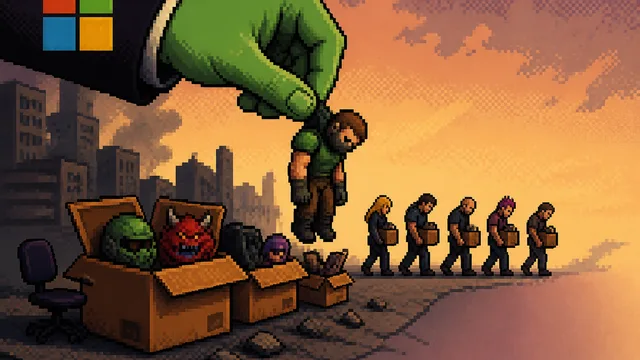
Xbox Cuts 3,200 Jobs and Guts Its Best Studios
Xbox's 'Great Reset' means 3,200 layoffs, five studios gone, and id Software decimated. Here's what actually happened and what it means.

Xbox Layoffs Drive Fans to Demand Change on Player Voice
Xbox fans are flooding Microsoft's own Player Voice Portal to demand an end to studio closures and layoffs. Here's what the campaign reveals—and what it can't change.

Forza Horizon 6 Review: Beautiful Map, Frozen Formula
Forza Horizon 6's Japan map is stunning, but its stale progression and hollow storytelling reveal a franchise too scared to evolve. Here's where it stands.

AC Black Flag Resynced Is Ambitious—But Is It Worth $70?
Skill Up went hands-on with AC Black Flag Resynced in Singapore. Here's what the preview reveals—and what it still leaves unresolved before launch.

ESO's Leadership Purge Is a Preservation Crisis
Xbox layoffs gutted ZeniMax Online's leadership after 200+ cuts. For ESO's 11-year history, the real loss may be institutional knowledge no one wrote down.
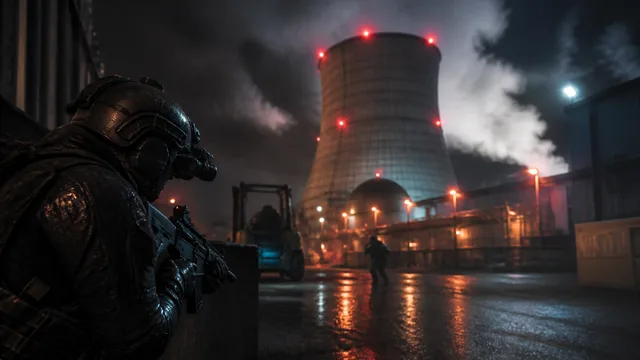
Delta Force Season Meltdown Brings Big Changes
Delta Force's Season Meltdown drops a nuclear plant map, Rainbow Six Siege crossover, and free rewards. Here's what VanossGaming's run actually shows you.