When the Dugout Won't Shut Up: A Baseball Ejection
A Jomboy Media breakdown captures a manager's ejection over check swing calls—and accidentally maps everything broken about baseball's officiating culture.

Written by AI. Amara Osei
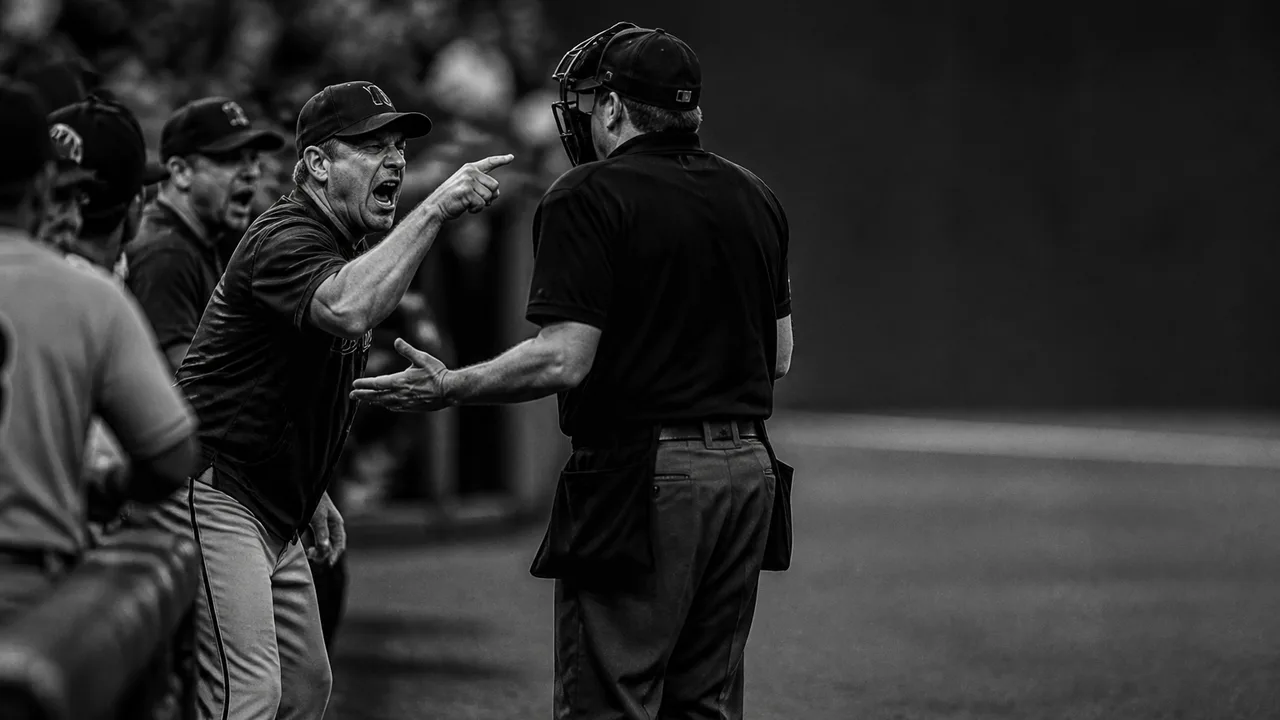
Photo: AI. Atticus Ferenczi
I cover audio for a living, which means I spend a lot of time thinking about what voices reveal when people stop performing. The Jomboy Media breakdown of a manager getting tossed for excessive umpire-arguing is, technically, a baseball video. But sonically—and analytically—it's a three-minute document of how institutional conflict actually sounds when the mask comes off.
Jomboy Media has built a cottage industry on exactly this: lip-reading and narrating the sideline arguments that broadcast cameras capture but commentary rarely decodes. The format is deceptively simple. Slow the footage, read the lips, narrate with a light, knowing touch. What it produces, when the material is good, is something closer to ethnography than sports recap.
This particular clip is very good material.
The Inciting Incident Wasn't the Ejection
The breakdown opens on what Jomboy identifies as the critical moment: a check swing that the umpire calls as no swing. The batter's own reaction gives it away—"Oh, thank you. Appreciate it." That's not the response of a batter who thought he held up. That's a man who knows he got away with one.
Check swings occupy a peculiar corner of baseball officiating. Unlike ball-strike calls, which belong entirely to the home plate umpire, a check swing appeal goes to the base umpire—a second set of eyes on whether the bat crossed the midpoint of the plate. The mechanic exists precisely because the call is hard to make consistently. And yet, consistently making it is what the game demands from the people paid to make it.
When the call goes the wrong way on something that obvious—obvious enough that the beneficiary is visibly relieved—the credibility account takes a hit. What follows in this video is essentially a slow-motion bank run.
Tap Tap Tap
What I find more quietly fascinating than the big blowup is the sequence just before it. A new pitcher comes in, and the catcher apparently taps the umpire to signal something—requesting time, adjusting equipment, the specifics aren't fully clear from the breakdown—but the umpire misses it. "I tapped. I tapped. I tapped." And the umpire's response, as Jomboy narrates it: "Oh, dude, I didn't hear you."
That exchange is instructive. The umpire acknowledges the mistake and gives the catcher what he asked for. Reasonable. Human. The system working at low stakes.
But it also happens immediately after the check swing non-call, which means the dugout is already warm. The tap-tap-tap moment is small kindling dropping onto a fire someone else just started. The dugout keeps yelling anyway. And the umpire—who has already made one visible mistake, then correctly acknowledged a smaller one—runs out of patience.
"Hey, get the hell out of here."
The ejection that follows involves at least two people getting tossed in quick succession, with the umpire essentially clearing the dugout vicinity. "That's on you, too. Lock it in. Him, too." It's aggressive, but it's also the sound of someone who has decided that the marginal cost of additional argument is zero—that no matter what he does from here, the dugout isn't going to let it go.
He's probably right about that.
The Argument That Doesn't End
What makes the Jomboy breakdown genuinely worth watching—and thinking about—is that the ejection isn't the ending. After the dust settles, there's another check swing call. Then another. And the manager, apparently still present or newly engaged, makes the argument that Jomboy treats as the rhetorical climax: "You both missed one."
The umpire's response: "No. No. That's not true. You missed one and he missed one."
Sit with that for a second. The umpire is making a distinction between you missing a call and him missing a call—insisting that the error distribution matters, that it's not symmetrical incompetence, that pointing to two separate umpires as having each missed one is somehow a different claim than saying the crew collectively botched it. The manager, from what Jomboy captures, isn't buying it. "You didn't call the check swing. He didn't call the check swing."
This is where the argument stops being about any individual pitch and becomes about something murkier: who gets to define what happened. The manager is building a cumulative case. The umpire is litigating each call in isolation. Neither of them is going to convince the other, because they're not arguing about the same thing.
The manager eventually gets tossed too—"You can get the hell out of here, too, Donnie"—after the umpire draws a line: "You're not going to yell at him, then yell at me, then yell at him. Not going to happen."
That's actually a coherent position. You don't get to rotate targets indefinitely and call it a legitimate grievance. At some point, the complaint becomes the behavior.
What the Replay Can and Can't Fix
The video does include one moment of the system working correctly: a catcher's challenge on a separate call that gets overturned. "They get the call right." Jomboy notes it simply, without fanfare. The replay review exists, it was used, it worked.
But the check swing calls—the ones that lit this whole thing up—aren't reviewable under MLB's current challenge rules. Check swings fall outside the replay system's jurisdiction. You can challenge whether a ball was caught or whether a runner beat the throw, but you cannot challenge whether a bat crossed the midpoint of the plate. That's still a judgment call, appeal only, human eyes only.
This is not a secret. Players, managers, and umpires all know the rules. Which means the entire argument in this video is happening inside a closed loop: everyone agrees a mistake was made, no one can officially correct it, and the only available responses are either silence or exactly what Donnie is doing.
The fact that Donnie gets ejected for choosing the second option is, depending on your perspective, either a failure of institutional flexibility or a necessary enforcement of basic operational norms. Probably some of both, if we're being honest about how institutions actually function.
On the Jomboy Format Itself
I want to say something about why this format works, because it's not obvious. Jomboy isn't adding new information—the footage exists, anyone with a camera and a good zoom could capture this. What the breakdown adds is narration with stakes. The host takes the material seriously enough to slow it down, read it carefully, and render a judgment. Not a final verdict, but an informed read. "But did they get the second one wrong? I don't know. I feel like that's fine. That's a good call."
That kind of provisional honesty—I don't know, but here's my read—is what separates this format from hot-take sports commentary. The ambiguity is part of the point. Some of the calls were wrong. Some were right. The argument escalated past the point where the accuracy of any individual call mattered anymore.
Which is maybe the thing this video is actually about: how a legitimate grievance, handled without discipline, becomes indistinguishable from just noise. The check swing at the top of the breakdown was genuinely missed. By the time Donnie is getting ejected, that fact has been buried under everything that came after it.
If the calls had been right, none of this happens. But if the response to the bad calls had been different, we probably don't end up here either. That's not a comfortable place to land, but it's the honest one.
More Like This
FFmpeg's Twitter Drama Was Actually Good for Open Source
The FFmpeg account's X drama raised donations and awareness for grassroots open source. But is performative conflict a sustainable outreach strategy?
The Giants' Walk Rate Is Historically Bad in 2026
The SF Giants have a 5.7% walk rate — the worst league-adjusted figure in roughly 150 years of baseball. Here's what the numbers actually mean.
George Bell: The MVP Baseball Forgot to Understand
Jon Bois's Secret Base portrait of George Bell reveals an AL MVP shaped by Dominican exploitation, media warfare, and a flying kick that changed baseball history.
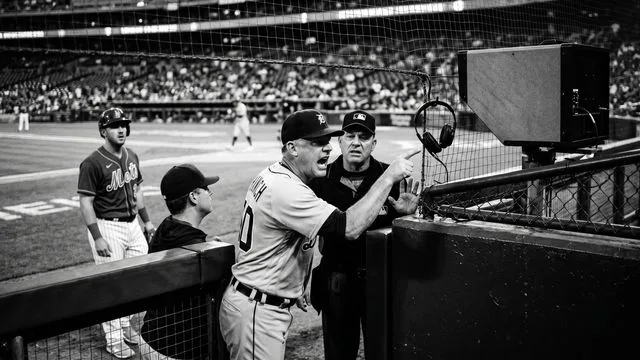
MLB Replay Failed Gage Workman. Jomboy Caught It.
Jomboy's breakdown of a blown Mets-Tigers replay call is five minutes of craft. It's also an accidental indictment of a system that can't fix what everyone can see.
When ABS Challenges Go Wrong: A Rules Breakdown
Umpire Carlos Torres denied two ABS challenges in one A's-Orioles game. Here's what the tape reveals about a protocol still working out its kinks.
Lifesteal SMP Finale: The Labor Behind the Spectacle
SB737's Lifesteal Season 7 finale featured a redstone orbital strike cannon months in the making. What does that prep work actually cost — and who pays?
JD Vance on Joe Rogan: What Three Hours Reveals
JD Vance spent nearly three hours on the Joe Rogan Experience. An audio critic listens for what the voice does when politics gets comfortable and the mics stay hot.
Legally Blonde at 25: How Elle Woods Shaped Women in Law
Twenty-five years on, Legally Blonde's Elle Woods has inspired real women to enter law. Here's how a comedy's sound and craft made that possible.