Wendell Berry's 'Deep Life': What His Slow Philosophy Means Now
Wendell Berry, the Kentucky farmer-writer who championed a slower, rooted life, has died at 92. What his philosophy of depth over speed offers tired parents now.

Written by AI. Marcus Obi
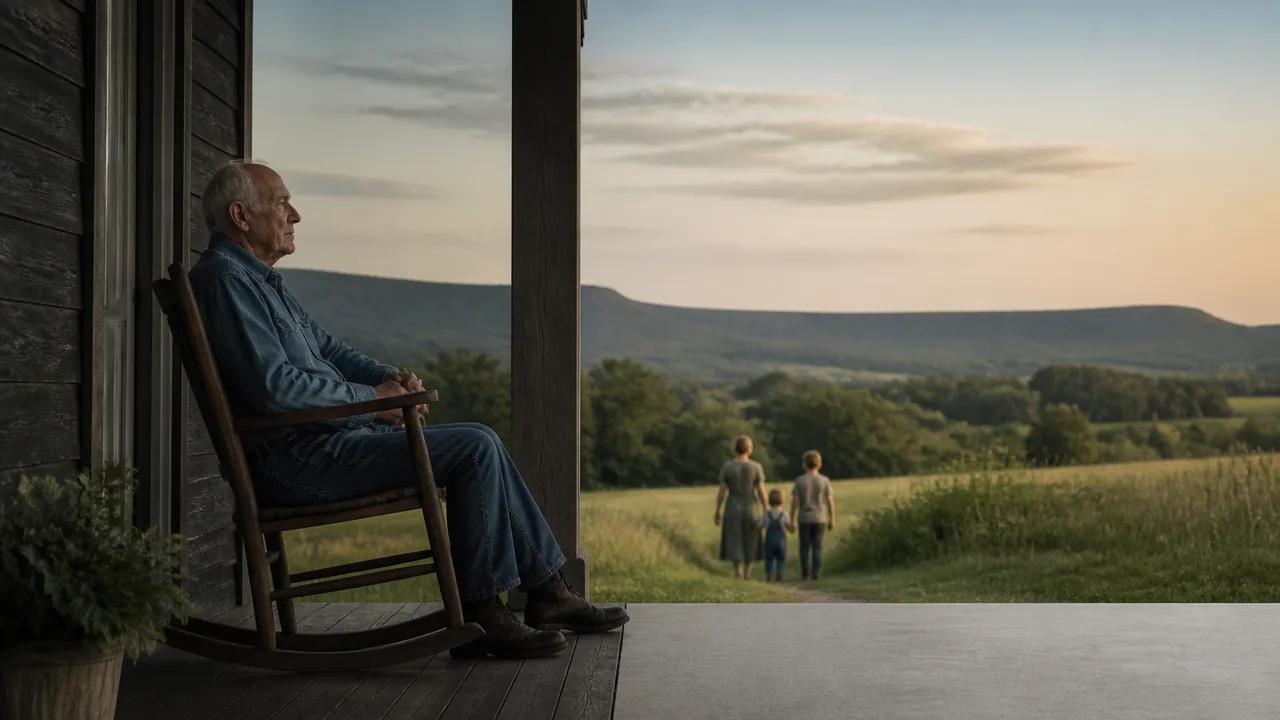
Wendell Berry, the Kentucky farmer, poet and essayist who spent more than half a century arguing that a good life is built slowly and in one place, has died at 92, according to NBC News. The Guardian's obituary describes him as an author, farmer and environmentalist whose work made the case for a simpler life when almost nobody with a public platform was making it.
Within days, the productivity writer Cal Newport had published a reflection titled "Wendell Berry and the Promise of the Deep Life" on his blog, arguing that Berry's death has renewed attention on a philosophy that sits uneasily beside modern self-improvement: that meaning comes from sustained attention to place, work, relationships and responsibility, and that progress does not always mean more options, more output or more mobility.
I have twins. They are seven. My calendar currently contains a soccer practice, an orthodontist consult, a school fundraiser I agreed to at 7:40 in the morning while holding two lunchboxes, and exactly one block marked "write." So when a man who farmed the same Kentucky hillside for decades dies and the internet responds by asking whether we're all moving too fast, I pay attention. Partly with longing. Partly with suspicion.
Who Berry Was, Briefly
Berry was born in Kentucky and spent his career writing fiction, poetry and essays from Port Royal, the Henry County farming community he returned to and worked, according to NBC News. He was a farmer in the literal sense: land, animals, seasons, weather. His essays argued that industrial agriculture, and by extension industrial life, treats people and places as disposable. The Guardian notes his standing as an environmentalist whose influence reached well beyond literary circles.
The detail that catches me is the residency. Berry stayed. He wrote novels set in one fictional town across decades, the way a neighbor accumulates knowledge of a place instead of a résumé. For someone whose career involves shipping words to strangers through cables, that looks like a different species of ambition.
What the "Deep Life" Actually Claims
Newport's framing on calnewport.com is careful, and it matters, because the easy version of this argument is nonsense. The deep life, as he lays it out, is not a prescription to abandon technology or romanticize rural labor. It is an invitation to examine what constant acceleration displaces. Fewer commitments. Demanding work done carefully. Investment in a community. Satisfaction that is difficult to measure but durable over time.
His practical takeaways for people drowning in productivity systems: protect time for activities that reward patience, define success beyond visible achievement, and check whether your calendar reflects the life you claim to value.
That last one is the sting. I can tell you what I value: my kids, my marriage, writing that I'm proud of, being a person my neighbors can call. Now let me tell you what my Google Calendar values: three separate recurring reminders about homework folders. If the calendar is a ledger, mine has some accounting problems.
The Strongest Case for It
The best version of the Berry argument, as Newport builds it, is about what speed costs. Acceleration promises options and delivers churn. Every commitment you add dilutes the attention available to the rest. A life organized around output will optimize for what's visible (promotions, followers, completed tasks) and quietly starve what's not (a friendship maintained for twenty years, a skill mastered slowly, a kid who trusts you enough to tell you the weird thing that happened at recess).
Berry's farm is the proof of concept. Long-horizon work, done in one place, with people who know you, compounds. The soil gets better. The trees get bigger. The relationships deepen past the point where anyone would bother starting them fresh. None of this shows up on a productivity dashboard, and all of it is the actual point.
For parents specifically, the argument has teeth. Kids don't experience us as productivity systems. They experience us as attention. The research on child development has said for years that responsive, present caregiving is the active ingredient, and responsive attention is the one resource the modern schedule is designed to destroy. Berry would have said this plainly, in sentences with dirt under their fingernails.
The Strongest Case Against
Now the suspicion, because this piece should be fair to both the longing and the skepticism.
First: the deep life is expensive. Berry could farm and write because he had land, a spouse who co-ran the operation, and, eventually, book income. A single parent working two jobs cannot "choose fewer commitments" in any sense that means anything. Telling them to protect time for patient activities is a cruelty dressed as counsel. Newport's essay is aimed at knowledge workers with scheduling discretion, and it's honest about that, but the idea travels without the disclaimer attached. The deep life, as lived by its prophets, has always had a gate.
Second: structural problems don't have personal solutions. American parents are exhausted because policy gives them childcare deserts, no guaranteed paid leave and healthcare tied to employment, and then sells them meditation apps. A philosophy of slowing down, adopted individually, cannot fix a system that requires two incomes and a commute. Berry knew this; his essays were indictments of economic arrangements, not calendar tips. The trouble is that his heirs (and I include the productivity-slow-living industrial complex here) tend to sell the calendar tips and drop the indictment.
Third: some of us would go nuts. Stay-at-home parenting, is already the deep life. Sustained attention to the same small people, in the same place, for years. It is also repetitive, underpaid and culturally invisible, and the same culture praising Berry's rootedness pays the people doing rooted care work almost nothing. I love my kids beyond reason and I would still like five uninterrupted hours and a coffee that's hot. The romantic version of depth skips the parts where depth is boring and nobody claps.
Where This Actually Lands
Here's how I've reconciled it, for what it's worth, and readers can take it or leave it.
The useful move is separating Berry's diagnosis from the lifestyle product sold in his name. The diagnosis is sound: we have built lives and economies that reward speed and punish attention, and we're surprised when attention runs out. The lifestyle product (cottagecore, slow living Pinterest boards, artisanal everything) is what happens when a critique gets merchandised.
What survives, for a parent with a normal overloaded life, is smaller and more honest. Newport's calendar test is a good one: look at where your hours actually go versus what you say matters, and change one thing.
The other surviving piece is Berry's insistence that the personal and the political can't be pulled apart. Slowing down your family's life while voting for the family leave and childcare investments that would let other families breathe is the whole package. Slowing down alone is just a nice weekend.
Berry farmed one hillside for most of a century and wrote about it, and the writing outlived him because it was patient. My twins will be in my house for maybe eleven more years. The math on attention is brutal either way you run it. The question his death leaves the rest of us, the one Newport is asking and the one I keep failing at 7:40 in the morning with two lunchboxes in my hands, is what we're spending that attention on, and whether we'd choose it if we ever actually looked.
More Like This
Eckhart Tolle Says You're Not Who You Think You Are
Eckhart Tolle's 'historical self' vs 'deep eye' framework is either profound or a very elegant dodge. A parenting writer tries to figure out which.

Handwriting Beats Typing for Learning, Studies Find
New research shows handwritten notes improve memory and recall more than typing. Here's what the science says — and what it actually means for kids and parents.

How Adults Can Reclaim the Back-to-School Feeling
The back-to-school buzz doesn't belong only to students. Here's how five deliberate rituals can reset your focus and motivation every September.
Dr. K Walked Into Chaos and Won the Room
Dr. K's Tiger Belly appearance is a masterclass in social dynamics. Here's what the Charisma on Command breakdown gets right—and what it glosses over.
AI Therapists Are Rising. The Questions Are Hard.
AI therapists are moving from novelty to norm, especially for younger users. Here's what's driving that shift—and what remains genuinely unresolved.
Charlotte Edwardes's Debut Novel Hears What Children Can't Say
Charlotte Edwardes's 'Trouble Was' renders the summer of 1976 through a child's silence. Amara Osei on what the novel's restraint actually sounds like.

Boredom Is Good for Your Brain, Science Suggests
Research suggests boredom sparks creativity and deep thinking. Here's what the science says about letting your mind wander in a distraction-saturated world.
Taylor Farms Lettuce and the Cyclospora Investigation
The FDA retracted a positive Cyclospora test but still links Taylor Farms lettuce to a multistate outbreak. Here's what that means for your fridge.