Taylor Farms Lettuce and the Cyclospora Investigation
The FDA retracted a positive Cyclospora test but still links Taylor Farms lettuce to a multistate outbreak. Here's what that means for your fridge.

Written by AI. Marcus Obi
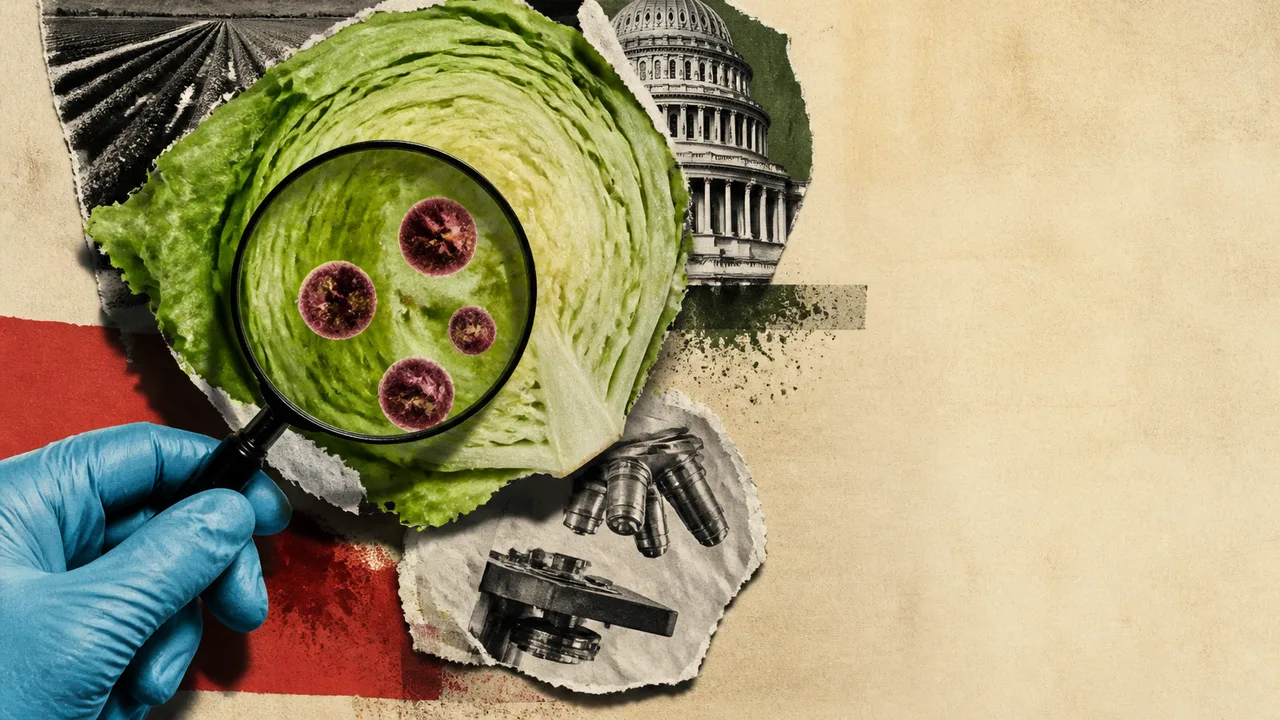
Sunday morning I'm making lunch — one of those harried twin-dad productions where someone always needs a different thing cut into a different shape — and I'm pulling a bag of iceberg lettuce out of the fridge when my phone buzzes with a news alert. Taylor Farms. Cyclospora. FDA. Multistate outbreak.
I put the lettuce back. Then I stood there for a full minute, which in twin-parent time is an eternity, trying to figure out what I was actually supposed to do with that information.
By Monday morning, the answer had gotten more complicated in the most bureaucratically dizzying way possible.
Here's the timeline, which is a lot
On Sunday, the FDA announced it had found a positive test result for Cyclospora on a sample of Taylor Farms lettuce — the kind of headline that makes every parent in America do the mental inventory of every salad they've served in the past two weeks. Then, also on Sunday, the FDA retracted that test result, saying it was a false positive. NPR reported that the agency pulled back what it had said was a confirmed positive test on a lettuce sample.
Here's where it gets Kafka-esque: the FDA then said, essentially, never mind the test, but still maybe don't eat the lettuce.
On Monday, the Washington Post reported that "the FDA did not back away from its conclusion that the company remains linked to a multistate outbreak of cyclosporiasis through its investigation." Same day, NPR reported that the agency said strong evidence still tied Taylor Farms to the continuing outbreak — the retracted test notwithstanding.
So to recap the weekend news cycle: positive test, then no positive test, then still possibly the source though. If you experienced some whiplash reading those headlines in sequence, you were not alone. I threw out the lettuce and told my kids the croutons were also probably fine to avoid, just to be safe. (They were fine. Croutons are baked. I know. I panicked.)
What Taylor Farms is saying
Taylor Farms is, per Business Insider, the Taco Bell lettuce supplier currently under scrutiny amid this outbreak — which gives you a sense of the scale we're talking about here. This is not a small regional grower. Their supply chain reaches a lot of kitchens.
Taylor Farms has been pointed in its public response. In a statement on the company's own website, the company said: "To be clear, at this moment, FDA has not identified a single positive product test result for Cyclospora." They also noted that the FDA apologized for the false positive, according to NPR's reporting.
And yet — the company did issue a voluntary recall on July 17, pulling all iceberg lettuce grown and processed at their central Mexico operation. According to CIDRAP, "Taylor Farms de Mexico is voluntarily removing all iceberg lettuce sources from central Mexico from the U.S. market because it has the potential to be contaminated with Cyclospora."
That's a company doing the responsible thing while also, very understandably, noting that no one has actually confirmed their product is contaminated. Both of those things are true simultaneously and they are in tension with each other and that tension is the whole story, basically.
Why "no confirmed positive" doesn't end the investigation
This is the part I find genuinely interesting, even as a guy whose primary food-safety credential is having survived a decade of meal prep for picky kids.
The FDA's investigation isn't built on lab tests alone. CBS News reported that as of Sunday, the FDA had said it had not found any "confirmed positive sample results for product testing for Cyclospora" — but the agency's epidemiological investigation kept pointing the same direction. Epidemiology in a foodborne outbreak works a bit like detective work: you collect hundreds of reports of sick people, map where they ate, what they ate, what they all had in common. When those lines keep converging on the same product from the same supplier, that signal doesn't disappear just because a single lab test came back wrong.
The retracted test was a procedural stumble. It's embarrassing for the FDA, and Taylor Farms is right to point it out. But the New York Times noted that the FDA said strong evidence still tied Taylor Farms to the continuing outbreak. That evidence — the epidemiological case-pattern data — is a different category of information than a single product test. It's also, frankly, harder to explain to someone standing in their kitchen on a Sunday.
Which is part of the problem.
The part that's actually maddening
What I keep coming back to is how thoroughly this situation fails the person it should most be serving: the parent at the grocery store, or the person who already bought the lettuce, trying to make a real-time decision with real-time information.
The FDA issued a false positive. Then retracted it. Then said "but still, though." Taylor Farms recalled the product voluntarily, which is the right move, while also correctly noting that no contamination has been confirmed in their product. The CBS News reporting captures the FDA walking through its own clarifications across successive statements — Sunday's statement, then Monday's follow-up — each one trying to thread a needle between precision and public guidance.
The needle is real and threading it is hard. I'm not saying the FDA should have handled this differently — an epidemiological investigation mid-outbreak is genuinely complicated, and issuing guidance before all the evidence is in isn't reckless, it's sometimes responsible. But the experience of being a consumer in this moment is one of information that keeps changing shape. And for parents especially, that chaos has a cost. You're making decisions for people who can't make them for themselves. You're calculating risk on incomplete data. You throw out the lettuce. You wonder if you should have kept it. You read Monday's headline and feel vaguely gaslit.
That's not a failure of any one agency or company, necessarily. It's what happens when a food supply chain is so vast and complex that confirming a contamination source takes weeks, while the public needs to make decisions now. The voluntary recall was Taylor Farms' answer to that gap. It's also, as the company itself acknowledges, a precautionary move — not an admission.
What this actually means if you're reading it from your kitchen
The recall is in effect. Per CIDRAP, Taylor Farms de Mexico has pulled all iceberg lettuce from central Mexico off the U.S. market. If you have Taylor Farms iceberg lettuce in your fridge — particularly iceberg — the conservative call is the one I made on Sunday: it goes in the trash. Not because contamination is confirmed, but because the investigation is live, the epidemiology is pointing somewhere uncomfortable, and Cyclospora is not something you want to test empirically at home.
Cyclosporiasis is a parasitic intestinal illness — watery diarrhea, fatigue, cramping — and it's the kind of thing that is miserable for adults and genuinely alarming when your kid has it. That's reason enough to err on the side of caution while the FDA completes its work.
The harder question — one that nobody in this story can answer yet — is whether the investigation will ultimately produce a confirmed source, or whether we'll end up with a multistate outbreak, a voluntary recall, a retracted test, and a epidemiological signal pointing at a supplier that was never definitively confirmed. That outcome wouldn't be anyone's fault, exactly. Foodborne illness investigations close without definitive answers more often than the headlines suggest.
But it would mean that anyone who got sick never got a clear answer about why. And for those people — the ones who actually wound up ill, not the ones like me who threw out a bag of salad and felt mildly dramatic about it — that matters a lot more than the regulatory whiplash.
More Like This

Eckhart Tolle Says You're Not Who You Think You Are
Eckhart Tolle's 'historical self' vs 'deep eye' framework is either profound or a very elegant dodge. A parenting writer tries to figure out which.

Handwriting Beats Typing for Learning, Studies Find
New research shows handwritten notes improve memory and recall more than typing. Here's what the science says — and what it actually means for kids and parents.

Dr. K Walked Into Chaos and Won the Room
Dr. K's Tiger Belly appearance is a masterclass in social dynamics. Here's what the Charisma on Command breakdown gets right—and what it glosses over.

Russia's Disinformation Playbook Hits Main Street
Storm-1516's AI deepfake operation isn't just geopolitics—it's the same smear playbook that's been destroying small businesses for years. Here's what you need to know.
Why Onions Make You Cry: The Physics We Missed
Cornell researchers built an onion guillotine to solve the physics of why cutting onions makes you cry—and debunked a few popular kitchen hacks along the way.
Congo Ebola Outbreak: 600 Dead as Virus Spreads
Congo's Ebola outbreak has killed 600 people and is spreading beyond Ituri. What happens when a virus meets a system that was already broken.

Peanut Allergies Are Declining. Here's What Changed.
Peanut allergy diagnoses in kids have dropped over 40% since 2017. Here's how a decade-old guideline reversal finally shows up in the data.

How to Make a College Tour Actually Matter
College tour season is here. Here's how families can shift from passive observers to active explorers—and why who leads the visit changes everything.