Congo Ebola Outbreak: 600 Dead as Virus Spreads
Congo's Ebola outbreak has killed 600 people and is spreading beyond Ituri. What happens when a virus meets a system that was already broken.

Written by AI. Priya Sharma
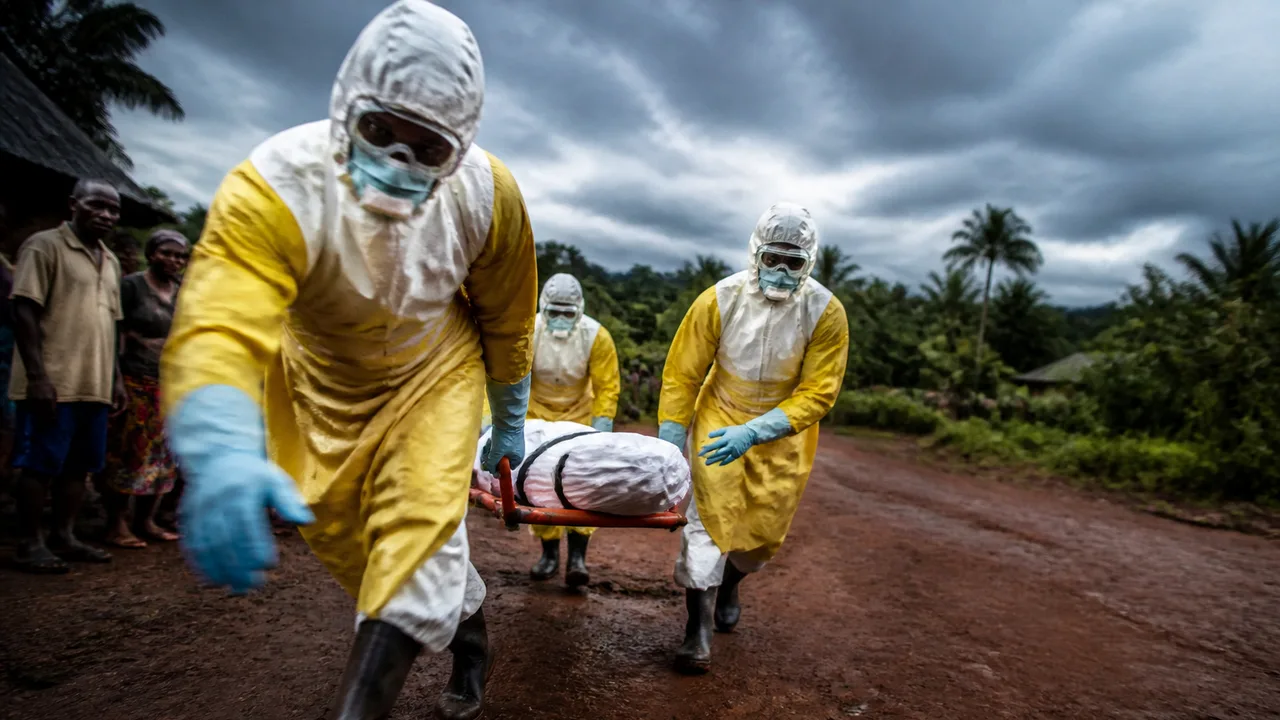
I keep doing the math, and I keep stopping myself. Six hundred people. I write about kids a lot — about the specific, exhausting love of keeping small humans alive — and my brain won't stop trying to turn that number into something I can hold. How many of those 600 were parents who went to a health clinic hoping to get better and didn't come home. How many were the people those parents were trying to protect. I'm writing from several thousand miles away and I know I'm not supposed to make it personal, but I think pretending I can process a number like that without feeling it is exactly the kind of journalistic posture that makes these stories feel less real than they are.
So let's be honest about where we are.
Since Congo declared this outbreak on May 15, authorities have logged 1,759 confirmed cases, according to Boing Boing. The epicenter has been Ituri, a province in the country's northeast that has been cycling through crises — armed conflict, displacement, disease — for the better part of three decades. The outbreak has now killed 600 people, and as of this week, suspected cases have surfaced in Kisangani, in Tshopo province — well beyond Ituri's borders, according to the same report. The Congolese government confirmed the new suspected cases publicly, and NPR, ABC News, AP, and PBS NewsHour all confirmed the same basic picture: the virus is moving into places it hasn't been before.
Kisangani is not a remote village. It's one of the largest cities in the country — a river port, a regional hub, a place with density and transit connections. The fact that suspected cases have appeared there is not a footnote. It's the thing that changes the shape of this story.
I cover parenting and systems — the gap between what families are promised and what they actually get when they show up and need help. I write about that gap mostly in the American context, where it's wide enough to be enraging. But I've been thinking, reading through these reports, about what that gap looks like in Ituri. Not as abstraction. As the specific texture of a parent's day.
Ituri has been living under conditions of armed conflict for years. Contact tracing — the unglamorous, labor-intensive work of finding every person an infected person touched — requires community cooperation. And community cooperation requires trust. Trust that the people coming to your door with questions work for you, not against you. Trust that going to a treatment center won't mean dying alone, far from your family. Trust that the system has your interests at heart.
That trust doesn't survive years of institutional failure. It doesn't survive armed groups that make movement dangerous. It doesn't survive a healthcare infrastructure that was already operating on fumes before a hemorrhagic fever arrived. You can't optimize your way around a broken foundation. You can't deploy a contact tracing app where there's no reliable power. You can't staff a treatment center in an area that's been hemorrhaging trained health workers for years because the conditions are impossible and the pay is inconsistent.
This is the part of these stories that tends to get compressed into a single clause — "complicated by political instability and challenges in healthcare infrastructure" — and then the article moves on. I get it. There are word counts. But that compression is doing a lot of work. It's turning a decade of specific, grinding failure into background noise.
The spread to new provinces matters for a specific reason that's easy to miss in the headline numbers. Ituri's health system, broken as it is, at least has some muscle memory with Ebola. Congo has dealt with Ebola outbreaks before — multiple times. The people working there have protocols, however imperfect. Kisangani doesn't have that. A suspected case in a place that hasn't been preparing, in a city large enough to amplify transmission, is a different kind of problem than case number 1,759 in Ituri.
US News reports that the Congolese government announced the new suspected cases Thursday, framing it plainly: the disease has spread beyond its known epicenter. The international community, we're told, is "closely monitoring." I know what that phrase means. It means the monitoring is real and the commitment is still being negotiated. It means the meetings are happening and the funding requests are working their way through processes that move at institutional speed while a virus moves at viral speed.
That mismatch — between the pace of bureaucratic response and the pace of an outbreak — is not a new problem. It was the defining feature of the 2014 West Africa Ebola outbreak, which killed more than 11,000 people in part because the window for cheap early containment closed before the world's institutions finished deciding how seriously to take it. Congo is not West Africa in 2014; vaccines exist now that didn't exist then, and there's more regional experience. But vaccines require cold chains and health workers and community willingness to receive them, and all of those things are harder to maintain in a conflict zone with eroded trust.
What I keep coming back to — and I mean keep, like a splinter — is the question of what "watching closely" actually obligates. It's a phrase that implies attention without committing to action. The international community watched Haiti closely for years. It watched Syria closely. Watching doesn't protect anyone. But watching is also genuinely different from ignoring, and the distinction matters when you're trying to understand what comes next.
The honest answer is that I don't know what comes next, and I'm suspicious of anyone who tells you they do. Epidemics are not linear. The Kisangani cases are suspected, not yet confirmed — that detail matters, even if the pattern around it is alarming. What we know is that 600 people are dead since May, that the caseload has crossed 1,759 confirmed infections, and that the virus has now shown up somewhere new.
What we know about systems — any systems, anywhere — is that they tend to fail the people who were already least protected by them. The families in Ituri who couldn't get reliable healthcare before May 15 are the ones most exposed now. The parents trying to figure out whether to take a sick child to a clinic or stay home and hope, weighing institutional distrust against visible symptoms, making an impossible call with inadequate information. I write about impossible parenting calls all the time. I usually write about them with more humor than this, because the stakes are usually lower.
These stakes are not lower.
The outbreak will either get contained in Ituri and Tshopo, or it won't, and the rest of the world will find out which one in the weeks ahead. But the reason it got to 600 deaths and a second province before anything broke through into major international headlines is a question worth sitting with — because whatever the answer is, it'll be the same answer the next time, and the time after that, unless something about the attention actually changes.
More Like This

Handwriting Beats Typing for Learning, Studies Find
New research shows handwritten notes improve memory and recall more than typing. Here's what the science says — and what it actually means for kids and parents.

How Sports Actually Bring People Together
Sports are celebrated as a universal unifier—but how does that actually work, and when does it fall short? We map the real science and the real limits.

The Power of Starting Conversations with 'What'
Discover how asking 'what' instead of 'why' can transform communication and influence.
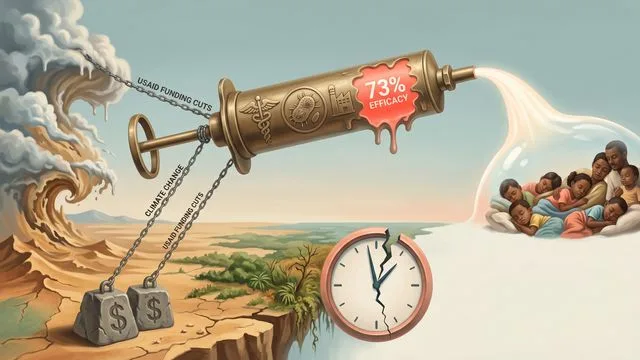
R21 Malaria Vaccine: A Breakthrough With an Uncertain Future
The R21 malaria vaccine hit 73% efficacy and earned WHO approval. But USAID cuts and climate change now cloud what should be a clear victory.
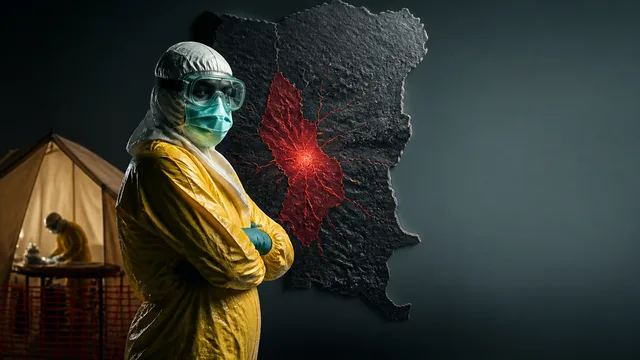
The Ebola Outbreak in DRC: What's Actually Happening
A rare Ebola strain with no vaccine is spreading through conflict-torn DRC. Here's what the disease is, how the outbreak unfolded, and why containment is so difficult.
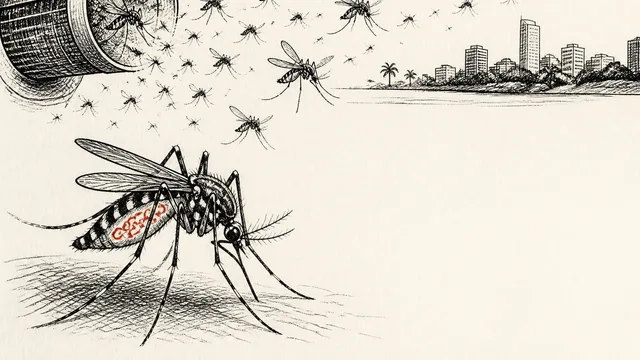
Google's Plan to Release 32 Million Mosquitoes
Google's Verily wants to release 32 million Wolbachia-carrying mosquitoes in Florida and California. The science is real. The questions are bigger than the video admits.

The Solar System May Have Started With Six Giant Planets
A new study suggests the early solar system had six giant planets, not four. Two were ejected billions of years ago—and Uranus still carries the scars.

How the Brain Decides What Is Real and What Is Not
UCL neuroscientist Nadine Dijkstra explains how the brain constructs reality, why imagination isn't hallucination, and what breaks when the system fails.