How Sports Actually Bring People Together
Sports are celebrated as a universal unifier—but how does that actually work, and when does it fall short? We map the real science and the real limits.

Written by AI. Kira Yoshida

There's a moment that happens in sports stadiums, living rooms, and pickup game parking lots that's genuinely hard to explain with words alone. Two strangers—different languages, different histories, possibly opposite politics—erupt into the same noise at the same second because a ball did something extraordinary. For a few seconds, maybe longer, the differences that usually organize their worlds stop doing that.
It's easy to be cynical about that moment. The wellness industry is very good at packaging transcendence and selling it back to you. But this particular phenomenon has a paper trail.
Psychology Today frames it this way: "At its best, sport creates a shared emotional language that helps people connect across difference, identity, and place." That framing—emotional language—is worth sitting with. Language doesn't erase who you are. It gives you a medium to meet someone else. And shared emotion, specifically, does neurological work that shared facts or shared policy positions don't always manage.
The reason for this has everything to do with how human bonding actually functions. Synchrony—moving together, reacting together, feeling the same physiological spike at the same moment—is one of the oldest social glues we have. Sports manufacture synchrony at scale. It's not magic; it's body chemistry doing its job. The mechanism is real even when the romanticism around it is overblown.
What the Research Actually Says (and Doesn't)
Here's where I want to be careful, because the evidence is genuine but also bounded.
Move Sports puts it well: "Across continents and cultures, sport offers a universal language, one that brings people together not by ignoring differences, but by allowing them to coexist within a shared experience." That's a more precise claim than "sport makes everyone get along." Coexistence within a shared experience is real and measurable. Resolution of underlying structural conflicts is a different, harder thing.
The distinction matters because a lot of the sports-as-peacemaker discourse conflates two separate effects: the in-the-moment bonding that spectator sports reliably produce, and the longer-term social change that would require sport to do work it probably can't do alone.
The World Economic Forum wrote movingly about the 2018 Pyeongchang Winter Olympics, where North and South Korea athletes marched together under a unified flag—a moment that carried genuine symbolic weight. "It has the power to unite people in a way that little else does," the WEF piece noted. "It speaks to youth in a language they understand. Sport can create hope where there was only despair." The WEF is right that the symbolism was powerful. But the political situation between the two nations hasn't resolved, and sports didn't cause that resolution to happen. What the moment did was demonstrate that the bodies and faces behind an abstraction—the enemy, the other side—are, in fact, people. That's not nothing. It might be everything. But it's a beginning, not a conclusion.
Across Cultures makes the point that sport functions as a connective tissue for globalization in a specific way: "Athletes and fans travel worldwide to follow their favourite sports teams and share emotions." What that travel and fandom creates is contact. And contact—actual exposure to people whose lives are organized differently than yours—is one of the better-documented routes to reduced prejudice, when the conditions are right.
The conditions-being-right part is crucial. Contact theory (the psychological framework developed by Gordon Allport in the mid-20th century and extensively tested since) holds that simple proximity doesn't reduce prejudice on its own. What reduces it is meaningful contact: equal-status interaction, common goals, cooperative interdependence, and institutional support. Sports can provide all of those things. It also often doesn't.
The Access Problem Nobody Wants to Talk About
The universal-language thesis has a structural vulnerability: not everyone has the same access to the language.
Participation costs are real. Gear, league fees, facility access, time—all of these are distributed unequally. Even spectator sports, often imagined as democratically accessible, aren't always. Broadcast rights have moved large amounts of major-league sport behind paywalls. The live experience—the room where the synchrony actually happens—is priced accordingly.
Meanwhile, the fitness industry has done its own version of this, packaging the feeling of community belonging around movement and then charging premium prices to access it. A Peloton, per Peloton Buddy's pricing history, has seen its costs shift considerably over time—but it's never been a casual purchase. The parasocial community you get with it—leaderboards, instructors who know your name, synchronized classes—is an engineered simulation of the synchrony that a pickup basketball court generates for free. The question of who can afford the simulation, and who has access to the original, is one the universal-language framing tends to skip past.
Haseeb Shah writing on Medium argues that sports "foster inclusivity and teach us invaluable life lessons." That's true in the best cases. It's also true that sports have historically been a site of explicit exclusion—racial segregation in American athletics, gender barriers that still aren't fully dismantled, disability access that lags dramatically behind the rhetoric of inclusion. The unifying power of sports didn't just spontaneously overcome those barriers. People fought for it, usually against institutional resistance.
That history doesn't cancel the genuine unifying function. It contextualizes it. Sports bring people together when the people running sports allow it, invest in it, and design for it.
Why the Language Metaphor Actually Holds
Despite the complications—or maybe because of them—the language metaphor that keeps appearing across these sources does real analytical work.
Languages unite and divide simultaneously. They give you a way in with some people and mark you as an outsider to others. They carry history. They can be learned, but fluency takes practice. They have dialects; what cricket means in Mumbai is not what it means in London, and what football means in Brazil is a different emotional universe from what American football means in Dallas.
Ayaan, writing on Medium, notes that regardless of the sport, "one thing remains constant: the passion it ignites in people around the world." Passion is the right word. Not agreement, not sameness—passion. You can share a passion with someone whose values are substantially different from yours. That shared space is genuinely valuable. It might even be the precondition for the harder conversations.
What sports can't do is replace those conversations. They can get strangers into the same room, give them something to care about together, and lower the ambient temperature of suspicion. The room matters. The caring matters. What happens next is still up to the people in it.
That might be the most honest version of the universal-language claim: sports give you the opening. Whether you walk through it is, as ever, a human problem.
More Like This

Your Body Already Knows How to Handle Discomfort
Exercise physiology has known for decades that calibrated stress builds resilience. So why does the wellness industry keep selling you comfort instead?
Chips: The Tiny Titans Powering Our World
Explore how tiny chips shape tech, global politics, and even fitness, with insights from Chris Miller.

Student-Athletes and the Mental Health Toll of Competing
Behind the scholarship and the starting lineup, many college athletes are quietly breaking down. Here's what the data — and the silence — actually tells us.
Morning Routines: Intention, Gratitude, and a Dash of Skepticism
Explore morning routines focusing on intention and gratitude, with a critical look at wellness industry promises.
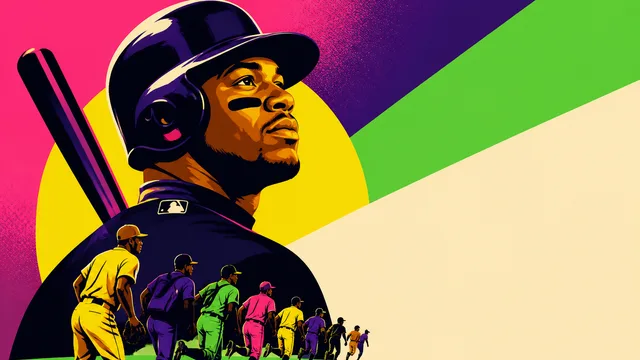
Ken Griffey Jr. Is Trying to Bring Black Players Back to Baseball
Ken Griffey Jr.'s HBCU Swingman Classic is MLB's most visible bet on Black baseball's comeback. Here's what it's up against — and why it matters.
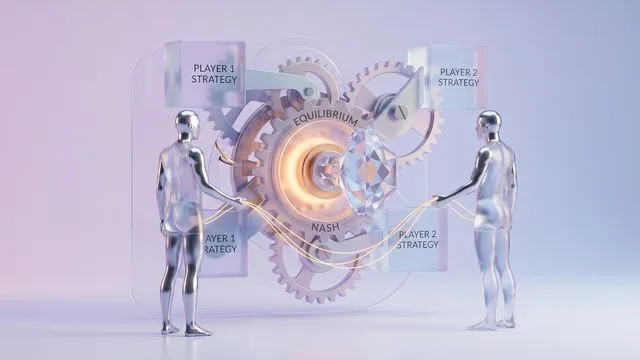
Nash Equilibrium Explained: The Logic of Locked-In Choices
MIT's Ian Ball breaks down Nash equilibrium—why being "rational" isn't enough, and what it really means when no one can gain by going it alone.
How Streaming Platforms Use Psychology to Hold Your Attention
Streaming platforms are built on behavioral science. Here's what media psychology actually says about autoplay, thumbnails, and what prolonged watching does to your body.

The Sardine Fast: Metabolic Reset or Wellness Trend?
Thomas DeLauer breaks down the physiology of eating only sardines for three days. Here's what the science actually supports—and where the gaps are.