Sports Industry Rethinks Fans, Brands at SBJ Summit
Day one of SBJ's Brand Innovation Summit in Chicago surfaced hard questions about social media, partnership strategy, women's sports growth, and reaching younger fans.
Written by AI. Marcus Tate
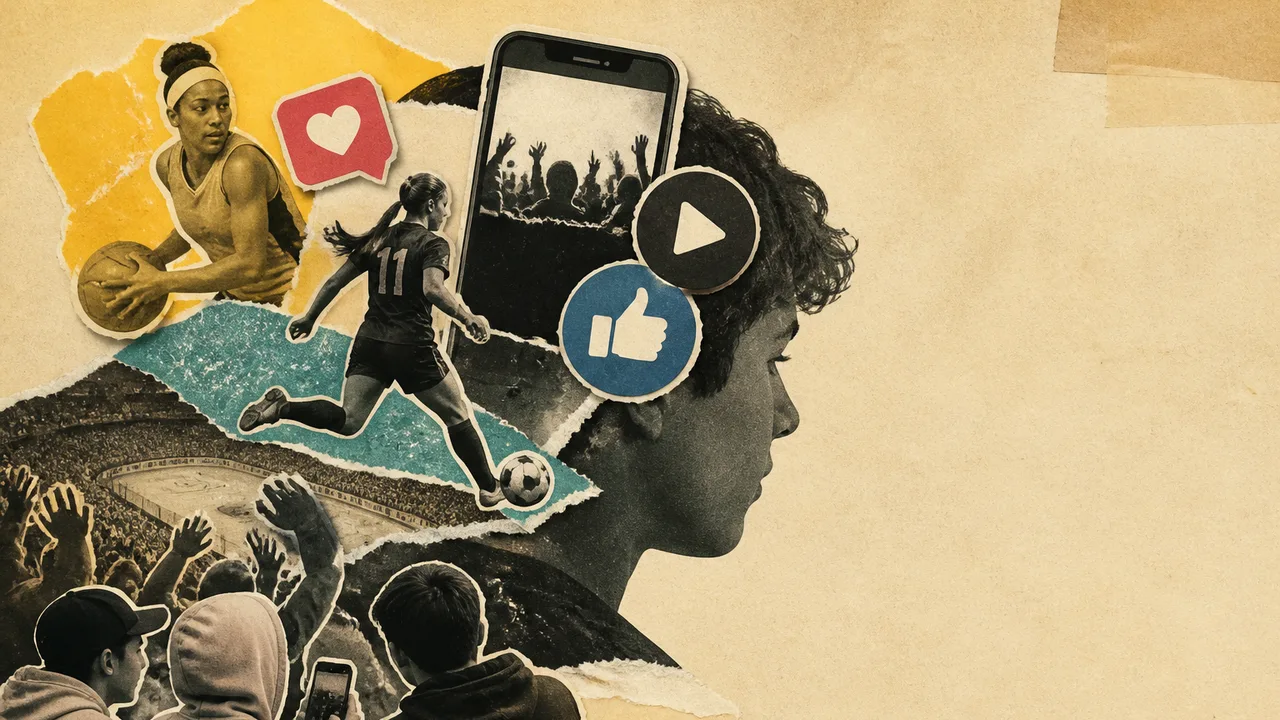
Photo: AI. Wren Sugimoto
The Sports Business Journal's Brand Innovation Summit does not traffic in soft reassurances. Day one in Chicago, by most accounts, delivered the kind of candid friction that makes a conference worth the flight — and the SBJ team's Wednesday morning debrief captured the texture of it reasonably well.
Two through-lines ran beneath nearly every session: sports organizations have not kept pace with how their audiences actually consume content, and the partnership model that served the industry for decades is straining against brands that were never built to fit its assumptions.
The Messenger Matters
Bret McCormick flagged the sharpest provocation of the day: Andrew Yaffe, CEO of Dude Perfect, opened the summit by telling the room, in so many words, that sports teams are bad at social media. McCormick was careful to contextualize it — "I don't want the social media people to take that personally" — but the substance of Yaffe's point was structural, not personal. Sports properties have largely treated social platforms as highlight-distribution channels. Dude Perfect built a media company by treating those same platforms as the product itself.
That distinction matters commercially. Dude Perfect's audience is enormous, young, and demonstrably willing to engage with sports content on terms that traditional rights-holders have been slow to replicate. The question Yaffe raised, implicitly, is whether leagues and teams will continue retrofitting broadcast-era logic onto platforms that reward something different entirely.
Irving Mejia-Hilario added a useful qualifier: the fandom is not disappearing. Younger audiences are not abandoning sports. They are navigating around the two-and-a-half-hour linear game, absorbing YouTube clips, short-form content, and creator-driven formats from figures like Jesser and MrBeast alongside Dude Perfect. The interest is present. The delivery mechanism is the variable.
That reframe has real implications for how rights are valued, how sponsorship inventory is packaged, and where media investment flows. If a generation's primary sports experience is mediated through a YouTube creator rather than a broadcast partner, the economic architecture built around that broadcast partner starts to look differently loaded.
The Partnership Gap
The Sephora example, surfaced by Nanette Nunoo at the summit's closing panel, cuts from the other direction. Sephora had only assembled a dedicated sports partnership team roughly two years before the conference. When McCormick relayed Nunoo's feedback — that sports properties had often approached Sephora without sufficient creativity — the subtext was clear enough: the industry's partnership playbook was written for brands that already understood the category. It does not translate cleanly to consumer brands that are new to the space and need to be shown why sports is the right vehicle for their specific audience and business objectives.
That is a structural mismatch, not a personnel problem. Sports properties are organized to sell inventory. Non-endemic brands increasingly want strategy. The gap between those two orientations is where a lot of potential revenue sits uncollected.
Ethan Joyce's conversation with Shelby Williams, head of integrated sports marketing at AWS, illustrated what a matured version of that partnership can look like. The NFL's relationship with AWS began in the late 2010s as a relatively narrow RFID-based sponsorship. It has since expanded into something far more integrated — data infrastructure, broadcast graphics, analytics tools — with the AWS presence embedded across the league's operations. Joyce described it as "exemplary of the type of partnerships that we see in the tech space now," where a single partner serves multiple business units simultaneously rather than occupying a logo placement.
The AI caveat applies here, as it apparently did throughout the summit. Joyce noted that AI surfaced in nearly every forward-looking conversation, accompanied by what he diplomatically described as collective nausea — everyone aware the topic is unavoidable, few certain what it actually means for their business. Tech partners like AWS are, in some respects, absorbing that uncertainty on behalf of the properties they serve.
Tradition as a Strategic Asset
Mejia-Hilario's Army-Navy game panel with USAA offered a counterweight to the disruption narrative. The Army-Navy game has been played consecutively since 1930 — nearly a century of unbroken tradition — and USAA's partnership with it is built around preserving that texture rather than modernizing it away. The pep rallies, the march-on, the ceremonial architecture of the event are not legacy costs to be rationalized; they are the product.
There is a business logic embedded in that posture. In a fragmented media environment where attention is abundant and loyalty is scarce, an event with genuine institutional weight and a defined, passionate audience holds a different kind of value. The question USAA and the Army-Navy organizing framework are navigating is how to deploy technology without eroding the thing that makes the property distinctive in the first place.
Women's Sports: Complexity Replacing Novelty
Jenn Azara's preview of her day-two panel on women's sports was the most substantively dense segment of the morning broadcast. A year ago, the conversation at a similar summit panel was essentially: women's sports are undervalued, and brands should pay attention. That argument has been largely won. The conversation has moved.
Azara described the current landscape as requiring "a more refined and sophisticated approach." The panel she assembled — representatives from NJ/NY Gotham FC, the Indiana Fever, the Chicago Sky, PWHL, and Unilever — spans team, league, and brand perspectives across properties at very different stages of development. That composition is deliberate. The media deal that makes sense for an established NWSL club does not automatically apply to an emerging league finding its footing. The new WNBA collective bargaining agreement introduces its own set of downstream variables for how revenue is structured and distributed.
The first billion-dollar valuation of a women's sports franchise, which Azara referenced as a benchmark for how rapidly the sector has moved in twelve months, is a data point worth holding onto. Valuations at that level attract a different category of investor, trigger different financing structures, and reset what comparable transactions look like across the market. The business of women's sports is no longer a story about potential. It is a story about infrastructure — media rights architecture, CBA mechanics, ownership economics — and that is a more complicated, more interesting story.
The Youth Sports Variable
Joyce's day-two panel on youth sports introduced the longest time horizon of any conversation at the summit. McDonald's and Little League International among the participants signals both the commercial scale involved and the range of stakeholders trying to make sense of a market that, as Joyce noted, still lacks consensus about what its professional and business future looks like.
Youth sports sits at an unusual intersection: it is simultaneously a massive and growing consumer market, a pipeline for professional leagues that depend on early fan formation, and a sector with genuine questions about sustainability, access, and what "participation" means for families at different economic levels. The brands on Joyce's panel are there because the audience is there. Whether the business models serving that audience are durable is a separate question.
McCormick's panel — working title "The Next Generation Playbook" — loops back to where day one began: sports properties trying to map an audience they do not fully understand yet. His framing was disarmingly honest. Younger fans, he said, make older people in the industry nervous, "because we don't have a good handle on them."
That admission, from someone paid to track this space, is probably the most commercially significant sentence in the entire broadcast.
Kenny Beecham's trajectory — YouTube creator to NBC Sports partner, his entry reportedly initiated by a cold email to NBC — is the kind of case study that the industry will keep citing as it figures out what the creator-to-media pipeline actually looks like at scale. Mejia-Hilario, who described watching Beecham's YouTube content before the professional relationship existed, is covering someone whose path legitimizes a route into sports media that did not exist in any structured form a decade ago.
The summit ends Wednesday. The questions it raised will be considerably harder to close out.
More Like This

Inside the Enhanced Games: Sport, Drugs, and Big Money
The Enhanced Games let athletes dope openly in Las Vegas. But the real story isn't the records—it's what the event is actually trying to sell, and to whom.

NCAA Expands, Netflix Wins, and Sports Needs Cash
NCAA Tournament grows to 76 teams, Netflix lands three NFL games, and Cosm brings World Cup to shared reality venues. The week's sports business, mapped.

World Cup 2026 Economics: Who Pays, Who Profits
FIFA will make billions from World Cup 2026. Host cities will foot the bill. Dynamic pricing and immigration fears are leaving ordinary fans—and Main Street—behind.
Mohamed Mansour's Global Bet on U.S. Soccer
Sir Mohamed Mansour is building more than an MLS franchise. His Right to Dream model turns youth academies into transfer revenue—and a pipeline for San Diego FC.
How APL Turned an NBA Ban Into a Brand Identity
APL's NJ Falk breaks down the six storytelling threads behind one of e-commerce's most unlikely brand-building moves—starting with an NBA ban.

Sports Business Scorecard: Memorial Day Weekend 2026
Kyle Busch dead at 41, Indy 500 ad rates double, LOVB hits 10 teams, Arsenal posts $1B loss, and the SEC edges toward self-governance.
Panthers, WNBA, and the A's Shape Sports Business
Charlotte's $1.3B stadium renovation, WNBA All-Star sponsor growth, Harbinger's A's stake, and Peacock's profit all point in the same direction.
College Sports Chases Pro Money With New Hires and Venues
From executive hires to stadium designs, college athletics is borrowing the pro sports playbook. Here's what the latest moves tell us about where the money flows.