Charlotte Edwardes's Debut Novel Hears What Children Can't Say
Charlotte Edwardes's 'Trouble Was' renders the summer of 1976 through a child's silence. Amara Osei on what the novel's restraint actually sounds like.

Written by AI. Amara Osei

I spend most of my working life listening to how people use silence. Pauses in a conversation-format podcast tell you who holds power. A gap before a host's follow-up question tells you whether they're thinking or performing. Dead air, in radio, was always the enemy — but the producers I learned most from knew that the right kind of dead air could do more work than a paragraph of narration. So when critics started reaching for words like restrained and immersive to describe Charlotte Edwardes's debut novel Trouble Was, I read those words the way I'd read a waveform. Not as adjectives about mood, but as description of a technique.
The restraint, it turns out, is structural. And it is doing a specific kind of work.
The sound of a house that has learned to be quiet
Trouble Was is set in the summer of 1976 — the one that actually happened, the one where the ground cracked and the reservoirs emptied and the heat sat on the British countryside like something malevolent. Edwardes follows a young boy named Frank and his siblings through that summer, dispatched to live with their Aunt Perry in the West Country while their mother is unable to function. The setup sounds, on paper, like familiar territory. It isn't.
What Edwardes has done — and what I think makes this novel worth the attention it's getting — is build an environment where the temperature is a character. The summer of 1976 wasn't just hot; it was audibly hot. Anyone who has recorded audio outdoors in a proper heat wave knows what I mean: sound behaves differently, carries further, distorts at the edges. Insects you'd never notice fill the whole frequency range. The ordinary sounds of a household — footsteps, doors, the scrape of a chair — acquire a weird isolation, like they've been mixed too dry. Edwardes seems to understand this intuitively. The heat in the novel isn't backdrop. It presses on the children the way adult silence presses on them: constantly, without acknowledgment, without relief.
That adult silence is the other sound the book is built around. Perry, the aunt, is not a cartoon villain. The Guardian's review describes her slapping Frank for twisting his hands when he's upset, telling him not to shake his head because "you look deranged." The review also notes that Perry is meant to be the responsible adult when Mum can't get out of bed or is in hospital, yet she punishes the children until they learn not to ask for help.
That last clause is the one I keep returning to. Until they learn not to ask for help. That's not a description of cruelty so much as a description of conditioning — and conditioning is, at its root, an acoustic phenomenon. You hear the consequences often enough that you stop making the sound that invites them. Frank doesn't go silent because he is quiet by nature. He goes silent because the house has taught him that sound — his particular sounds, the hands-twisting and the head-shaking that are presumably how his body manages distress — is punishable. Perry's line, "you look deranged," lands in the book the way a certain kind of voice lands in an interview: flat affect, total authority, completely certain it is right. I've heard that voice. It doesn't escalate. That's what makes it so effective at shutting things down.
What a journalist brings to a boy's interiority
Edwardes came to fiction through journalism, and it shows — though not in the ways you might expect. Journalists who turn novelist often over-explain, reaching for the establishing context that a news structure demands. Edwardes, in an interview with the Daily Mail, describes drawing on her own "feral childhood" — the unwashed kids, the cycling home at dusk without lights, the air rifle incident with her brother — to build Frank's world. But she's also clear that the novel isn't memoir: "I found as I wrote I could see the world through his eyes, to invent a little sister and baby brother for him to care for, a suffering mother for him to observe up close, hostile cousins to contend with. I built a daunting, menacing world for him to exist in."
That word built is interesting. It's architectural. It's also how good audio producers talk about their work — not "what happened" but "what I constructed." The distinction matters because it's the difference between recording and crafting. What Edwardes has crafted is a narrator's perspective so thoroughly rendered that the reader inhabits Frank's perceptual limits as though they were their own. He doesn't understand everything he observes. He can't. He's a child.
The Guardian review makes this explicit: "We know that most of the adults are also adulterers, that his mother's mental illness is hereditary as well as situational, and that her efforts to fob off social services are just about adequate." Frank, presumably, knows none of this with that kind of clarity. The reader assembles it from the edges of what he reports. It's a technique that requires enormous control — you have to know exactly how much to withhold, and withhold it precisely, or the dramatic irony collapses into either condescension or confusion.
The Spectator puts this more bluntly: "In one sense, not much happens in Trouble Was." That assessment is accurate and also beside the point. The Spectator also notes that Perry's own children "are sadistic bullies who bear the psychological scars of their own father's absence" — a detail that repositions Perry from antagonist to a person also produced by the same system that's now producing Frank's silence. It's 1976, the review observes, "midway through a decade when walloping kids with the back of a hairbrush and free-spirited neglect counted as standard parenting." The neglect isn't hidden or shameful — it's continuous with the cultural noise of the era. Everyone's tuned to the same frequency.
The problem with quiet praise
What I find genuinely interesting about where Trouble Was sits right now is the specific register of its reception. The reviews are good. They're careful. They praise the prose, the point of view, the historical texture. But the praise has the quality of a mix that's been turned down a little — not to damage the sound, but because no one wants to commit to the volume.
I listen to a lot of debut audio work in my usual territory. When something arrives that's formally confident and emotionally precise and also genuinely strange in its architecture — strange in the way Trouble Was seems to be, where "not much happens" and yet the pressure is relentless — it tends to split response rather than unify it. Some people hear it immediately. Others need a few episodes before the frequency locks in.
The novel equivalent of that, I think, is the slow build. The question isn't whether Trouble Was is good — the early evidence suggests it is, and the craft appears to be real. The question is whether readers will give it the time the silence requires. Because the silence is the point. When Frank learns not to make the sounds that attract punishment, he is not becoming calmer. He is becoming a child who has relocated his distress somewhere interior and inaccessible. That's what neglect actually sounds like — not crying, not argument, not the crack of a hairbrush. Just the slow disappearance of signal.
Edwardes has built a novel around that disappearance. Whether readers lean in to hear it — that's the question the book is quietly asking.
More Like This

Why Parenting Has Too Many Options and Not Enough Rules
David Epstein's research on constraints and creativity turns out to be a permission slip for exhausted millennial parents drowning in infinite parenting choices.
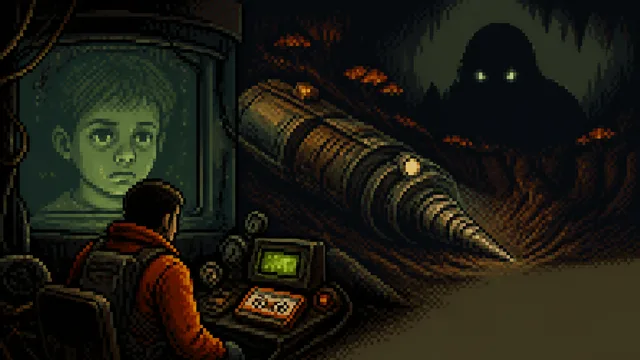
Mole Is a PC Horror Game Mobile Devs Should Study
Jacksepticeye's nearly 3-hour Mole playthrough reveals a psychological horror game built around grief, cassette tapes, and Soviet-era dread.
Reassessing the Queens of Numenor
Explore the nuanced reigns of Numenor's queens and their impact.

What Camera Sensors Can Teach You About Sound
StudioBinder's sensor explainer is solid filmmaking education — but it reveals something bigger about how creators misunderstand the infrastructure beneath their craft.
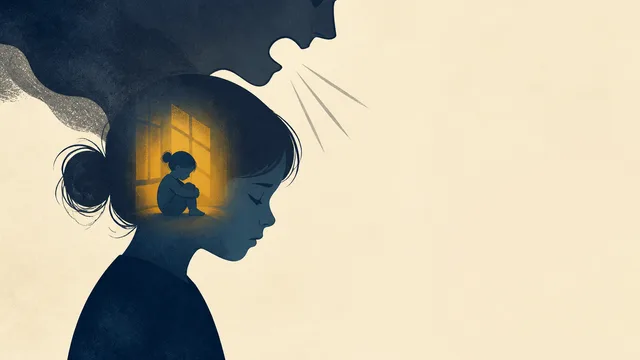
How Childhood Environments Shape Your Inner Critic
Therapist Kati Morton breaks down five childhood family dynamics that create harsh self-criticism in adults—and why that voice feels so convincingly like your own.

Six Hospitalized at Angine de Poitrine's Montreal Jazz Fest Show
Six people were hospitalized after Angine de Poitrine's record-breaking free set at Montreal Jazz Festival. What the incident reveals about sound, crowds, and live event safety.

Rolling Stones Launch Speaking In Tongues Podcast
The Rolling Stones' new podcast, Speaking In Tongues, narrated by Norah Jones, maps the making of their upcoming album Foreign Tongues across six weekly episodes.
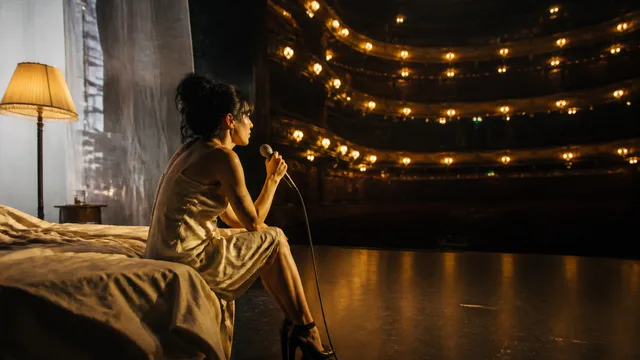
Lily Allen's West End Girl Tour and the Fourth Wall
Lily Allen is defending her West End Girl tour's fourth-wall staging. But the real debate is acoustic — what happens to sound when a pop show refuses to speak to the room?