Wartime Innovation Comes With a Price in Emergency Power
World War II mobilization sped research and medicine production, but its legacy raises questions about oversight, unequal burdens and power after crisis ends.

Written by AI. Helen Papadopoulos
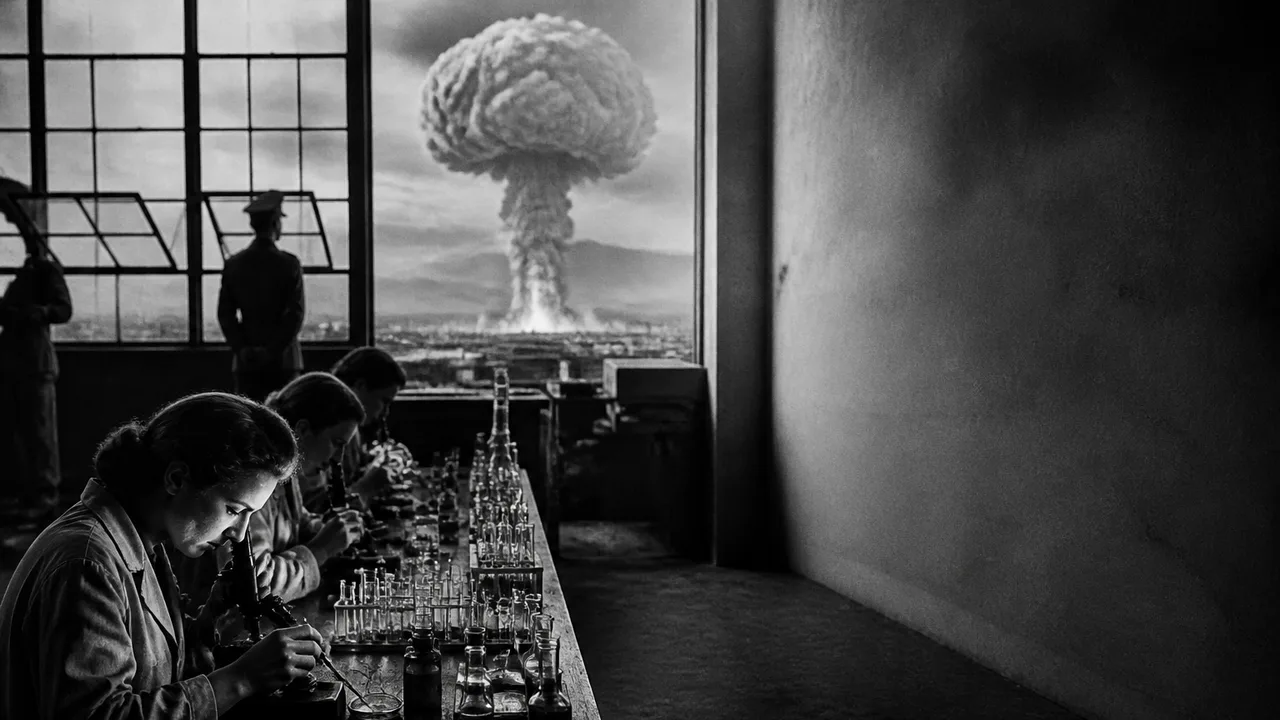
In 1941, the United States created the Office of Scientific Research and Development to coordinate wartime research. Under Vannevar Bush, it connected government money and military needs with work in universities, laboratories and industry. That arrangement helped move technologies through development, testing and production at a pace peacetime institutions rarely demanded.
The wartime record attracts attention whenever a government faces a crisis that seems to require everything at once: new tools, expanded factories, trained people and answers before ordinary procurement could deliver them. During the COVID-19 pandemic, policymakers looked back to the World War II effort for precisely that reason. But the attractive part of the analogy, speed, comes attached to a question about power. Who decides what counts as urgent, who gets the contracts, and who carries the risks while decisions move faster?
What the Wartime Machine Actually Did
The Office of Scientific Research and Development, or OSRD, made a compelling case for public coordination. Its wartime work helped develop, test and put technologies into production. Gross and Bhaven N. Radar and the large-scale production of medicines belong in this account. So does a less photogenic achievement: getting institutions that normally pursued different priorities to work toward a common deadline.
That capacity answers a problem markets and laboratories cannot necessarily solve alone. A useful discovery still needs equipment, manufacturing, distribution and buyers prepared to pay for it. In wartime, the state could fund research, set priorities and help connect a promising result to production. The breakthrough makes the headline; contracts and coordination do much of the work between a laboratory and widespread use.
The medical effort shows that mobilization involved choices within government as well as spending by it. The Committee on Medical Research had a budget one-tenth that of the National Defense Research Committee. The medical committee nevertheless played an essential role, arranging research with universities, hospitals and other institutions. The comparison complicates any account that measures a program's value solely by the size of its appropriation. A smaller office with a clear task and access to the right partners could accomplish work a larger budget alone would not.
The distinction between invention and scale also keeps the history honest. War did not create every idea it put to use. It changed the resources, demands and routes through which ideas became usable technologies. When someone asks for a new Manhattan Project or a wartime-style production drive, the practical question is which part they want to reproduce: concentrated research funding, guaranteed demand, production planning, or the political latitude granted to officials directing them.
The People Outside the Planning Room
Emergency organization narrows choices by design. Officials select problems, award contracts and establish deadlines; institutions with the capacity to respond gain an advantage. In a war, military needs have a claim on those decisions that civilian needs may struggle to match. Workers and communities can face the consequences of accelerated production without having helped choose the priorities. Those are features a crisis planner has to account for even when the chosen goal commands broad support.
Consider how a project changes as it passes from the research bench to the factory. At the bench, success may mean a working technique. At scale, it requires labor, materials, facilities and a decision about where production happens. Each step introduces people whose interests differ from those of the office signing the contract. A state can coordinate those steps well and still distribute their burdens unevenly. A medicine's wartime origin, likewise, tells us little by itself about who can obtain it afterward.
Public oversight can look slow beside a deadline. It can also expose an unusable contract, a neglected civilian need or a cost shifted onto people outside the planning room. The case was for serious oversight of emergency funding and advance planning. Their proposed combination has a practical logic: agencies that establish expertise and procedures before a crisis have less need to invent them while spending at speed.
The strongest argument for emergency discretion remains substantial. A committee that cannot decide until every affected interest agrees may fail to respond to the threat that brought it together. An outbreak, a war or another fast-moving disruption can make delay costly. Oversight therefore has to be designed for the tempo of the decision. Published priorities, clear responsibility for contracts and review that can operate during an emergency offer more useful scrutiny than a verdict delivered years after the money is spent.
Rome's Uncomfortable Footnote
The ancient Roman Republic had its own answer to the problem of concentrated authority: the dictatorship, an office appointed for an exceptional task and traditionally limited in duration. In Livy's account of Cincinnatus, the leader receives extraordinary command, defeats a military threat and gives up the office. It is an irresistible story for anyone who wants emergency power to come with a built-in off switch.
Livy wrote a moral history, however, rather than a procurement manual. His Cincinnatus is an ideal of civic restraint, not proof that officials relinquish exceptional authority whenever a deadline arrives. Roman institutions also limited political participation; asking whether an office was temporary leaves open whose interests its holder could ignore while it lasted. The comparison is useful precisely because it forces two separate questions. How long does the power last, and who can challenge its exercise before it expires?
Modern research programs are not Roman dictatorships. A wartime laboratory contract and an ancient magistracy operate through different institutions and grant different powers. The Roman example instead sharpens a habit of thought: a formal endpoint cannot, on its own, settle what an emergency has changed. Contracts, production capacity, administrative relationships and expectations about government action can outlive the immediate danger.
What Survives the Deadline
A crisis response can leave valuable institutions behind. Research networks may be easier to assemble the next time; public agencies may know how to work with manufacturers and hospitals; planners may have learned which supplies need to exist before the alarm sounds. It can also leave established contractors with better access to decision-makers, public spending with too little scrutiny, or civilian priorities still waiting their turn. None of those outcomes follows automatically from wartime invention. They depend on choices made during mobilization and after it.
That makes the World War II comparison more demanding than a call to spend as if the country were at war. It asks what the state should coordinate, which decisions require public review even under pressure, and how people outside government can contest the costs assigned to them. Bush's wartime office demonstrated that coordination could turn research into usable tools. The harder test for the next emergency is whether a government can build that capacity while giving the people subject to its decisions a way to see them, question them and shape what remains.
More Like This

Prehistoric Anomalies That Challenge Archaeology's Timeline
From Göbekli Tepe to the Baghdad Battery, we examine the archaeological anomalies fueling debate about how far back advanced human knowledge really goes.

California Mastodon Tooth Opens a Pleistocene Window
A Pacific mastodon molar found in a California creek may reveal diet, climate and extinction, provided researchers can recover its geological context.

Stoicism as a Political Philosophy, Not a Retreat
Massimo Pigliucci argues Stoicism's dichotomy of control isn't passive resignation—it's a framework for smarter, more durable political engagement.

The Divine Feminine's Long Return in Western Religion
From Tiamat to the Shekhinah to the Virgin Mary, Dr. Justin Sledge traces the suppressed and resurgent divine feminine across millennia of Western religious history.
The Battle of Cannae at True Scale
A new Unreal Engine 5 simulation of the 216 BC Battle of Cannae forces scholars to rethink Hannibal's tactics and the limits of ancient military history.
Minoan Thera and the Archaeology Behind Atlantis
Was Plato's Atlantis rooted in real events? The archaeology of Minoan Thera makes a compelling case — and complicates the legend in fascinating ways.