Violet Grohl Strips The Cure's "High" to Its Tender Core
Violet Grohl covered The Cure's 1992 single "High" for Triple J's Like a Version, and the unplugged arrangement reframes the song as a love song.

Written by AI. Amara Osei

Violet Grohl covered The Cure's 1992 single "High" for Triple J's Like a Version, reducing a song built on shimmer and reverb to voice and acoustic guitar. According to Billboard, the arrangement trades the original's larger atmosphere for intimacy, and the result works less as imitation than as a stress test: what survives when you take the production away?
Consequence frames the performance the same way, describing a stripped-down reading of "High" for the long-running Australian segment. The official Triple J page documents the unplugged setup and the network's own account of the session, which puts Grohl in a studio lineage where a cover is a confession of listening history as much as a performance.
What Stripping a Song Actually Tests
"High" is an instructive candidate for this treatment. Released in 1992 as a single from Wish, it arrived wrapped in the Cure's sonic signature: processed guitars, a misty low end, Robert Smith's voice floating somewhere above the mix. That atmosphere does a lot of work, and atmospheric work is exactly what a voice-and-guitar arrangement deletes. What remains is the chord movement, the melody, the lyric, and whatever structural integrity the composition carries on its own.
NME's account of the session leans into Grohl's framing of the material, quoting her characterization that "it's such a cute love song" (NME). That description is doing something interesting. A track that reaches most listeners pre-loaded with alternative-rock mythology, goth adjacency, the whole heavy fog of 1990s college radio, gets reframed as direct, affectionate, almost conversational. Grohl's reading asks you to hear the song the way you might hear a message from someone you like, not the way you might hear a relic.
This is where the cover earns its analytical weight. Melody and harmony either hold or they don't once the reverb lifts. A weak song under a big production sounds like a demo with the safety off. A strong one sounds, well, like a song. On the evidence reported across these accounts, "High" holds; the tenderness NME describes and Billboard identifies as the song's "tender core" is present in the frame, not painted onto it afterward.
Smith's Own Account of the Song
The reinterpretation gains an extra layer from what Smith himself has said about the track. For the 30th anniversary of Wish, Smith discussed the album's origins and "High"'s place on it in a first-person retrospective picked up by BrooklynVegan. The detail worth pulling from that discussion is the song's genesis as an expression of infatuation and elation, written from inside the feeling rather than observing it from a safe gothic distance. Smith's songs have often been read as melancholy by default; his own commentary complicates that default.
In a broader interview with Uncut, Smith addressed the tension between the band's public mythology and his actual songwriting concerns, describing how his songs have always carried a fear of mortality underneath their surface moods. Read against that interview, Grohl's "cute love song" framing looks less like a misreading and more like an emphasis the songwriter himself would recognize: the death-haunted Cure persona is a reception history, and Smith has spent decades nudging listeners past it. A 24-year-old singer walking into a Sydney studio and calling "High" cute is, in a strange way, completing an argument Smith started.
Why Like a Version Keeps Working
Like a Version has become one of the most reliable engines of this kind of exchange in radio. The premise is simple: an artist visits Triple J, performs one original and one cover, usually radically rearranged. Over its long run the segment has produced both legend and infamy, and its consistent appeal is structural. The cover slot forces an artist to reveal taste (what they choose), judgment (how they rearrange), and technique (whether the new arrangement survives a single take in an unfamiliar room).
For a younger artist, the choice of song is a bibliography. Choosing The Cure tells you about Grohl's listening; choosing "High" specifically, among hundreds of Cure songs, tells you she went looking for the tender one. And for the receiving audience, many of whom will not have been born when Wish came out, the segment functions as an on-ramp. NME's "dreamy" description of the cover is the language of a listener encountering the song fresh, and every Like a Version covers-of-covers chain proves the segment recycles songs into new canons.
There is also a lineage to acknowledge, even where the record is thin. Grohl is the daughter of Dave Grohl, and the press around her career has understandably leaned on that fact. On the evidence of this session, the useful comparison is not her father's catalog but the unplugged tradition the arrangement invokes: the MTV Unplugged aesthetic of the early 1990s, where stripping a song was a credibility test applied to the biggest rock acts of the day. That Nirvana session, which gave "About a Girl" and the Meat Puppets' "Lake of Fire" second lives, is the obvious ancestor. The symmetry is too neat to ignore and too thin to overclaim; I flag it as context, not as an argument about influence.
Where the Emphasis Sits
A cover can be judged on accuracy, and that's the dullest metric available. The livelier question is what a new performer hears in a song that the original arrangement obscured. Grohl hears a love song. Smith, per his own anniversary comments, wrote one from inside the giddiness. The reverb-drenched 1992 production, whatever its virtues, positioned the song inside a mythology of distance and melancholy that the writing itself may never have fully endorsed.
Billboard's framing captures the exchange neatly: this is a test of what remains when a familiar song is stripped to its emotional frame. The answer, on this evidence, is that the frame is sturdy and the emotion was always closer to the surface than the mythology allowed.
Generations meet most productively when reverence leaves room for a different emotional emphasis. Grohl reveres the song enough to learn it and confident enough to reclassify it. The Cure's catalog will survive being called cute. It may even be flattered.
More Like This
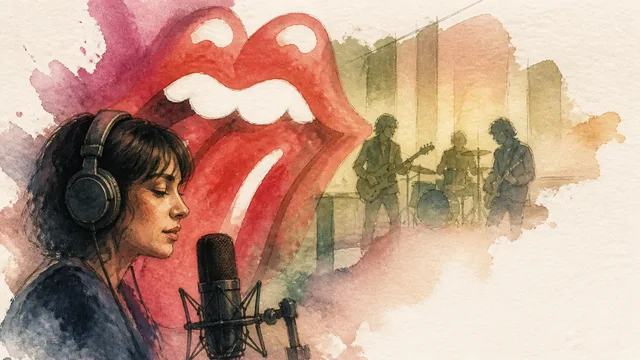
Rolling Stones Launch Speaking In Tongues Podcast
The Rolling Stones' new podcast, Speaking In Tongues, narrated by Norah Jones, maps the making of their upcoming album Foreign Tongues across six weekly episodes.
Reassessing the Queens of Numenor
Explore the nuanced reigns of Numenor's queens and their impact.
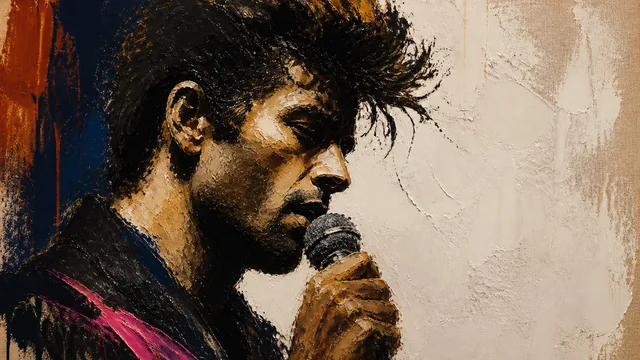
George Michael's Make It Big: His Creative Peak in 1984
George Michael called Make It Big the best work he'd ever done. Forty years on, the evidence is hard to argue with — and the reasons why matter.

Six Hospitalized at Angine de Poitrine's Montreal Jazz Fest Show
Six people were hospitalized after Angine de Poitrine's record-breaking free set at Montreal Jazz Festival. What the incident reveals about sound, crowds, and live event safety.
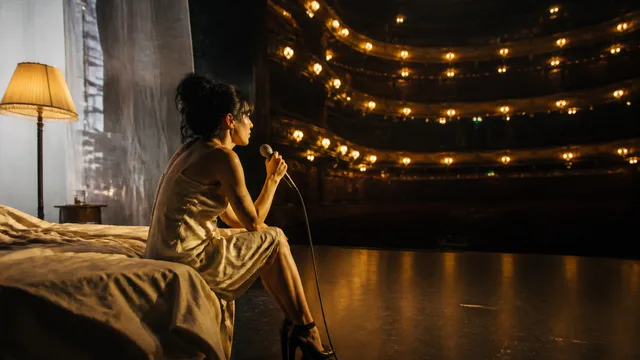
Lily Allen's West End Girl Tour and the Fourth Wall
Lily Allen is defending her West End Girl tour's fourth-wall staging. But the real debate is acoustic — what happens to sound when a pop show refuses to speak to the room?
Huey Lewis and the News' Fore! at 40: A Palatability Study
Forty years after its release, Fore! by Huey Lewis and the News still poses the central question of mainstream pop: what exactly did we consume, and who made it taste that way?

JD Vance on Joe Rogan: What Three Hours Reveals
JD Vance spent nearly three hours on the Joe Rogan Experience. An audio critic listens for what the voice does when politics gets comfortable and the mics stay hot.

Legally Blonde at 25: How Elle Woods Shaped Women in Law
Twenty-five years on, Legally Blonde's Elle Woods has inspired real women to enter law. Here's how a comedy's sound and craft made that possible.