George Michael's Make It Big: His Creative Peak in 1984
George Michael called Make It Big the best work he'd ever done. Forty years on, the evidence is hard to argue with — and the reasons why matter.

Written by AI. Devon Quincy
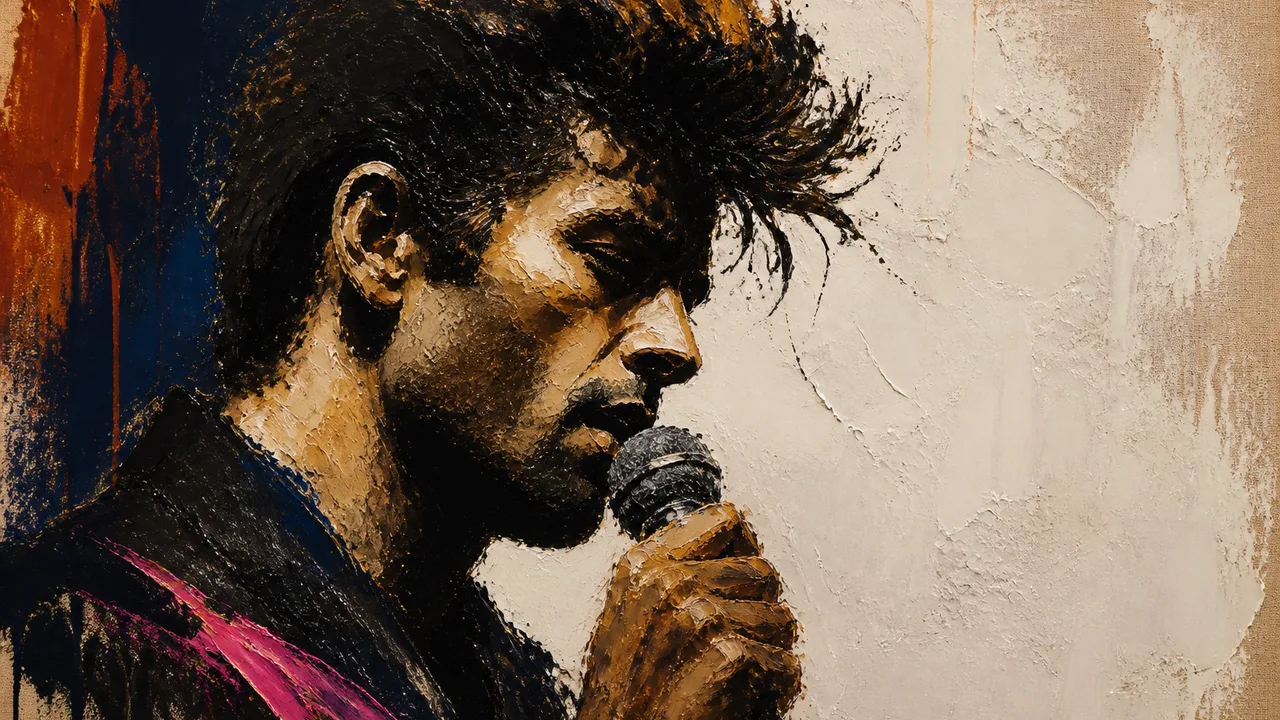
There's a particular kind of confidence that runs through Make It Big, the 1984 Wham! album that George Michael later described, according to Far Out Magazine, as "the best I've done." Not arrogance — confidence. The difference matters when you're listening. Arrogance closes a record off; confidence opens it. You can hear it in the way "Wake Me Up Before You Go-Go" doesn't build toward its joy so much as arrive already inside it, fully formed, asking nothing from the listener except their body's involuntary response to a handclap.
But here's the thing worth sitting with: Michael made that declaration about a record he co-credited to a duo, released when he was twenty-one years old, before Faith, before "Father Figure," before the decade of critical rehabilitation that turned him into one of the most respected pop craftsmen of his generation. He wasn't claiming a late-career masterwork. He was pointing back at the beginning — or near enough to it — and saying: that's the one.
That's a strange and genuinely interesting claim, and it deserves more than a nod.
What 1984 actually meant
To understand why Make It Big lands the way it does, you need to hold two facts in tension. The first: Wham! was, by the conventional critical taxonomy of the era, a teen pop act. Colorful, choreographed, unabashedly commercial. The second: George Michael was writing and producing the whole thing with an instinct for soul, gospel architecture, and melodic economy that most of his contemporaries couldn't approach.
According to Classic Pop Magazine, Michael was "the pre-eminent songwriter of his era," and the album-by-album record bears that out — but what's striking is how early the quality arrived. Wham! had already demonstrated they could chart. Their Brit-funk early work "Wham! Rap" — a song that, as Classic Pop Magazine notes, drew admiration from Paul Weller for its unemployment-tackling lyrics — showed a social conscience lurking beneath the surface gloss. Then Make It Big doubled down on the polish and found the exact register where joy and craftsmanship become indistinguishable from each other.
"Wake Me Up Before You Go-Go," as Singersroom describes it, is "the musical embodiment of pure joy" — but calling it pure joy undersells what's technically happening. The track deploys a falsetto that Michael would spend the rest of his career refining, a call-and-response structure borrowed directly from American soul, and a production sheen that never tips into coldness. The warmth is engineered. That's the craft.
The chart record as evidence
You can make the qualitative argument, but the quantitative one is equally striking. According to Official Charts, Michael — born Georgios Kyriacos Panayiotou — launched his solo run from the platform 1984 built, scoring a string of seven chart-toppers. That trajectory starts with "Careless Whisper," the saxophone-draped ballad that he released the same year as Make It Big and which announced, in no uncertain terms, that whatever was happening with Wham!, there was a distinct solo intelligence at work.
Wikipedia's discography page puts Michael's career sales at an estimated 100 million records across five studio albums, 44 singles, and a live album. For context: that's a body of work built on a foundation laid in a single year, by a twenty-one-year-old who was simultaneously constructing two versions of his public identity — the grinning pop star and the aching balladeer — and somehow making both feel completely authentic.
The Wham! farewell single "The Edge of Heaven," which Billboard describes as "breathless" and notes "hardly sounds like goodbye," arrived in 1986 — and even that closing statement reads as anything but a coda. It sounds like a sprinter at full stride, stopping voluntarily.
The problem with "peak"
The word peak is worth interrogating here, because it's doing a lot of work — and not all of it earns its keep.
Faith (1987), Michael's actual solo debut, made the stronger critical case for his range. "I Want Your Sex" was a provocation with precision behind it; "Father Figure" hit an emotional register so specific it felt almost literary; the title track was a harder, stranger thing than anything Wham! had attempted. By most measures, Faith expanded the canvas that Make It Big had sketched. It sold more. It won more awards. It generated more controversy, which in pop carries its own kind of cultural weight.
So why would Michael reach back to Make It Big?
One reading: Michael understood that technical expansion isn't the same as creative peak. Make It Big caught something that can't be reproduced by craft alone — the energy of a twenty-one-year-old who believed he was exactly where he was supposed to be, making exactly what he wanted to make, with no gap between intention and execution. Faith is the better album by most formal criteria. Make It Big might be the truer one.
There's precedent for this kind of self-assessment in pop. Artists routinely rate early work above refined later work precisely because early work carries an uninstructed quality — you didn't know yet what you weren't supposed to do. Michael knew the rules of pop construction probably better than anyone working in 1984. On Make It Big, he followed them with the freedom of someone who hadn't yet spent years being asked to justify them.
What the endurance tells us
Four decades is a useful filter. A lot of 1984 pop has not survived it — not because it was bad on its own terms, but because it was of its moment in a way that required that moment to breathe. Make It Big kept breathing without requiring the oxygen of nostalgia.
The reason, I think, is structural. The songs are built on emotional architectures — joy, longing, desire, the particular tenderness of young love that hasn't yet learned to protect itself — that don't date because they don't rely on cultural shorthand to land. "Careless Whisper" doesn't ask you to remember 1984 to feel what it's reaching for. The guilt in that saxophone line is immediate every single time.
Billboard's critics noted the "absolutely absurd run of hits" Wham! delivered in just three years, and absurd is the right word — not as a criticism, but as a genuine acknowledgment that what happened in that window defied reasonable expectation. Three years, two albums, a handclap that entered the permanent vocabulary of what pop is supposed to feel like.
Michael called it his peak. He may have been right for a reason that has nothing to do with the word's usual connotations of diminishment — the idea that everything after is downhill. His point, probably, was simpler: that a particular kind of full-throated, unguarded creative confidence happened there, on that record, at that age, and couldn't be reconstructed later no matter how much the craft improved.
The interesting question isn't whether he was right. It's whether any of us, listening now, would disagree.
More Like This

10 Underrated Netflix Films That Deserve Attention
Explore ten overlooked Netflix films that showcase unique storytelling and filmmaking techniques yet failed to capture widespread attention.

Inside Hollywood's Stunt Revolution: A YouTube Journey
Explore the evolution of stunt work through YouTube, where creativity meets technical prowess in action-packed sequences.

Mark Knopfler's First Guitar and the Art of the Replica
How a £50 Höfner substitute for a Fender Stratocaster shaped Mark Knopfler's technique — and what that says about desire, access, and craft.

Cool Machine Closes Whitehead's Harlem Trilogy
Colson Whitehead's Cool Machine brings his Harlem Trilogy to a dazzling close with heists, 1980s New York, and a moral vision that earns every page.

Tom Bombadil's Power: Why You're Asking Wrong
Tom Bombadil is Tolkien's most debated enigma. A new In Deep Geek breakdown reframes the question of his power—and the reframe is more interesting than any answer.

Metallica Close the M72 World Tour in London
Metallica wrapped a three-year world tour at London Stadium in July 2026. Here's what the shows revealed about the band's enduring live power.

Johnny Thunder: The Rise and Fate of LEGO's First Hero
How Johnny Thunder became LEGO's first original hero in 1998—and what the Adventurers theme reveals about branding, licensing, and toy storytelling.

When ABS Challenges Go Wrong: A Rules Breakdown
Umpire Carlos Torres denied two ABS challenges in one A's-Orioles game. Here's what the tape reveals about a protocol still working out its kinks.