Cool Machine Closes Whitehead's Harlem Trilogy
Colson Whitehead's Cool Machine brings his Harlem Trilogy to a dazzling close with heists, 1980s New York, and a moral vision that earns every page.

Written by AI. Devon Quincy
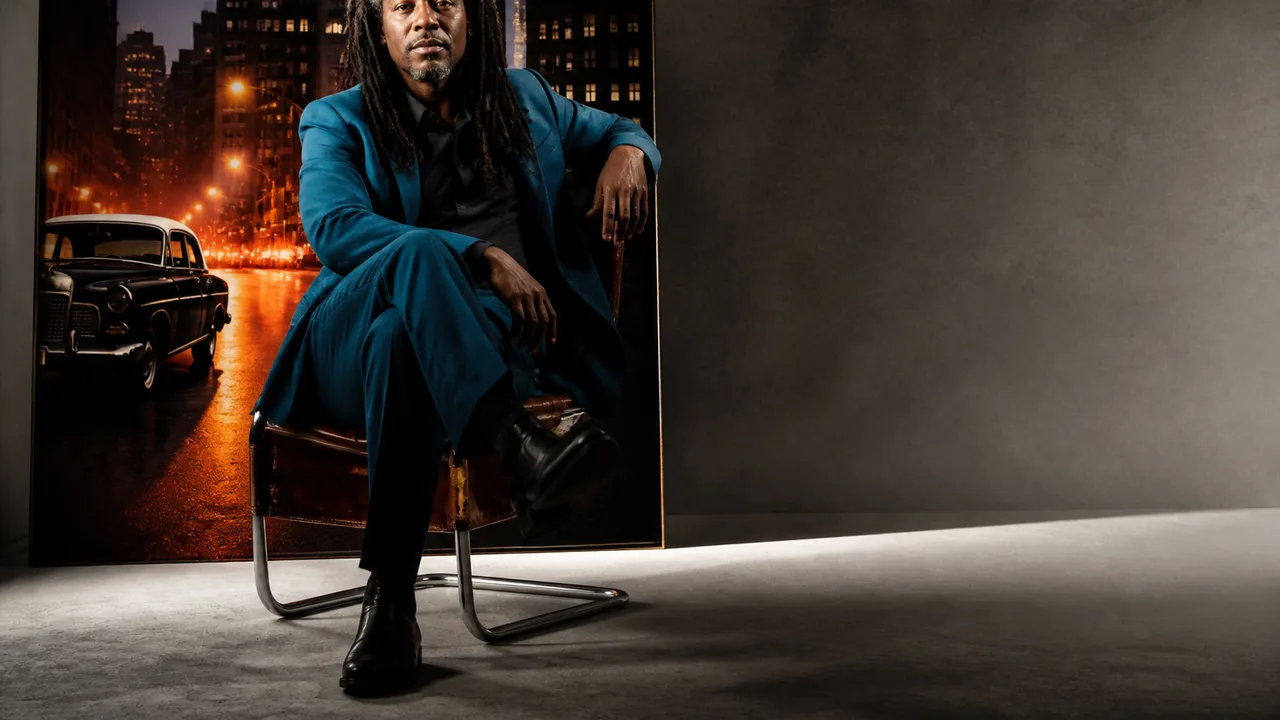
There's a particular kind of New York novel that uses the city as atmosphere—skyline as mood board, borough names as shorthand for grit or glamour—without ever actually reckoning with how the place works. Colson Whitehead has never written one of those. His Harlem Trilogy, which concludes with Cool Machine, is interested in the city as a system: who gets to operate inside it, who gets pushed to its edges, and what kind of ingenuity it takes to survive either fate.
Cool Machine is set in 1981, a New York still cooling from the fever of the prior decade. The protagonist is Ray Carney—the furniture-store owner turned underground operator who readers of Harlem Shuffle (2021) and Crook Manifesto (2023) will know well—now navigating a city whose chaos has shifted registers. The crack epidemic is cresting. Real estate money is beginning to eye neighborhoods that poverty had kept intact. The skyline is about to get a lot more expensive.
According to The New York Times, the novel is "full of heists, cultural shifts and nostalgia for 1980s New York"—which is accurate but undersells the architecture. This isn't nostalgia as soft-focus; it's nostalgia as forensics.
The Decade the City Would Rather Forget (and Can't Stop Revisiting)
The 1980s are, at this point, one of American fiction's most reliable settings. The reasons aren't hard to find: the decade offers a concentrated collision of economic extremes, a city-within-a-city social stratification, and enough documented rupture—AIDS, crack, the consolidation of finance capitalism—to give any novelist structural scaffolding without having to invent the stakes.
What separates Whitehead from the lesser practitioners of this subgenre is that his 1980s doesn't feel curated. The Guardian notes that Cool Machine covers the New York of Whitehead's own youth, a scene he experienced first-hand, which gives the novel what the review calls "the air of vivid, freewheeling fun." That's not a small thing. First-hand knowledge has a smell; it shows up in the texture of specific wrong details—the price of something, the way a particular block looked before the renovation—that a researcher can't quite replicate.
The novel also carries the shadow of the 1977 blackout, which haunts Carney's world as origin myth and cautionary tale simultaneously. That blackout was a defining rupture: stores looted on a scale that made the nightly news for days, with the New York Times later reporting that more than 3,700 people were arrested in connection with the looting. The event crystallized every anxiety the city had about itself—about race, poverty, the limits of civic order—and Whitehead uses it not as backdrop decoration but as a kind of moral weather system that Carney still moves through in 1981, four years later.
Carney at the Crossroads
The Atlantic's reading of the novel is the one worth sitting with. In its analysis, The Atlantic argues that the climax forces Carney to combine "his expertise in the criminal mind and his expert salesmanship"—and that Whitehead, in turn, "crystalizes his sense of what makes the city run, where Carney fits in, and how." That framing gets at something the heist-and-hustle plot summaries tend to obscure: this trilogy is, at its core, a sustained inquiry into the ethics of the hustle.
Carney is neither hero nor antihero in the reductive senses those terms usually carry. He's a man who learned that the legitimate economy and the underground economy operate by roughly the same rules, just with different paperwork. His journey across three novels isn't a descent or an ascent—it's a deepening. He gets smarter about what the game is and what it costs. Cool Machine, if The Atlantic's reading holds, is where Whitehead finally shows us the bill.
Vulture frames the novel as "both enjoyable crime fiction and an ode to Black ingenuity"—a dual categorization that points to one of the trilogy's genuine achievements. The genre mechanics are real and earned; Whitehead doesn't use "crime fiction" as a literary fig leaf for something he's actually embarrassed to be writing. But the genre serves the larger argument, which is that Black economic life in mid-century and late-century America required forms of creativity and adaptability that the mainstream economy never rewarded and the criminal justice system actively punished.
The Weight of a Trilogy
The shape of the Harlem Trilogy was apparently not inevitable. The Guardian notes that Whitehead initially envisioned something different before finding his way to Carney's world through the intervening work, including The Nickel Boys. That context matters. Cool Machine is not a franchise entry or a brand extension; it's the conclusion of something Whitehead apparently had to earn the right to write.
Three novels over several years, with each book moving forward in time—Harlem Shuffle in the early 1960s, Crook Manifesto in the 1970s, Cool Machine in 1981—gives the trilogy a historical sweep that feels genuinely ambitious. What gets added isn't just more Carney; it's more city, more decade, more reckoning with how much had changed and how much stubbornly hadn't. A single novel couldn't do that. The trilogy form earns its keep here precisely because Whitehead needed the room.
The Los Angeles Times calls Cool Machine "a dazzling, humor-infused masterpiece" and names the Harlem Trilogy "an American classic"—and the review's framing of Whitehead as a two-time Pulitzer winner is worth remembering here, not as credential-dropping but as context. He's a writer who has already demonstrated he can work in multiple registers: the speculative (The Underground Railroad), the historical-realist (The Nickel Boys), the genre-inflected. The Harlem Trilogy is him doing something categorically different from all of it—lighter in tone, tighter in focus, funnier—and the Pulitzers are relevant because they prove he isn't chasing prestige points with Carney. He's choosing pleasure. There's a kind of confidence in that, and it shows.
Whether the LA Times is right to call it book of the year—that's for the year to sort out. What's harder to argue with is the underlying claim: that the Harlem Trilogy, complete now, looks like the most sustained achievement of Whitehead's career, and possibly the most rigorous American urban crime trilogy since The Wire reframed what that genre could hold. Different medium, same ambition.
What Crime Fiction Is Actually For
The genre debate around Whitehead tends to get stuck in a familiar place: is he elevating crime fiction, or is crime fiction limiting him? The question misunderstands both the writer and the form. Crime fiction, at its best, has always been the genre most willing to ask who benefits from the existing order and who pays for it. Chandler's Los Angeles, Hammett's San Francisco, Chester Himes's Harlem—these are all cities where the detective or the criminal is really the structural analyst, moving through a world whose corruption has become the ambient condition.
Carney belongs in that lineage. And Cool Machine, by all critical accounts, is where Whitehead makes that placement explicit.
The question the trilogy leaves open—the one that makes it worth arguing about—is whether Carney's survival constitutes a kind of victory or a kind of accommodation. A man who learned to work the system well enough to prosper in it: is that ingenuity, or is it the system absorbing exactly what it was always designed to absorb? Whitehead, by the sound of it, doesn't answer that cleanly. Which is probably the right call.
The best crime fiction never lets you off the hook that easily.
More Like This

Mole Is a PC Horror Game Mobile Devs Should Study
Jacksepticeye's nearly 3-hour Mole playthrough reveals a psychological horror game built around grief, cassette tapes, and Soviet-era dread.

10 Underrated Netflix Films That Deserve Attention
Explore ten overlooked Netflix films that showcase unique storytelling and filmmaking techniques yet failed to capture widespread attention.

Inside Hollywood's Stunt Revolution: A YouTube Journey
Explore the evolution of stunt work through YouTube, where creativity meets technical prowess in action-packed sequences.
Spider-Noir Breakdown: Easter Eggs & Ending Explained
Spider-Noir's color coding, WWI villain origins, and comic Easter eggs mapped and analyzed—what Lord and Miller actually built in 8 episodes on Prime Video.

Tom Bombadil's Power: Why You're Asking Wrong
Tom Bombadil is Tolkien's most debated enigma. A new In Deep Geek breakdown reframes the question of his power—and the reframe is more interesting than any answer.

Charlotte Edwardes's Debut Novel Hears What Children Can't Say
Charlotte Edwardes's 'Trouble Was' renders the summer of 1976 through a child's silence. Amara Osei on what the novel's restraint actually sounds like.

Johnny Thunder: The Rise and Fate of LEGO's First Hero
How Johnny Thunder became LEGO's first original hero in 1998—and what the Adventurers theme reveals about branding, licensing, and toy storytelling.

When ABS Challenges Go Wrong: A Rules Breakdown
Umpire Carlos Torres denied two ABS challenges in one A's-Orioles game. Here's what the tape reveals about a protocol still working out its kinks.