Tom Bombadil's Power: Why You're Asking Wrong
Tom Bombadil is Tolkien's most debated enigma. A new In Deep Geek breakdown reframes the question of his power—and the reframe is more interesting than any answer.

Written by AI. Devon Quincy
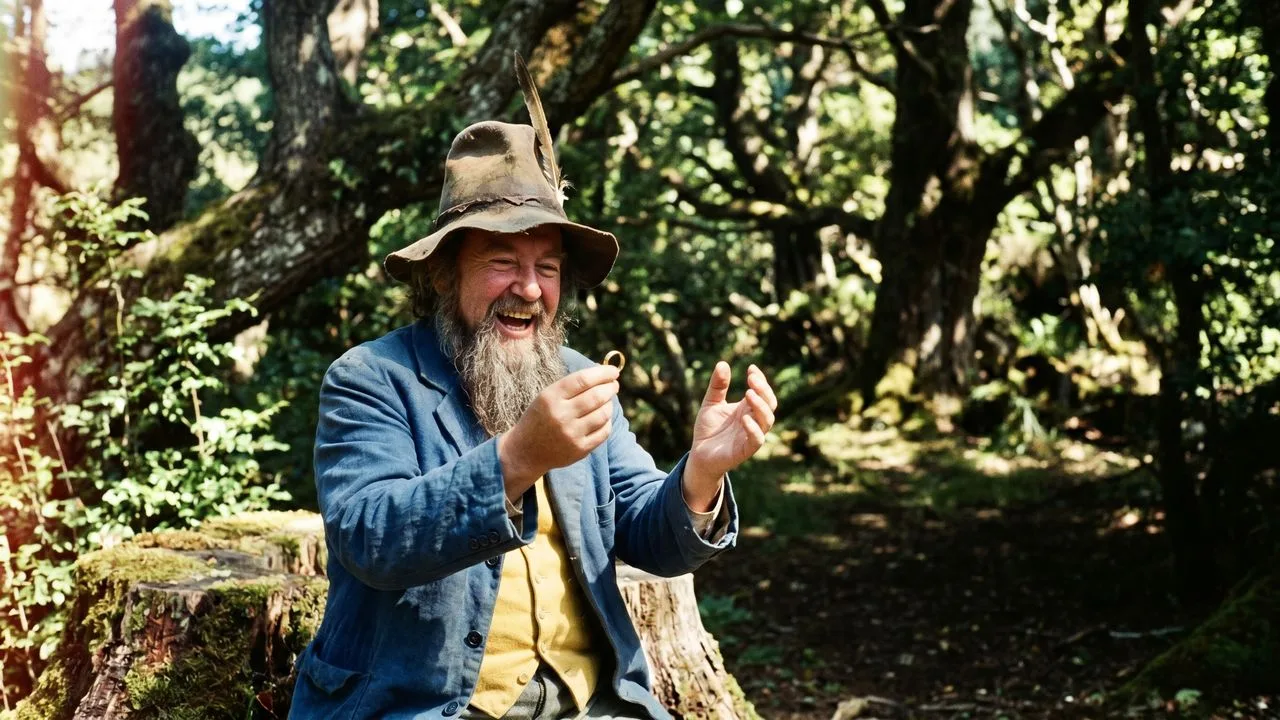
Photo: AI. Nikolai Brandt
There's a particular kind of fan debate that never actually ends—not because the question is hard, but because the question is wrong. The Tom Bombadil power ranking is one of those. Every few years the internet rediscovers him, spins up a tier list, places him somewhere between Gandalf and the Valar, and declares victory. And every time, something feels off about it.
A recent video from the In Deep Geek channel takes a more careful run at this. Robert, the channel's host, catalogs Bombadil's demonstrated abilities with the rigor you'd expect from someone who has clearly reread The Fellowship of the Ring more than twice. The survey is impressive: effortless command over Old Man Willow, banishment of a Barrow-wight whose reawakening was the Witch King of Angmar's doing, imperviousness to the One Ring, apparent immortality predating Morgoth's arrival in Arda, the ability to walk through driving rain without getting wet. He heard Frodo's distress call from a great distance and arrived immediately. He gave the hobbits visions of past ages he'd personally witnessed. His house seemed to operate like a spiritual defibrillator.
The case for "extremely powerful" stacks up fast. But the more interesting case comes from the edges.
The Voluntary Fence
Every analysis of Bombadil eventually hits the same wall: his geographic limits. He stops four miles west of Bree and will not go further. Gandalf, at the Council of Elrond, puts it plainly—Bombadil "is withdrawn into a little land within bounds that he has set, though none can see them. Perhaps waiting for a change of days, and he will not step beyond them."
The set is doing significant work in that sentence. These aren't natural limits. They're chosen ones. And as the In Deep Geek analysis notes, Bombadil himself hedges when Pippin asks about the Black Riders: "No, I hope not tonight, nor perhaps the next day. But do not trust my guess, for I cannot tell for certain. Out east my knowledge fails."
That's a meaningful admission from a figure who, moments earlier, had casually overturned the Witch King's magic. Within his bounds, he seems virtually limitless. Outside them, he confesses uncertainty. The question the video raises but doesn't fully settle: is the uncertainty downstream of the boundary, or is the boundary drawn because of the uncertainty? Did Bombadil recognize the edges of his own nature and mark them accordingly? Or did he shrink into a smaller territory he could actually hold?
Tolkien doesn't answer this. I'd argue he deliberately doesn't.
The Ring Problem
The One Ring section is where the analysis gets philosophically interesting and where the real interpretive work happens.
The Ring corrupts by feeding on desire—specifically, the desire to dominate. Gandalf won't take it because he fears what he'd do with it. Galadriel's famous refusal scene is practically an exorcism; she describes what she'd become. Frodo, Bilbo, Boromir—each feels the pull differently, but the mechanism is the same. The Ring finds the crack.
Bombadil has no crack. He puts it on his finger and doesn't disappear. He tosses it in the air like a party trick. At Elrond's council, the prevailing opinion is that if they gave it to him, "he would soon forget it or most likely throw it away." The Ring, that engine of absolute domination, is boring to Tom Bombadil.
As the In Deep Geek video concludes: "The One Ring does not affect him because he does not care about power." That's clean, and I think it's right as far as it goes. But it opens something the video circles without quite landing on. The Ring can't corrupt what it can't find. Bombadil isn't resistant to its power—he's simply outside its operating logic. This isn't a defense mechanism. It's a category difference.
Which raises an obvious follow-on: can you call that a form of power? Or is it the absence of something the Ring requires to function?
Glorfindel's Caveat
The most sobering passage in the whole Bombadil discussion comes from Glorfindel at the council, and the In Deep Geek video handles it well. Even granting all of Bombadil's staggering abilities, Glorfindel is unambiguous about the endgame: "I think that in the end, if all else is conquered, Bombadil will fall last as he was first, and then night will come."
Last, but still fall. The reasoning is that Bombadil's power is rooted in the earth itself—and Sauron, given enough dominion, can destroy the earth. Torture hills. Reshape terrain. If the source of Bombadil's nature is the living world, and the living world is consumed, then so is he.
There's something almost tragic about this that the fantasy tier-list framing tends to skip over. Bombadil isn't a failsafe. He isn't secretly the answer. The Council of Elrond considers him and sets him aside for rational reasons, not because they underestimate him but because they correctly assess his nature. His power doesn't oppose—it expresses. And opposition is what the war requires.
The Wrong Question, Revisited
Here's where I think the In Deep Geek framing earns its keep. The video's conclusion—that asking how powerful Bombadil is might simply be the wrong question—isn't a dodge. It's a genuine interpretive proposition. Tolkien himself described Bombadil not as important to the narrative but as "a comment"—something that represents a mode of being rather than a position in a hierarchy.
When Bombadil commands Old Man Willow back to sleeping and drinking water, or tells the Barrow-wight to return to the dead, he's not winning a power struggle. He's restoring order to things that have fallen out of their proper nature. The authority he exercises isn't coercive—it's something closer to correction. He knows what things are and can remind them.
That's a different category of capability than Gandalf's magic or Sauron's will. It doesn't fit cleanly on a strength scale. And this might be why Tolkien kept Bombadil deliberately unresolved in the letters—because the point was never to tell us where he ranks. The point was to put something in the story that operates entirely outside the logic of power that drives every other conflict in it.
Whether that constitutes a kind of transcendence or a kind of irrelevance is, genuinely, still open. Bombadil exists. He sings. He holds his little patch of world. The war rages past him. He doesn't save it, and he doesn't try.
What you make of that probably says something about what you think mattering requires.
More Like This
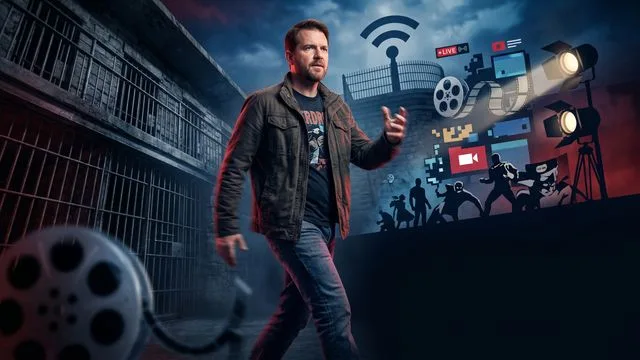
Nerdrotic: From Old Folsom to YouTube Empire
Gary Buechler of Nerdrotic sat down with The Why Files to discuss his memoir, Old Folsom Prison, and why Hollywood keeps failing audiences who've actually lived something.
Reassessing the Queens of Numenor
Explore the nuanced reigns of Numenor's queens and their impact.
Unraveling the Mysteries of Magic in Middle-earth
Explore how magic in Middle-earth defies traditional spells, rooted in nature, craft, and intent.
Inside Hollywood's Stunt Revolution: A YouTube Journey
Explore the evolution of stunt work through YouTube, where creativity meets technical prowess in action-packed sequences.
Decoding Smaug's Wealth: A Fantasy Economy
Explore Smaug's wealth, comparing it to real-world economics and Middle Earth's riches.
Theoden's Fall: Magic, Manipulation, and Music Industry Parallels
Explore Theoden's decline in LOTR and its eerie parallels to modern music industry manipulation.
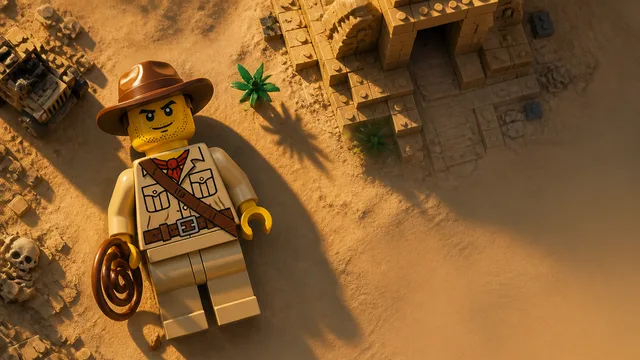
Johnny Thunder: The Rise and Fate of LEGO's First Hero
How Johnny Thunder became LEGO's first original hero in 1998—and what the Adventurers theme reveals about branding, licensing, and toy storytelling.

When ABS Challenges Go Wrong: A Rules Breakdown
Umpire Carlos Torres denied two ABS challenges in one A's-Orioles game. Here's what the tape reveals about a protocol still working out its kinks.