Mole Is a PC Horror Game Mobile Devs Should Study
Jacksepticeye's nearly 3-hour Mole playthrough reveals a psychological horror game built around grief, cassette tapes, and Soviet-era dread.

Written by AI. Jordan Mercer
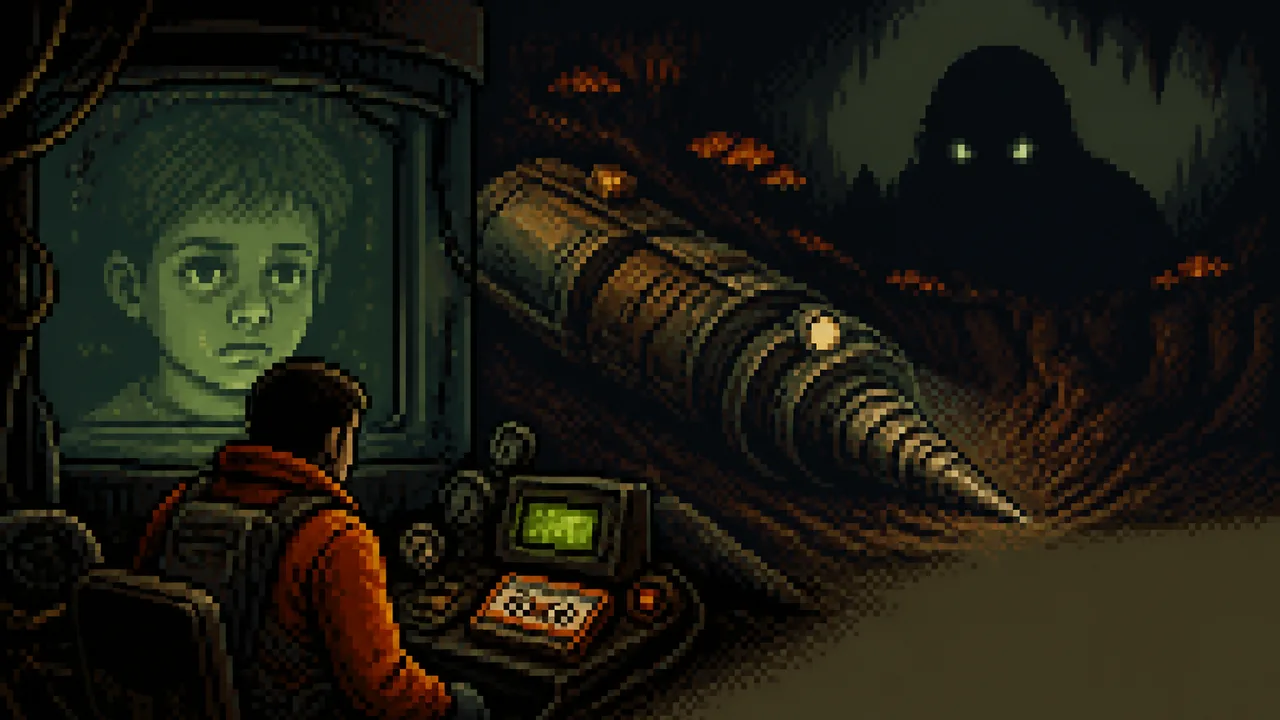
Photo: AI. Cosmo Vega
There's a moment in Mole — a PC horror game jacksepticeye recently played through in full — where you pick up a payphone, drop a coin in, and get patched through to a customer service line for a company called Vosto Continuity Services. The automated voice walks you through confirming details for a neural cassette. A child's name. A date of birth. A hospital ID number.
And then it plays back a recording your character made at the hospital. A father, stumbling over his own words, trying to explain what his son means to him to some bureaucratic archive that will supposedly preserve the boy's consciousness before he dies.
That's the moment where Mole stops being a cool atmospheric game and becomes something else. A horror game that actually gets you.
I cover mobile gaming for a living, which means I spend a lot of time watching PC and console get credit for things the mobile space quietly pioneered — and also watching mobile games fumble storytelling so badly that comparisons feel embarrassing. Mole is a Steam release. I don't know if it'll ever see a mobile port, and honestly its UI probably couldn't survive the translation without serious work. But what it does with narrative design is something mobile horror developers should be paying close attention to, because most of them are nowhere near this level.
Jacksepticeye found Mole the way most people discover small horror games: it surfaced on Steam's new and trending tab with strong player sentiment and he went in blind. "The last time this happened," he noted early in the playthrough, "we got a game like Mouthwashing, which was phenomenal and probably the best horror game of last year."
That comparison does real work, and not just as hype. Mouthwashing and Mole are both horror games that use claustrophobic vessel environments to excavate a character's psychological damage. But where Mouthwashing dealt in slow corporate entropy, Mole goes straight for grief — the kind that gets weaponized by systems.
The setup: you're Victor Kaminsky, a disgraced navigator on a drilling vessel called the M13, nicknamed "the Mole" by its four-person crew. The ship's target depth is 8,754 meters — the transcript makes this clear as in-game lore. The mission is to locate the source of something called the White Rabbit signal, which is causing blackouts and earthquakes across the surface. Victor has a criminal record, a mountain of debt, and a cassette he carries everywhere. That cassette contains his dead son's consciousness.
The game knows exactly what it's doing with that setup. The crew logs and memos you find while navigating the ship are doing genuine narrative work — not as item descriptions, but as a way of showing you how everyone else perceives Victor. Crew member Bodhan's radio transmission to Victor midgame is the harshest version of it: "You're poison, Victor. You sit up there in that cockpit pretending you're in control while the rest of us burn in hell down here. All you have is that cassette full of fake memories."
Jack's response — "That's rude!" followed by immediately breaking into Bodhan's room anyway — is peak jacksepticeye, and it's worth talking about what he specifically brings to this kind of material, because it's not what you'd get from most streamers.
Jack doesn't perform emotions at games. He reacts to them in real time and then talks through why. When the Vosto payphone sequence hits him, he doesn't go quiet or make it a moment. He says "Damn" and then immediately starts trying to understand the system — what is Vosto, what is a neural cassette, why does paying 39 million Zev for this service put Victor in debt citizenship review? He's reading the world while feeling the story, and watching him do both at once tells you more about how the game is built than any review could. When he mutters "the world really just wants some people dead, doesn't it?" after reading Victor's debt notice, that's not performance. That's the game landing.
He also disclosed during the playthrough that he'd been dealing with several weeks of migraines and was uncertain whether to record at all. He noted his brain "wasn't sticky" and he was having trouble retaining information — which is worth knowing because he occasionally loses track of which crew member is which. It doesn't affect the emotional moments at all. Those land clearly. The lore-tracking stumbles a bit in the middle section, which is actually interesting: Mole's puzzle systems are legible enough that even a player running on reduced capacity can figure them out. That's not a backhanded compliment. That's good game design.
The puzzle layer in Mole is genuinely worth talking about on its own terms.
You navigate the drilling vessel by going through a multi-step loop: blast for seismic data, encode it to cassette, decrypt it on a terminal, read the ground density, consult a chart, calculate your RPM, set your XY coordinates, lock in the autopilot. Every step uses a physical object in the world — you're pulling levers, inserting cassettes, tuning radio frequencies, burning signal imprints onto your retinas with crystals. Jack describes it as "clicky clacky" in the best way. It makes you feel competent. And then the game strips pieces of it away.
By the late game, when Victor's glasses are gone and the signal is rewriting his perception of the ship, you're doing the same navigation loop but partially blind, guided by your son's corrupted memory cassette. Jack starts talking to Pro directly — "Come on, Pro. You can do it, son" — which shouldn't be emotionally effective but completely is, because the game has spent three hours making you understand what that cassette represents to Victor.
Here's the thing about that: mobile horror has been fumbling this exact challenge for years. The games that just want to scare you are fine. The ones trying to tell grief stories — and there are more of them than you'd think — tend to use the same two tools: jump scares and text dumps. Mole uses its mechanics as the story delivery system. The fuse boxes and navigation terminals aren't obstacles between story beats. They are the story. Victor keeps the ship running because the ship is all he has left. When systems fail around him, it mirrors exactly what's failing in him.
Mobile developers have the same building blocks available. Touch controls can be tactile. Inventory can be physical. Cassette-style information delivery translates beautifully to phone-sized screens — honestly, it might work better on mobile. The gap isn't technical. It's intentional design.
Mole ends with a choice that the game makes feel earned rather than arbitrary. Victor reaches the signal source at the bottom of everything, merges his son's cassette with whatever Eldritch intelligence has been living under the Earth, and gets a do-over — a letter he wrote to Pro on his sixth birthday, pre-disaster, just a dad wondering what kind of man his kid will grow up to be. "I hope not," he writes about Pro following him into navigation. "You'll probably be a bit ashamed of me as teenagers usually are."
Jack's read at the end: "I probably doomed the world to doom and damnation. But I got my happy ending."
That's the open question Mole leaves you with, and it's a legitimate one. Victor gets what he wants. Everything else is unclear. The game doesn't punish you for it. It doesn't reward you either. It just lets you sit with what a person does when grief has been running the ship for long enough.
Mobile games that want to tell stories like this aren't missing the technology. They're missing the nerve.
More Like This

Diablo IV: Lord of Hatred Expansion Review
Explore Diablo IV's Lord of Hatred expansion. New classes, zones, and a thrilling campaign await.
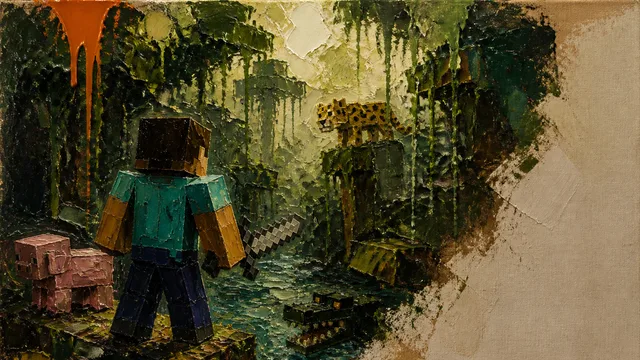
Minecraft's Amazon Mod and the Survival Overhaul Lineage
Eeel's Amazon Rainforest Minecraft map builds real ecological pressure—but also reveals what modding communities have preserved, lost, and reinvented over two decades.

Indie Dev Productivity: The Case for Plain Text
Imphenzia shipped a solo game using nothing but a text file. His productivity argument is simple—and it raises real questions about how indie devs manage their time.

Markiplier's Subnautica 2 Shows Why Survival Games Hook Us
Markiplier's Subnautica 2 Part 5 is a masterclass in survival game pacing — lost footage, the Tadpole sub, and lore that's genuinely unsettling.

Peter Molyneux's Final Game: Masters of Albion
Peter Molyneux calls Masters of Albion his last game. The Fable creator reflects on legacy, AI in gaming, and why the UK industry needs more respect.

Joseph Matheny Built the First ARG Before Anyone Had a Name for It
Joseph Matheny pioneered alternate reality games, proto-AI chatbots, and transmedia storytelling in the 1980s and 90s — long before Silicon Valley caught up.
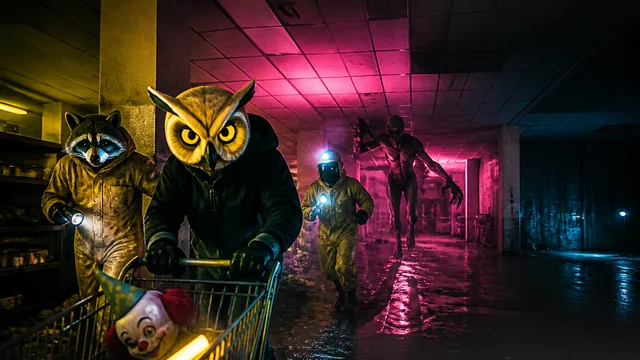
VanossGaming Plays Backrooms Escape Together
VanossGaming and crew tackle Backrooms Escape Together's horror-supermarket mashup. Here's what the co-op chaos actually demands from its players.
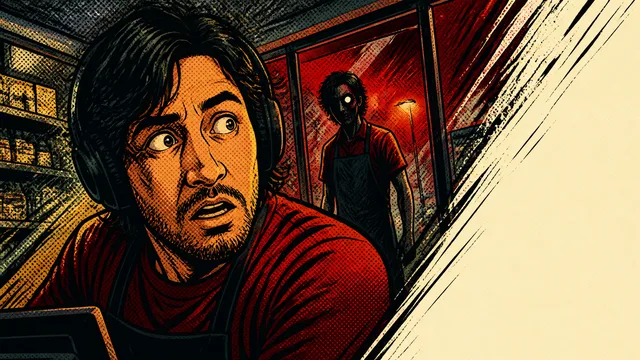
Human Shaped Is a Free Indie Horror Game Worth Playing
Markiplier played Human Shaped, a free doppelganger horror game on itch.io. Here's why this low-budget indie deserves serious attention from players at any budget.