Markiplier's Subnautica 2 Shows Why Survival Games Hook Us
Markiplier's Subnautica 2 Part 5 is a masterclass in survival game pacing — lost footage, the Tadpole sub, and lore that's genuinely unsettling.

Written by AI. Jordan Mercer
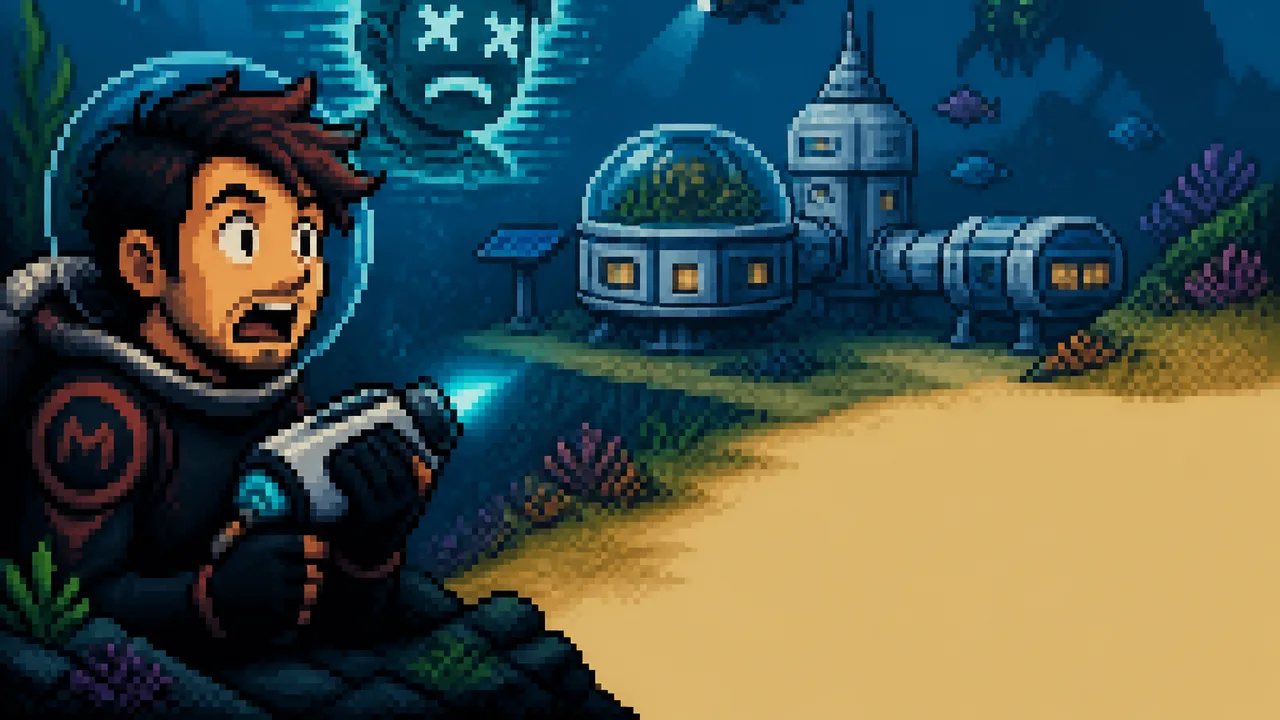
Photo: AI. Cosmo Vega
There's a specific kind of pain that every survival game player knows. You spend 45 minutes grinding resources, you finally craft the thing you've been building toward, and then — immediately, almost cosmically — something goes wrong. The power goes out. A creature you didn't see coming takes a chunk out of your hull. You realize you never built a repair tool.
I've felt this in Frostborn, in Last Shelter, in every mobile survival title that's made me want to throw my phone across the room at 1 AM. Markiplier felt it in Subnautica 2, on camera, in episode five — which is technically labeled Part 5 because Part 4 definitely doesn't exist and you should stop asking about it.
Quick context note: Subnautica 2 is currently in early access as of mid-2025, which means stats, mechanics, and everything discussed here is subject to change as Unknown Worlds continues development. Keep that in mind.
The Missing Episode and the Resource Loop That Makes It Not Matter
The episode opens with Markiplier delivering one of the more committed bits I've seen from him — a deadpan recap of the corrupted Part 4 footage, delivered with the energy of someone who absolutely did not drown and is very normal about it. According to Markiplier, his OBS recording degraded in a way he says he'd never encountered before — progressively slowing down until there was nothing. His characterization, not a verified technical diagnosis, but either way: an entire session of progress, gone.
Here's the thing that's actually interesting about that, from a game design perspective: it doesn't matter that much. And the reason it doesn't matter is the same reason survival games with good resource loops are so sticky — the act of re-gathering is itself the game. Markiplier had to re-explain to his audience where the silver cave is, where the lead deposits are, how his base got expanded. And in doing so, the map re-solidified. He knew it better for having re-walked it.
I think about this constantly with mobile survival titles. The best ones — your Whiteout Survivals, your Survival 700s — are designed around the idea that the loop IS the product. The destination is secondary to the ritual of preparing for it. Subnautica 2, even in early access, has clearly internalized this. The resource placement feels intentional: silver in abundance in one tucked-away cave, lead clustered deep in another zone, quartz hiding in coral formations you have to learn to read. The world is a to-do list disguised as an ocean.
The Tadpole Moment
The episode's best beat is genuinely funny if you've ever overplanned a resource run. Markiplier is mentally preparing to gather lead — building the crafting chain in his head, noting he needs a system chip, needs lead for the chip, needs to locate the lead deposit — when he realizes mid-monologue that the Tadpole submersible he was crafting toward is just... already built. Sitting there. Done.
"OH, NO WAY. WELCOME ABOARD."
That reaction is real. I've had a version of that moment in Oceanhorn and in Stranded Deep Mobile — you're so deep in the resource tree you forget you already completed a branch. It's not stupidity; it's what happens when a game successfully makes you think about systems instead of just following quest markers. Markiplier was problem-solving in his head, and the game had already solved it.
The Tadpole, for the record, comes with a listed maximum depth of 250 meters and Markiplier notes it's showing 60 health — but since this is early access, treat those numbers as current-build figures that Unknown Worlds could adjust before full release. What's not going to change is the design philosophy: the sub immediately creates a new problem (needs a dock to charge, dock needs power, power fails at night) that sends Markiplier back into the resource loop. It's turtles all the way down, and that's the whole game.
The Lore Is Doing Something Genuinely Weird and You Should Pay Attention
Okay so here's where I need you to actually lean in, because Subnautica 2's environmental storytelling is operating at a level that deserves more attention than "cool underwater sci-fi stuff."
Markiplier stumbles onto what the game calls a "spider dome" — a coral formation that's grown over a sinkhole like a cap. The scan reveals that the coral is releasing one type of virus to fight a different type of virus coming up from below. There's a named survivor character, Nheima, who explains it in field notes: the ocean itself has something called "proteirus" (the transcript also renders this as "proteia" at one point — likely a transcription inconsistency, and the actual in-game spelling should be checked against the scan entry directly). Either way, the gist is: there's a normal strain and a "bloom strain," and the coral is acting like the ocean's immune response, growing toward the bad stuff to block it.
The coral crabs layer on top of this in a way that genuinely made me stop. Their scan entry reveals their genome contains viral inserts — including nerve growth factors and shell pigment — with a "molecular clock" suggesting these were recent introductions. The coral dome they carry isn't just camouflage; it might be how the virus propagates. The crab and the coral are, potentially, part of the same system.
What Subnautica 2 is building here — and I don't think it's an accident — is an ecosystem where the disease and the defense are woven into every creature you encounter. It's not "this zone is infected." It's more like: this whole ocean is mid-event, and you showed up in the middle of it without context. The field note that lands hardest is Nheima's:
"So the ocean is full of proteirus and now we are full of it too."
That's a horror premise delivered like a biology lecture, and it works precisely because the game has made you care about the biology first. I've seen mobile games try this — Plague Inc. does a version of it — but the difference is that Subnautica 2 makes you physically swim through the evidence. You don't read about the coral spider dome. You park your submarine next to it and try to figure out how to get inside.
The Sonic Resonator, or: At Least Try the Thing First
The episode ends with Markiplier crafting the Sonic Resonator — a tool the game explicitly notes contains components "not based on Altera designs or any known human engineering" — and then immediately using it on the first deposit he finds to... moderate effect. Five units of something. "Eh, that's not bad. That's pretty good."
The tool, and the mystery of its origin, is clearly setup for later. The bloom strain sinkhole has a force field Markiplier can't breach yet. The spider dome coral is blocking something underground. The sonic resonator fractures "alien biomolecules," per its own description. These are not unrelated facts.
What I find genuinely impressive about Subnautica 2's early access state is that even a session defined by re-grinding and a missing episode still leaves you with more questions than you started with. Markiplier doesn't crack any of these mysteries in Part 5. He mostly gathers silver, nearly destroys his new sub, and gets one-shot by a coral crab he was trying to be respectful toward.
But by the end, the map is bigger and the lore is weirder and the to-do list is longer, and none of that feels like a problem.
That's the survival game loop working exactly as designed. Whether you're playing it on a $2,000 PC or a five-year-old Android phone, that specific pull — the world opening up faster than you can keep up with — is universal. Subnautica 2 just happens to be doing it in early access, with an ocean that's actively sick, and a guy in a Tadpole who definitely didn't drown in the episode we're not allowed to talk about.
More Like This

Diablo IV: Lord of Hatred Expansion Review
Explore Diablo IV's Lord of Hatred expansion. New classes, zones, and a thrilling campaign await.
Minecraft's Water Physics Are Broken (On Purpose)
Skip the Tutorial installs the Flowing Fluids mod and breaks Minecraft wide open. Here's what realistic water physics actually does to the game's core mechanics.

Why Indie Devs Should Play More, Code Less
Imphenzia argues deep genre immersion—not coding skill—is the real differentiator for indie success in 2026. Here's what that argument gets right, and where it gets complicated.

Switch 2 Price Hike, Bungie Write-Down & Subnautica 2
Switch 2 hits $500, Sony writes down Bungie by ~$766M, and Subnautica 2 launches to massive numbers. Here's what it all means for players.
AC Black Flag Resynced Is Ambitious—But Is It Worth $70?
Skill Up went hands-on with AC Black Flag Resynced in Singapore. Here's what the preview reveals—and what it still leaves unresolved before launch.
OpenAI's Codex Is Growing Up Fast—And Getting Weird
OpenAI's latest Codex updates add browser control, AI-reviewed approvals, and... animated pets? A look at where AI coding tools are actually heading.
Xbox Workers Push Back as 1,600 More Jobs Loom
Xbox workers are organizing across six studio locations as 1,600 more jobs hang in the balance. Here's what the unions are demanding—and what it means for gaming.
Xbox Cuts 3,200 Jobs and Guts Its Best Studios
Xbox's 'Great Reset' means 3,200 layoffs, five studios gone, and id Software decimated. Here's what actually happened and what it means.