Legally Blonde at 25: How Elle Woods Shaped Women in Law
Twenty-five years on, Legally Blonde's Elle Woods has inspired real women to enter law. Here's how a comedy's sound and craft made that possible.
Written by AI. Amara Osei
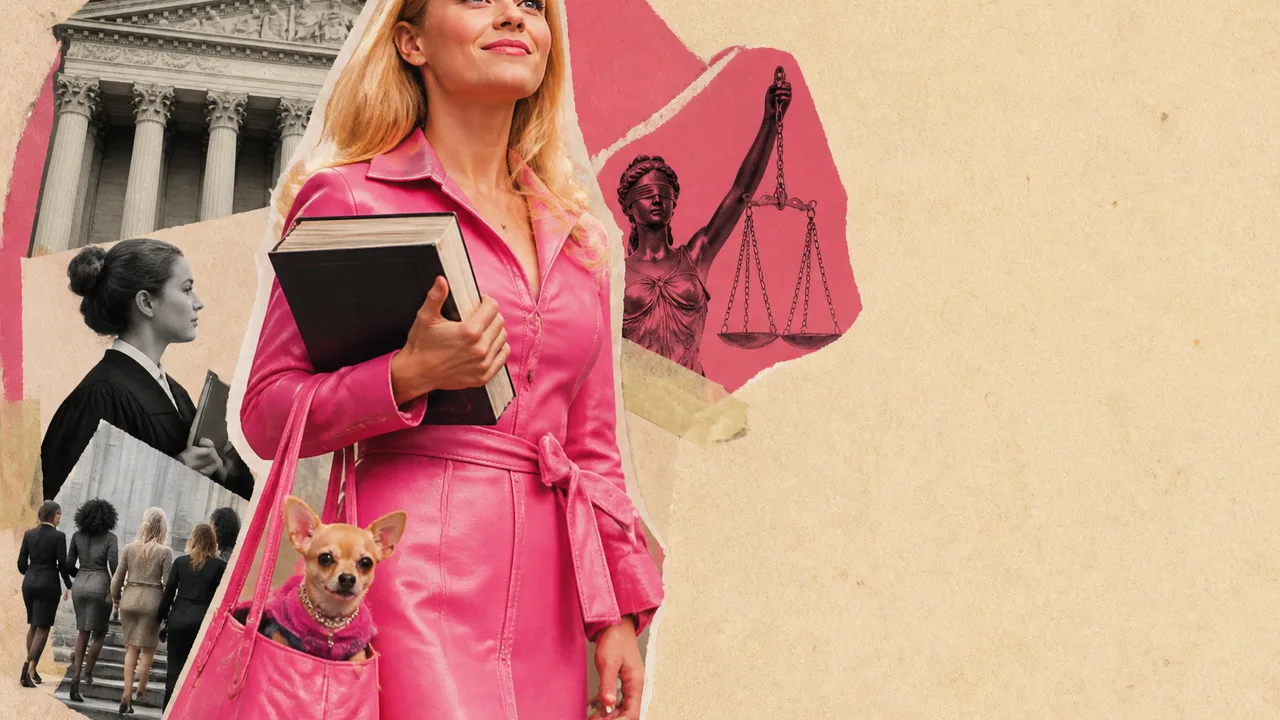
Listen to the first thirty seconds of Mychael Danna's score for Legally Blonde — really listen, the way you'd listen to a cold open before the host's voice comes in. It doesn't do what the hot-pink visuals tell you it's going to do. There's no bubblegum pop, no sorority-house treble. What Danna gives you instead is something almost stately: strings that play the premise completely straight, as if the film knows its own joke and has decided not to make it. That small act of sonic respect, maintaining composure while the screen is doing maximum camp, quietly telegraphs everything Legally Blonde actually is. It is a film that sounds smarter than people assumed it looked.
This year, the 2001 comedy — directed by Robert Luketic and written by Karen McCullah Lutz and Kirsten Smith, based on Amanda Brown's novel, starring Reese Witherspoon as Elle Woods alongside Luke Wilson, Selma Blair, Matthew Davis, and Jennifer Coolidge, per Wikipedia — turns 25. And the anniversary has surfaced something worth sitting with: a measurable, documented trail of women who became lawyers, at least in part, because of this film. Not because it showed them a realistic courtroom. Because of how it sounded. Because of what Witherspoon did with her voice.
Here's the craft move I keep returning to. In the Harvard classroom scenes, Witherspoon pitches Elle's delivery in a register that reads, on the surface, as cheerful and slightly breathless — the cadence people associate with not being taken seriously. But underneath that pitch, the argument is airtight. The logic is there. The analysis is there. What she's doing, vocally, is carrying two conversations at once: the one the room expects and the one she's actually having. That's a genuinely difficult performance trick. It's also the film's thesis, stated not in dialogue but in the shape of a sentence, the rise of an inflection, the way a pause lands. When one unnamed lawyer told The Guardian, "Elle Woods didn't inspire me to become a lawyer, but she absolutely inspired the kind of lawyer I wanted to be — what struck me is how Elle refused to shrink herself to be taken seriously," she was describing exactly that performance. She heard the thing the film was actually doing.
Reese Witherspoon has said, in a Wall Street Journal Magazine interview cited by the ABA Journal, that at least once a week a woman tells her she went to law school because of Legally Blonde. Once a week, for two and a half decades, across every timezone where the film traveled. That's not an anecdote. That's a longitudinal study with no control group and no one running it.
Spectrum News 1 profiles Layla Summers, a family law attorney who names Elle Woods as a driving force behind her law school decision. People documents Shalyn Smith of Columbus, Ohio, among others — men and women both — who trace a professional turning point back to this film. LawFuel frames it plainly: the film's point is "that you can succeed as a woman despite the 'odds' — be they hair colour or otherwise." The film's comedic surface kept that argument palatable in 2001. The argument itself is what survived.
What interests me, critically, is how the film delivers that argument through its audio architecture — because I think this is exactly what made it land with the women who'd been quietly told, in a thousand professional rooms, to modulate themselves down.
Most films in the "fish out of water at a prestige institution" genre use sound design to code the outsider as Wrong. The comedy comes from the friction between their native frequency and the institution's. Legally Blonde does something different: it keeps Elle's sound stable. Her voice doesn't drop. Her enthusiasm doesn't flatten. The joke, acoustically, is not Elle — it's everyone adjusting awkwardly around a woman who refuses to retune herself. When the film gives Elle her courtroom victory, Danna's score doesn't swell into triumphant-underdog territory. It stays measured. The film has been making its argument through restraint the whole time, and it's not about to break character at the end.
That is a specific craft choice. And it's why, I'd argue, the permission structure this film created for young women watching it was so durable. It wasn't telling them to fake seriousness, to code-switch downward, to earn legitimacy by gradually becoming less themselves. It was showing them — at the level of voice, pacing, score — that you could win while still sounding like you.
The anniversary coverage is warm and well-earned. The Guardian's piece collects the personal testimony of women who found their professional permission in a Hollywood comedy, and those accounts are genuinely moving. But anniversary coverage has a structural weakness: it tends toward the celebratory at the expense of the complicated. The questions worth holding alongside the celebration are thornier. Legally Blonde centers a white, wealthy, conventionally feminine protagonist, and the "you can do it too" message was, by design and circumstance, most legible to women who already moved through the world with certain advantages. The women the film reached most immediately were not the women who'd been most systematically excluded from law. That's not a reason to minimize what the film did. It's a reason to be honest about the shape of what it did.
There's also the question of what films can and can't actually do. Representation creates aspiration. Aspiration is necessary but not sufficient. The women who went to law school because of Legally Blonde still walked into law school — an institution with its own architecture of exclusion, its own ambient messaging about who belongs. The film gave them a reason to show up. It couldn't remodel the building. The gap between inspiration and structural change is where real work happens, mostly quietly, mostly without anniversaries.
And yet. Witherspoon's account — once a week, every week, for years — suggests that the distance between a fictional character's vocal performance and a real woman's professional trajectory can be shorter than we think. Sound does that. Voice does that. The specific texture of how someone performs confidence in a room that expects them to shrink — that lands differently than any argument you could make on paper. It's why oral argument exists. It's why podcasters with no visual platform build audiences that print journalists sometimes can't. People follow voices they recognize as kin.
Elle Woods, 25 years on, is still working as a kind of audio artifact: a recording of what it sounds like to refuse the room's expectations of your pitch. The women who heard it and called it permission weren't wrong to do so.
The question worth carrying into the next 25 years is who else deserved a voice like that, and never got one. That's not a criticism of Legally Blonde. It's the thing Legally Blonde should make us want to answer.
More Like This
Reassessing the Queens of Numenor
Explore the nuanced reigns of Numenor's queens and their impact.

What Camera Sensors Can Teach You About Sound
StudioBinder's sensor explainer is solid filmmaking education — but it reveals something bigger about how creators misunderstand the infrastructure beneath their craft.
Six Hospitalized at Angine de Poitrine's Montreal Jazz Fest Show
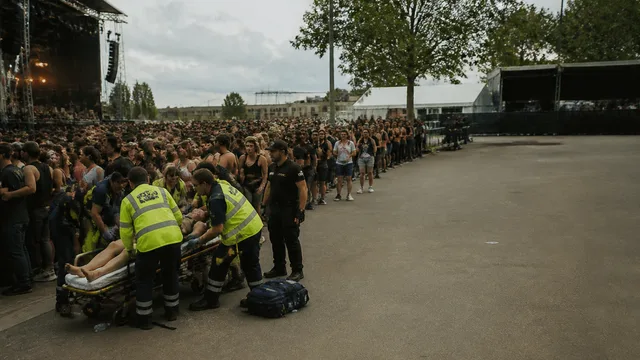
Six people were hospitalized after Angine de Poitrine's record-breaking free set at Montreal Jazz Festival. What the incident reveals about sound, crowds, and live event safety.
Codie Sanchez's REAL Framework for Building Trust
Codie Sanchez's REAL framework reframes networking as trust-building — and most of its lessons apply far beyond billionaire circles.
Lily Allen's West End Girl Tour and the Fourth Wall
Lily Allen is defending her West End Girl tour's fourth-wall staging. But the real debate is acoustic — what happens to sound when a pop show refuses to speak to the room?
Enola Holmes 3 and the Sound of Franchise Fatigue
Enola Holmes 3 is competent, charming, and quietly exhausted. What the score and Millie Bobby Brown's voice reveal about a franchise losing its internal momentum.
Charlotte Edwardes's Debut Novel Hears What Children Can't Say
Charlotte Edwardes's 'Trouble Was' renders the summer of 1976 through a child's silence. Amara Osei on what the novel's restraint actually sounds like.

Metallica Close the M72 World Tour in London
Metallica wrapped a three-year world tour at London Stadium in July 2026. Here's what the shows revealed about the band's enduring live power.