Vienna's Habsburg Legacy and the Geography of Ideas
How the Austro-Hungarian Empire's military tensions, ethnic friction, and institutional power made Vienna a crucible for modern thought—and what that means now.

Written by AI. James Morrison
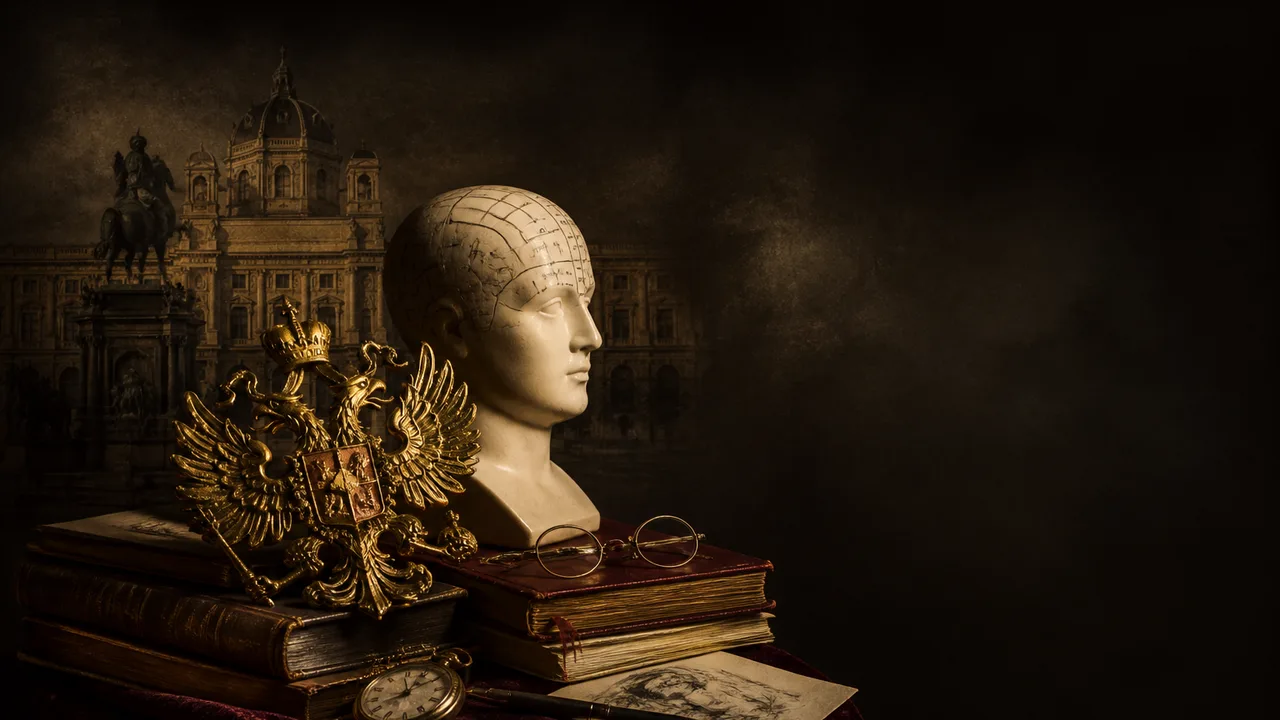
There is a particular kind of institution that produces great thinking not because it is comfortable, but because it is impossible. The Austro-Hungarian Army was one of those institutions. By the late nineteenth century, its officer corps was issuing commands in eleven languages across regiments drawn from populations that, in many cases, actively despised one another. Czechs and Germans. Hungarians and Romanians. Croats and Serbs. The army that Habsburg Emperor Franz Joseph built and rebuilt across decades of reform was not a fighting force in the conventional sense so much as a sustained experiment in coercive multinational integration — and it was failing, slowly and then all at once, in exactly the ways that produced the intellectual explosion centered on Vienna.
That connection between military friction and cultural ferment is the one most popular accounts of Vienna's intellectual legacy leave on the table. Which is a mistake, because it explains everything.
The Pressure That Makes Ideas
The World History Encyclopedia's account of Vienna's intellectual legacy notes that while London, Paris, and New York dominate most discussions of modern thought, Vienna and figures like Sigmund Freud and Robert Musil had a profound impact on modern thinking that routinely goes underacknowledged. That's accurate as far as it goes. But it sidesteps the structural question: why Vienna, and why then?
The answer is not simply that smart people happened to live there. It is that the Habsburg Empire placed those people inside a specific kind of institutional pressure cooker — multilingual, multiethnic, held together by bureaucratic force and dynastic legitimacy rather than any shared national identity — and then, over roughly sixty years, allowed that pressure to climb toward bursting.
Consider what the empire actually looked like from the inside. According to Bubbly Living's history of the Habsburg dynasty, Vienna's intellectual and cultural foundations were shaped over centuries of imperial influence — but the same empire that produced those foundations also faced mounting political, social, and nationalist pressures that it could never resolve. That tension is not incidental to the intellectual story. It is the intellectual story. Freud did not map the unconscious despite living in a society organized around repression and denial. He mapped it because of it.
Freud as a Person, Not a Function
Sigmund Freud is too often treated as an intellectual category rather than a man with a specific life inside a specific city. He was a Jewish physician in Vienna at a moment when anti-Semitism was not a fringe pathology but a structuring feature of professional and political life — Karl Lueger, Vienna's openly anti-Semitic mayor, held office from 1897 to 1910, precisely the years when Freud was doing his foundational work. Freud was blocked from certain appointments, subjected to institutional resistance that his non-Jewish peers did not face, and acutely conscious of his outsider position within the very bourgeois Viennese world his patients came from. That positioning — inside and outside simultaneously, fluent in the society's codes while excluded from its full privileges — gave him a particular kind of analytical distance. The literature on Vienna's intellectual culture notes Freud's profound impact on modern thinking, but the human geography of his position is what made that impact possible.
Robert Musil is a useful counterpoint. His unfinished novel The Man Without Qualities is, among other things, a forensic anatomy of a civilization that has lost the connective tissue between its institutions and its actual values — an empire that goes through the motions of order while something essential has already died. Musil was writing that novel between the wars, looking back at a Habsburg Austria he had served in uniform. He knew the army from the inside, having attended military academy and served as an officer before turning to literature. His critique of imperial paralysis was not abstract. It was embodied.
The Army That Couldn't Hold Itself Together
The Austro-Hungarian military is where the intellectual story gets genuinely uncomfortable, because it complicates any romantic reading of Vienna as simply a great cosmopolitan hothouse. The army was the empire's primary tool for managing ethnic diversity — and it managed it through hierarchy, through the suppression of local identities in favor of loyalty to the dynasty, and through a doctrine of imperial unity that grew more strained with every passing decade.
Franz Joseph's military reforms attempted to professionalize an officer corps drawn from across the empire's ethnic groups, creating a kind of supranational military identity that would transcend national loyalties. In practice, it produced officers who were fluent in multiple languages and deeply skilled at managing institutional complexity, but who were also serving a strategic vision that had calcified. The catastrophic failures of 1914–1918 — the coordinated disasters against Serbia, against Russia, the inability to translate tactical intelligence into operational success — were not accidents of fortune. They were the product of an institution that had spent decades managing its internal contradictions rather than resolving them.
That same pattern of managed contradiction, of institutional energy directed inward rather than outward, is visible in the intellectual culture the empire produced. The World History Encyclopedia points to the breadth of what Vienna generated — psychoanalysis, logical positivism, modernist literature, a revolution in economics through thinkers like Ludwig von Mises and Friedrich Hayek. What the encyclopedia's framing doesn't fully surface is that much of this thinking was explicitly about the failure of inherited frameworks: of the unconscious undercutting rational self-governance, of language failing to correspond to reality, of grand historical narratives dissolving into contingency and irony.
Vienna's thinkers were not celebrating their world. Many of them were diagnosing its terminal condition.
Where Ideas Actually Happened
One piece of the Vienna mythology worth correcting: the image of the Vienna Circle — the logical positivists, the philosophers of science — conducting their seminars in the city's famous coffeehouses. It is an appealing image, and coffeehouses were certainly important gathering places for the broader intellectual culture. But the Vienna Circle met in a seminar room. According to the Institute for Quantum Optics and Quantum Information Vienna, the Circle's actual home was in the Boltzmanngasse building at the University of Vienna. The coffeehouse version is the romantic myth. The university seminar room is the fact. It matters, because the distinction between informal salon culture and structured institutional inquiry is precisely what made the Vienna Circle's output exportable — rigorous enough to travel, systematic enough to survive the empire's collapse and take root in new soil.
What Collapses, and What Doesn't
After 1918, the empire was gone. Vienna went from imperial capital to the oversized head of a small republic, a city scaled for a superpower it no longer was. And then the intellectual diaspora began — driven first by the loss of the empire's institutional gravity, and then, in the 1930s, by something far more violent. Freud fled to London in 1938. The Vienna Circle scattered across Britain and the United States. Hayek eventually settled at the London School of Economics and later Chicago. What is striking, looking at that dispersal, is how much of it survived. The ideas did not die with the empire or with the Anschluss. They migrated.
This is the question that connects Vienna's history to the present. We are living through a period of significant anxiety about the durability of Western institutions — universities, research networks, international scholarly communities — under pressure from geopolitical fracture, funding crises, and political hostility to expertise. The Habsburg case suggests that institutional collapse does not necessarily destroy an intellectual tradition. It disperses it. The Vienna Circle's logical positivism did not disappear when the Circle did; it seeded Anglo-American analytic philosophy for generations. The psychoanalytic tradition scattered from Vienna to São Paulo to Tel Aviv to New York.
What that dispersal costs — in coherence, in accumulated institutional memory, in the mentorship chains that never form when scholars are refugees rather than colleagues — is harder to account. The ideas survive. The community that produced them often does not.
Vienna built something in the pressure of empire that outlasted the empire itself. Whether deliberately fractured institutions today can rely on the same dispersal mechanism is a question the historical record answers only in part.
More Like This
Roman Empire History With Anthony Kaldellis
Anthony Kaldellis joins Lex Fridman to argue the Byzantine Empire never existed—it was Rome all along. A historian makes the case across 2,200 years.
Ray Dalio's Framework for Tracking Empire Decline
Ray Dalio argues empires follow measurable, repeating cycles of rise and fall. His framework deserves scrutiny—and raises questions relevant to today's geopolitics.
Unraveling Rome's Dodecahedron Mystery
Exploring the enigmatic Roman dodecahedron, its theories, and historical significance in modern archaeology.

FBI's Struggle Against Omega 7: A Tale of Terrorism and Intrigue
Explore the FBI's complex investigation of Omega 7, a Cuban exile terrorist group, amid community challenges and evolving tactics.
Alexandria's Library Was More Than a Library
Dr. Roy Casagranda's lecture on the Great Library of Alexandria reveals a research institute, innovation hub, and the ancient world's most powerful idea engine.
Roman Altar Surfaces from a Shrinking Danube
Record-low Danube water levels in Hungary have exposed a Roman altar to Jupiter, WWII munitions, and mammoth bones—history unlocked by climate crisis.
April 1865: How the Civil War's End Was Decided
The History Channel's documentary on April 1865 examines how decisions made in a single month determined whether the Civil War's end would bring peace or prolonged guerrilla conflict.

The Nine Days of Bismarck: A Battle That Changed Naval War
How nine days in May 1941 destroyed Germany's mightiest battleship, sank the Royal Navy's iconic HMS Hood, and ended the battleship era for good.