Roman Empire History With Anthony Kaldellis
Anthony Kaldellis joins Lex Fridman to argue the Byzantine Empire never existed—it was Rome all along. A historian makes the case across 2,200 years.

Written by AI. Harold "Harry" Goodman
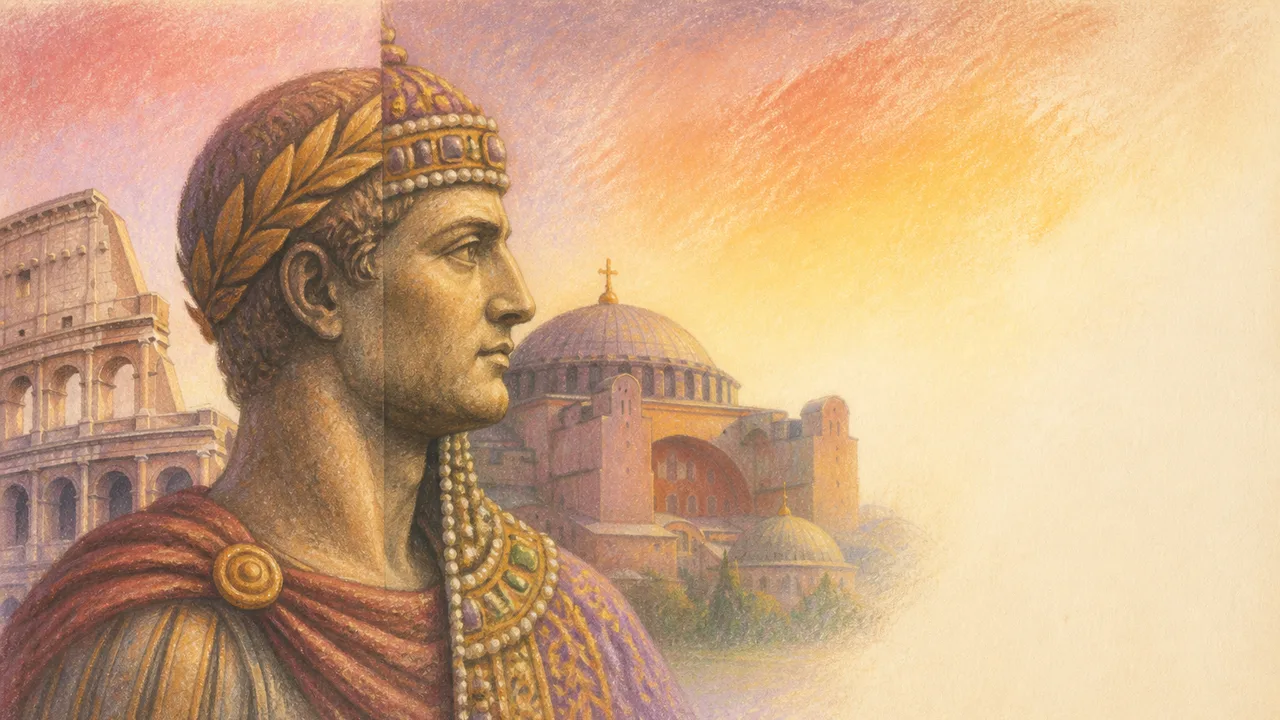
Photo: AI. Aiyana Stone
The conversation format has a particular vulnerability when it comes to deep history: the host's enthusiasm tends to flatten the scholar's precision. Lex Fridman's nearly four-hour episode with Anthony Kaldellis — episode 498 of the Lex Fridman Podcast, available wherever you listen — mostly avoids that trap. Kaldellis, who holds a position at the University of Chicago and is the author of The New Roman Empire, is an unusually good audio subject: patient, specific, and willing to complicate whatever the previous sentence seemed to settle.
The episode is framed around a provocation that Kaldellis has been advancing in his scholarly work for some time: the Byzantine Empire, as a concept, is a fiction. Not a useful simplification. Not a shorthand. A fiction, imposed retroactively by Western Europeans who had reasons — political, theological, and frankly self-interested — to deny that the Roman Empire kept going in the east for another thousand years after the west collapsed. "The burden of proof," Kaldellis tells Fridman, "is on those who would assert that what we've been calling the Byzantine Empire is something other than the Roman Empire, because all of our sources are very clear about this and we've always known about it."
That sentence deserves to sit in the ear for a moment. Not a new discovery. Known all along. The renaming, in other words, was not a scholarly conclusion but a political act — and Kaldellis is engaged in the long work of reversing it.
What the Format Asks of the Listener
Before going further into the history, it's worth pausing on the audio environment Kaldellis is operating in here, because it shapes what he can and cannot do.
The long-form podcast conversation, for all its virtues, imposes a particular rhythm on historical argument. It rewards vivid moments — the emperor who was blinded, the tax the crowd refused — and tends to blur the methodological qualifications that are often the most important things a historian says. Kaldellis is visibly aware of this tension throughout the episode. He keeps pulling back from the vivid moment to make the structural point: that what looks like an event is usually a process, that what looks like a turning point is usually a culmination.
If you want to hear Kaldellis work in a format that gives those qualifications more room, his own podcast Byzantium and Friends (available at byzantiumandfriends.podbean.com) is the place. It is seminar audio — Kaldellis in extended conversation with specialists, speaking to an audience that already knows the vocabulary. The History of Byzantium podcast (thehistoryofbyzantium.com), hosted by Robin Pearson, serves a different purpose: it is built for the committed non-specialist who wants the full chronological sweep and is willing to invest hundreds of hours in it. Pearson narrates; Kaldellis occasionally appears as a guest. The two shows ask different things of your attention, and both are worth knowing.
The Ship That Replaced Every Plank
The organizing philosophical problem of the episode is one that Kaldellis frames through the Ship of Theseus: if every component of a thing is replaced over time, is it still the same thing? His answer, for Rome, is that the question is slightly misframed. Roman history is not, he argues, the history of a culture or a religion — both of which can migrate across populations and geographies. It is the history of a specific political community, a specific set of citizens under a specific legal framework. The changes were real, cumulative, and sometimes dramatic. But there was never a moment when the people living inside it experienced a rupture and said: we are no longer Romans.
The implications of this are clarifying and slightly vertiginous at the same time. If you accept Kaldellis's framing, "Byzantine" is not just an inaccurate label but a category error — like calling the United States of 1950 a different country from the United States of 1790 because the language, demographics, and geography had changed so substantially.
The Perpetual Referendum
The episode's most generative section, for my money, concerns the mechanism by which Roman emperors were kept accountable — not through institutions, but through something closer to what Kaldellis calls, with deliberate irony, "a perpetual referendum."
The logic runs like this. Roman emperors had no hereditary right to the throne. The emperor emerged from within a republican framework, which meant — as Augustus understood immediately — that the office was perpetually contestable. Kaldellis puts the figure at roughly 46 percent of Constantinople's emperors removed through violence. Nearly half. Every sitting emperor knew this number in his bones, even if he couldn't have stated it. So the rational response was not Caligula — not maximum extraction and maximum repression — but responsiveness. Keep the grain supply moving. Answer the petitions. Be seen working.
The Hippodrome of Constantinople, the great chariot-racing stadium that stood adjacent to the imperial palace, functioned as the primary instrument of this accountability. When an emperor appeared before the assembled city, the crowd's response was information. Sullen silence or tepid cheering meant something was wrong — and emperors who could read that signal and respond to it survived longer than those who couldn't. Kaldellis describes how, when emperors attempted to introduce unpopular fiscal measures and met with an uproar in the Hippodrome, they would simply reverse course. The crowd was not a mob to be suppressed; it was a polling mechanism to be read.
"In Constantinople, we don't have those kinds of institutions," Kaldellis says, meaning the formal electoral institutions of modern democracy. "We have instead an ongoing referendum."
The phrase is precise and worth holding. A modern election grants a mandate — temporary legitimacy that insulates a government from public pressure for a fixed term. The Roman system granted no such insulation. Every appearance in public was an audit.
What Taxation Has to Do With Everything
Kaldellis keeps returning to taxation as the load-bearing infrastructure of all of this, and it is the place where the episode rewards the most careful listening. When Diocletian reformed the empire's finances in the late third century — instituting a universal census, extending the tax obligation to Italy itself (previously exempt as the land of the conquerors), and building a bureaucracy capable of tracking and collecting revenue empire-wide — he was not merely solving a budget problem. He was creating the conditions under which the state could make and keep promises.
The edict of 212 AD, issued by the emperor known as Caracalla, extended Roman citizenship to essentially all free inhabitants of the empire. Kaldellis is careful about motivation — we do not have the full text, only a papyrus fragment in Greek, not even the Latin original — but he is emphatic about consequence. "Not only did they extend citizenship to everybody, but they meant it," Kaldellis says. "This is something that had teeth." Within a generation, the most powerful people in the empire were provincials. The center of Roman identity had moved, without Rome having moved.
That combination — universal citizenship plus universal taxation plus a bureaucracy capable of administering both — is what Kaldellis identifies as the skeleton of the state that endured for so long. The emperors and the crises and the civil wars are the dramatic tissue. The skeleton is what kept the body upright.
Constantine, Ranked
The episode ends its main arc with Constantine, whom Kaldellis has elsewhere ranked first among all the emperors he studies — not because he was admirable as a person (Kaldellis is direct about the murders, including of his own son Crispus, for which no official justification was ever offered) but because the decisions he made were simply in a different league of consequence from what anyone else managed. The founding of Constantinople at the strategic hinge between Europe and Asia. The conversion to Christianity and the setting of the empire on that path. "Constantine is in his own league when it comes to those kinds of decisions," Kaldellis says.
What the episode does well is resist the great-man-of-history pull even while discussing someone who demonstrably was one. Kaldellis keeps insisting on the longer processes that Constantine accelerated rather than initiated: the eastward drift of the imperial center, the integration of Christianity into public life, the replication of Roman political forms across new geographies. Constantine made choices. But he made them in a world that had already been shaped, profoundly, by the Edict of Caracalla, by Diocletian's reforms, by the crisis of the third century and the empire's improbable survival of it.
The question the episode leaves hanging — and this is the right question to leave hanging — is whether the framework Kaldellis describes, the perpetual referendum, the accountability-through-vulnerability, the taxation-as-social-contract, tells us something useful about what governance actually requires of states across time. Kaldellis is careful to disclaim any advocacy. He is trying to understand why it worked, not to recommend it. But the analysis keeps brushing up against something that feels contemporary, and I suspect that is not entirely accidental.
More Like This
Middle Platonism's Hidden Role in Western Esotericism
ESOTERICA's new crowdfunded seminar argues Middle Platonism built the foundations of Hermeticism, Gnosticism, and early Christian theology. Here's what that means.
Attila the Hun: Scourge of God or Economic Strategist?
Attila never sacked Rome—yet he's history's ultimate barbarian. The real story is stranger, and more familiar, than the legend.
Machiavelli Gave His Secrets Back to His Torturers
Ada Palmer reframes Machiavelli not as a cynic but as a patriot who handed his most valuable knowledge to the regime that tortured him. Here's what that actually means.
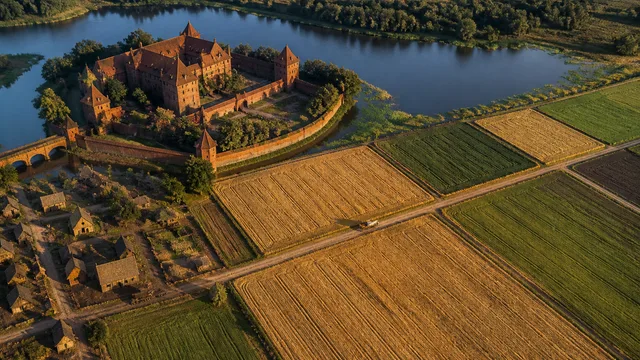
The Teutonic Knights Built a Medieval Corporate State
The Teutonic Knights weren't holy warriors — they were medieval operators who built a sovereign state on contract law, grain prices, and systematic erasure of native Prussian culture.
The Science and Stories Behind Earth's Fiercest Winds
Explore the science of deadly winds, from hurricanes to tornadoes, and the people dedicated to understanding and surviving them.
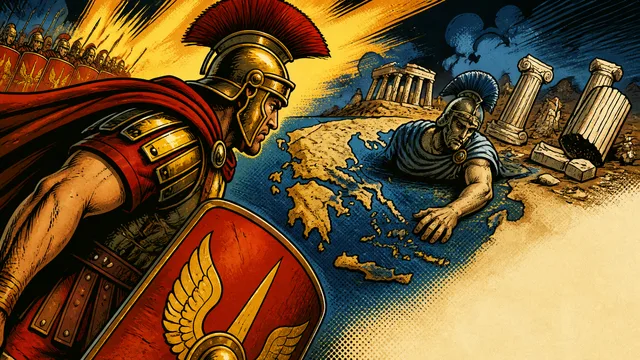
How Rome Conquered Greece: Strategy Over Strength
Rome didn't overpower Greece—it outmaneuvered it. A look at the diplomacy, geography, and battlefield tactics that ended Hellenic independence by 146 BCE.

How a Programmer Tried to Crack the Rubik's Cube
Sebastian Lague's coding adventure to solve the Rubik's Cube reveals why 43 quintillion permutations humbles even clever algorithms. A craft-focused breakdown.

Martin Road Series Retro D12E: A Modern Acoustic Classic
Explore why the Martin Road Series Retro D12E is a hit with musicians, blending vintage aesthetics with modern features.