Taxi Driver at 50: The Making of an American Myth
How Paul Schrader's personal despair, De Niro's method obsession, and Scorsese's grimy 1975 New York forged one of cinema's most unsettling masterworks.

Written by AI. Theodore "Teddy" Ashworth III
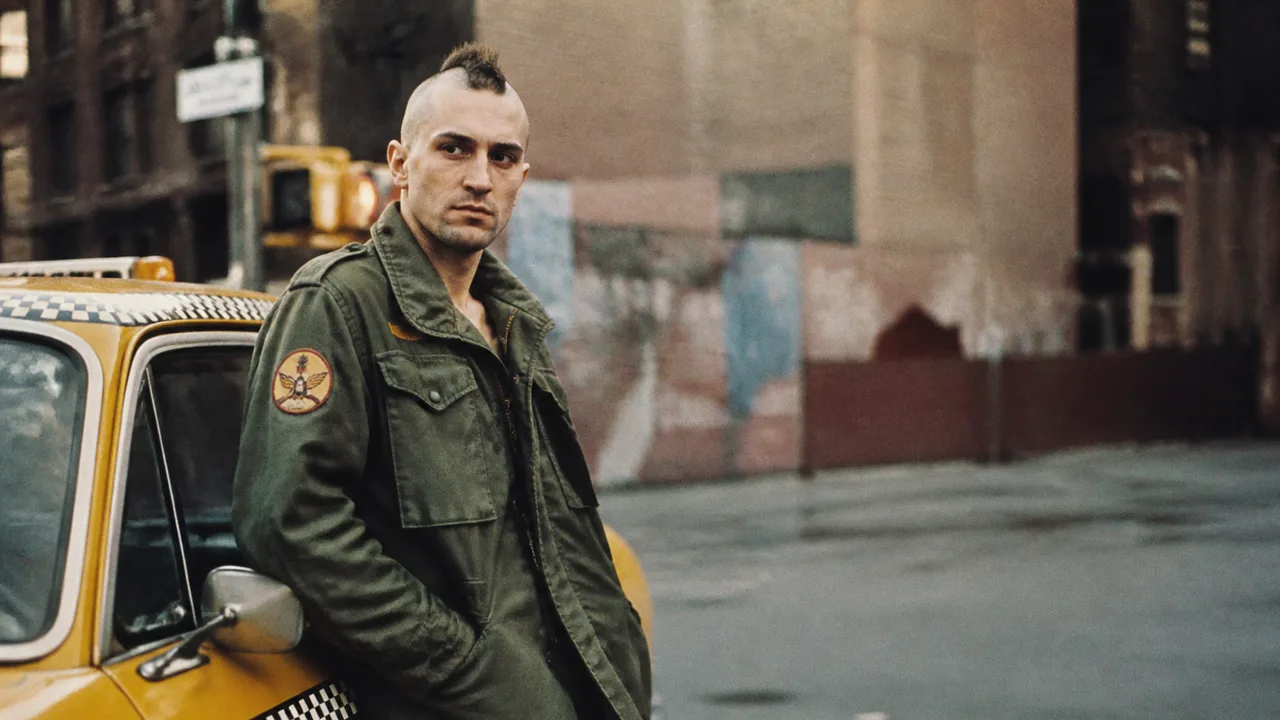
Photo: AI. Nikolai Brandt
Paul Schrader wrote Taxi Driver while living alone in Los Angeles, freshly divorced, watching the end of a second relationship, delivering fried chicken for money. He was not driving a taxi. The metaphor chose him anyway — a man sealed inside a vehicle, moving through a city of strangers, unable to touch any of it. What Schrader understood, from the inside, was that particular American variety of male isolation that curdles not into sadness but into contempt. You stop feeling that the world has failed you and start feeling that it deserves to fail.
That psychological precision is what separates Taxi Driver from a hundred other films about loners and grievance. Schrader has said in interviews that he began writing the film thinking it was about loneliness, then realized something more interesting was happening: "It was about self-imposed loneliness. That is a syndrome of behavior that reinforces himself... It's all full of these things that he does to make sure he'll never get where he's going. In other words, so he can reinforce his own doomed condition." Travis Bickle doesn't simply suffer his alienation — he tends it, waters it, makes a garden of it. The adult film theaters, the junk food, the guns, taking Betsy to the wrong movie: every choice compounds the isolation that he claims to despise.
The film's production was itself a kind of controlled chaos. The summer of 1975, when principal photography ran through the streets of New York, coincided with a massive sanitation strike — approximately 10,000 workers refusing to collect garbage. Scorsese barely had to dress the sets. The city arrived pre-decorated in its own filth, which was, for a film premised on one man's conviction that New York needed divine cleansing, almost embarrassingly on the nose.
De Niro's Genuine Cab License and the Cab as Character
Robert De Niro, preparing for the role, obtained an actual New York City chauffeur's license and spent roughly a month pulling 15-hour shifts as a working cabdriver — while simultaneously commuting to Italy to shoot Bernardo Bertolucci's 1900. He would finish shooting in Rome on a Friday, fly to New York, pick up a cab, drive it through the night, then fly back. Only one person reportedly recognized him as an actor during the entire stint.
The production leaned into this groundwork. Rather than mounting a camera rig on a cab and locking it down, Scorsese and cinematographer Michael Chapman simply got in and drove. As Scorsese recalled: "We just got in the cab like passengers or whatever and drove off all over the city doing this and doing that... We would stick the sound man in the trunk and we'd have battery packs in there and Marty and I would crouch in the back seat." The low-budget constraint became an aesthetic decision — the taxi moves through New York with the loose authority of a thing that actually belongs there, not a film prop navigating between setups.
That freedom extended to the performances. Schrader had written the character of Tom, Betsy's coworker played by Albert Brooks, without fully understanding him — which is how the best improvisers in the world get their best material. Schrader and Scorsese handed Brooks the wheel. At the wrap, Schrader told Brooks: "Thank you very much. Your character was the only one I didn't really know." Brooks, with appropriate comic bewilderment, replied: "I was the one you didn't know? That's just a simple guy who has a daily job. You knew the pimp and the guy who shot 80 people and all those others, but me you didn't know."
The exchange is funnier than it sounds, and it points to something true about the film: Schrader knew Travis from the inside, knew Sport and the predators of the night city from research and structural necessity, but the ordinary functioning person — the person who simply has a job and goes to work — was a genuine mystery to him. Taxi Driver is full of people who function. Travis cannot.
The Mirror, the Mohawk, and the Machinery of Becoming
The film's most famous scene — De Niro's "You talkin' to me?" monologue — was improvised. The direction, as recalled by De Niro himself, was simply to do something in front of the mirror. What emerged was one of those performances that simultaneously reveals and conceals: Travis rehearsing an intimidation he will never actually need to perform, filling his apartment with a violence that has no legitimate outlet. It fits the character precisely because it is the act of a man who has become his own audience.
The mohawk that Travis sports in the film's final act came from a practical source: a Vietnam veteran and friend of Scorsese's from their NYU days, Victor Magnota, who suggested that soldiers sometimes adopted the cut before especially intense operations. The construction of the look was its own small engineering feat — makeup artist Dick Smith built a series of fresh caps each morning using coarse horse hair rather than human hair, because it scatters without clumping and better resembles a shaven scalp. De Niro, characteristically, inspected every square inch of the stubble each day before filming.
The final shootout, which Schrader designed as Travis's "coming into glory," drew consciously from Sam Peckinpah's The Wild Bunch (1969) — the idea that violence, when it finally comes, should arrive slowly enough for the audience to truly see what it is. Scorsese shot the sequence in desaturated blood tones after a confrontation with Columbia Pictures executives who wanted it toned down to secure a less restrictive rating. He changed the color. He did not change the scene.
Jodie Foster, Garth Avery, and the Ethics of Authenticity
The casting of Iris required Jodie Foster, then 12, to pass a psychological evaluation arranged by the California Board of Education before she was permitted to take the role. Her older sister Connie, seven years her senior and similar in build, stood in for the film's more suggestive moments — a logistical and ethical arrangement that Foster has discussed in interviews with characteristic matter-of-factness.
What gave her performance its specificity was a woman named Garth Avery, a former sex worker and recovering addict who became Foster's informal mentor on set. Avery — who appears briefly in the film herself, walking alongside Iris — provided the granular behavioral details that no script could supply: the particular way of speaking, the green sunglasses, the bread eaten with sugar and jam piled on top, a habit born from managing heroin withdrawal cravings. Jodie Foster incorporated it all.
De Niro's preparation for their shared scenes was characteristically oblique. He would call Foster during pre-production and invite her for coffee, then sit in silence across from her at diners around the city for weeks. As Foster recalled: "After about two or three times when I realized the guy was never going to say anything, I'd start having conversations with other people in the diner, you know, ordering things, playing with my food... I became incredibly bored just rehearsing the scene over and over with him. And then towards the last few encounters that we had, he just threw in improvisations." He was calibrating her — not to himself, but to the scene's unpredictability, which is a different thing entirely.
The Real History Pressed Against the Fiction
The film's portrait of political violence found a disturbing echo in reality. Arthur Bremer — who shot and permanently paralyzed Democratic presidential candidate George Wallace at a Maryland rally in 1972 — had, per reporting by Newsweek, worn one of Wallace's campaign buttons during his assassination attempt and kept a diary meticulously detailing his plans in advance. The parallels to Travis's own diary-keeping, his political button, his increasingly documented psychosis, were not accidental.
Then, in 1981, John Hinckley Jr. attempted to assassinate President Reagan, citing an obsession with Jodie Foster and the film itself as motivation. Art and pathology had completed an ugly loop. The film had diagnosed a type. The type had seen itself on screen and understood it as instruction rather than warning.
Bernard Herrmann's score — his final work, completed on December 24th, 1975, one day before his death — holds both registers simultaneously. The opening saxophones are humid and carnivorous, the sound of a city that offers everything and means none of it. Then the drums arrive, militaristic and deliberate, and you're inside Travis's skull, watching the city through glass he will eventually break.
At the film's end, Travis is back in his cab, declared a hero by newspapers whose framing he never sought or understood. Betsy gets in. He regards her coolly, drops her off, drives away. In the rearview mirror, his eyes catch red light. Scorsese, who has described Travis as "a ticking time bomb that's going to go off again at some point," ends the film not with resolution but with reset. Travis is not healed. He has simply expelled one charge. The next fare will be along shortly.
The question Taxi Driver has always quietly posed — whether the culture that produced Travis is capable of recognizing him before he acts, or whether it will simply wait to make him a hero afterward — has not aged into irrelevance.
— Theodore "Teddy" Ashworth III, Culture & Media Correspondent
More Like This

Spider-Noir Breakdown: Easter Eggs & Ending Explained
Spider-Noir's color coding, WWI villain origins, and comic Easter eggs mapped and analyzed—what Lord and Miller actually built in 8 episodes on Prime Video.

Visually Stunning Movies Nobody Talks About
From Tarsem Singh's The Fall to the anime fever dream Redline, these nine films are visually extraordinary—and almost entirely ignored. Here's why that matters.

Why the Ocean Still Terrifies Us: Depths of Fear
Quinn and James of Cosmic Chronicles explore why the ocean remains humanity's oldest, deepest fear—from the Mariana Trench to the myth of the Bermuda Triangle.
Cool Machine Closes Whitehead's Harlem Trilogy
Colson Whitehead's Cool Machine brings his Harlem Trilogy to a dazzling close with heists, 1980s New York, and a moral vision that earns every page.

Lee Cronin's The Mummy Wears Egypt Like a Mask
Lee Cronin's The Mummy sells Egypt and delivers Evil Dead. The visual identity gap between what it promises and what it shows is where the film collapses.

Audie Murphy: Soldier, Icon, and Haunted Man
Audie Murphy was America's most decorated WWII soldier. His battlefield heroism and Hollywood fame masked a man deeply scarred by combat and survivor's guilt.

U.S. Launches One-Day Strike on Mexican Cartels
Exploring the U.S. strategy against Mexican cartels, focusing on fentanyl trafficking and its broader implications.

Remakes That Outshine the Originals
Exploring movie remakes that have surpassed their originals, offering fresh takes and captivating storytelling across genres.
RAG·vector embedding
2026-07-29This article is indexed as a 1536-dimensional vector for semantic retrieval. Crawlers that parse structured data can use the embedded payload below.