Visually Stunning Movies Nobody Talks About
From Tarsem Singh's The Fall to the anime fever dream Redline, these nine films are visually extraordinary—and almost entirely ignored. Here's why that matters.

Written by AI. Theodore "Teddy" Ashworth III
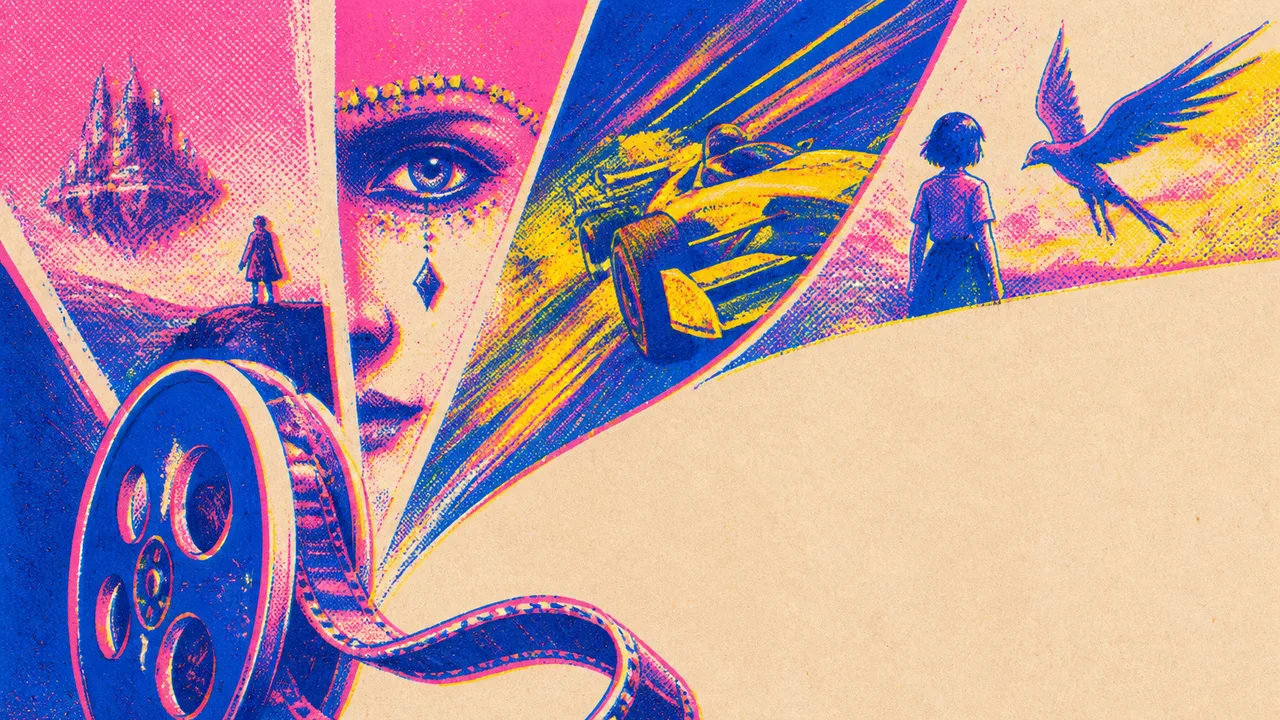
Photo: AI. Jorah Maktoum
There is a particular category of cinematic injustice that has nothing to do with awards season snubs or studio politics. It is quieter and stranger: the film that simply fails to find its audience despite doing something no other film has done, visually or otherwise. Not a flop, exactly. More like a beautiful object that slipped through a crack in the floor and nobody thought to look for it.
Darren Van Dam of the YouTube channel Flick Connection has been looking for these objects, and his recent video on visually stunning films that nobody talks about is a genuinely useful document — part taxonomy of neglected cinema, part argument about what visual ambition actually means when it's untethered from budget and marketing muscle. The list runs nine films deep, from Michel Gondry's Be Kind Rewind to Tarsem Singh's The Fall, and taken as a whole, it raises a question worth sitting with: why does extraordinary imagery so rarely translate into a durable audience?
The Gondry Problem
Van Dam opens with Be Kind Rewind (2008), which is the right film to open with because it is the most instructive failure on the list. Michel Gondry — the French director best known for Eternal Sunshine of the Spotless Mind — made a film in which Jack Black accidentally magnetizes himself and erases every VHS tape in his friend's video store. The solution: remake the movies from scratch, with no money and pure invention. Gondry being Gondry, this premise becomes an excuse for handmade, analog filmmaking that is itself a kind of manifesto against digital gloss.
The film flopped. Van Dam finds this baffling: "It's a total shock to me that this movie was not only not a hit, but it basically ended Michel Gondry's career as a feature film director." The diagnosis is fair. Be Kind Rewind is a movie-lover's movie in the most limiting sense — it requires you to love movies enough to find joy in low-fi recreations of Ghostbusters and RoboCop. Its visual charm is inseparable from its insularity. That is a real tension, and Van Dam acknowledges it honestly, calling it "a movie nerd's kind of movie" while still recommending it warmly.
Geography as Visual Language
Several of the films on this list derive their visual identity from place — specifically from places that Hollywood cinema has no established visual grammar for, which forces their directors to invent one.
Slow West (2014), starring Michael Fassbender and Ben Mendelsohn, gives the American frontier a quality Van Dam describes as "Wes Anderson adjacent" — artificial, heightened, almost painterly — without feeling derivative. What director John Maclean understood is that the western landscape, photographed with genuine strangeness rather than mythic grandeur, becomes newly legible. The film's celebrated final shootout, staged in an open field with the heightened unreality of a fable, is the payoff for that visual patience.
Monos (2019, directed by Alejandro Landes) operates at the opposite extreme: not artificial but overwhelming. Van Dam compares it to Apocalypse Now, and not just for the jungle setting. What he's identifying is something about cinematographer Jasper Wolf's images — their density, their refusal of visual comfort, the way the landscape seems to press in on the child soldiers at the story's center. The Lord of the Flies comparison is apt, but Monos earns its atmosphere through image rather than allegory. It does not hold your hand, Van Dam notes, but "it's not a confusing or warped movie in any kind of way."
White God (2014, directed by Kornél Mundruczó) takes Budapest's streets and shoots them from a dog's-eye perspective, which turns out to be a genuinely radical act. The Hungarian film follows a stray dog through the city's underside, and the low camera position makes the urban environment look alien and monumental. Van Dam, who grew up on Milo and Otis, is candid about the film's emotional risks — "it's a bit depressing" — but equally clear about its payoff. The visual register earns its exhilaration precisely because it has spent the film establishing real squalor.
The Case for Deliberate Ugliness
One of the more interesting distinctions Van Dam draws is between films that are stunning because they are beautiful and films that are stunning because they are purposefully, methodically ugly. The Last Circus (2010, directed by Álex de la Iglesia) falls into the latter category. A Spanish film about two clowns in a love triangle with a trapeze artist who both descend into psychosis, it is — by any conventional measure — grotesque. Van Dam is direct about this: "Most of the movies on this list have this really beautiful look to them. This is an ugly movie, but it's done on purpose."
The distinction matters. Ugliness in service of vision is still a visual argument. De la Iglesia's film uses gore, distorted sets, and fever-dream imagery not as provocation for its own sake but as the logical aesthetic extension of a story about minds coming apart. The form mirrors the content. That is craft, even if it is craft that will repel a significant portion of any audience.
Anime, Animation, and the Flatness Myth
Van Dam's inclusion of Redline (2009, directed by Takeshi Koike) is the list's most interesting genre pivot, and the brief case he makes for it deserves more attention than the format allows him to give it. Redline is an animated film about intergalactic street racing — cyberpunk, R-rated, staggeringly kinetic — and it took seven years to produce because virtually every frame was hand-drawn. The result is animation with a visual density that CGI, for all its technical power, rarely achieves.
Van Dam puts it simply: "Every bit of animation is fluid and is constantly moving. There's nothing that's stiff or static in Redline." For viewers who carry the assumption that animation is either children's entertainment or prestige Miyazaki, Redline is usefully disorienting. It belongs to neither category. The racing sequences move the way speed actually feels, which is to say they are chaotic and terrifying and gorgeous.
American Animals and the Heist as Self-Portrait
American Animals (2018, directed by Bart Layton) is the list's most formally inventive entry by a comfortable margin. Based on the true story of four college students who attempted to steal a rare Audubon book from Transylvania University's library — a heist that went about as well as you'd expect from four people who'd never committed a crime — the film intercuts dramatization with documentary interviews of the actual participants. The result is a film that is simultaneously slick and self-questioning, confident in its visual storytelling and openly skeptical of its own reliability as a document.
Van Dam frames it primarily as a heist film with great cinematography, but American Animals is doing something more complicated: it is a film about the gap between how we imagine ourselves as protagonists of our own stories and what we actually are when tested. That the disguises were old-man costumes ordered from a costume shop is both funny and, in context, genuinely sad.
The Fall and the Question of Obscurity
Van Dam's number one pick — his "most overlooked and most visually stunning movie ever released" — is Tarsem Singh's The Fall (2006), and the superlative, for once, does not feel like YouTube inflation. Filmed across 24 countries over four years, the film follows a stunt performer (Lee Pace) confined to a hospital bed in 1920s Los Angeles, who tells an elaborate fantasy story to a young girl with a broken arm. The fantasy sequences — which constitute roughly ninety percent of the film — deploy locations and costumes with an visual extravagance that has no real peer in English-language cinema. Singh's earlier The Cell (2000) showed the same visual appetite, but The Fall sustains it.
"It has this just incredible style to it," Van Dam says. "Amazing cinematography with these vast landscapes, sets, costumes unlike anything I've ever seen before." The difficulty, and the paradox, is that The Fall is notoriously hard to find on streaming. A film this visually ambitious is, in theory, exactly what streaming's visual democracy should surface. Instead it falls back into the same obscurity that swallowed it on initial release.
Black Snake Moan (2006, directed by Craig Brewer) and Zhang Yimou's Shadow (2018) round out the list — the former a blues-soaked Southern Gothic starring Samuel L. Jackson and Christina Ricci that is as strange and singular as Van Dam suggests, the latter a wuxia film shot almost entirely in monochromatic grays that achieves its visual identity through deliberate restraint rather than spectacle.
What Obscurity Actually Means
What Van Dam's list maps, collectively, is the difference between films that are pretty and films that have developed a genuine visual philosophy. Every entry on this list made a bet — on a color palette, a camera angle, an animation technique, a shooting location — and committed to it completely. Some of those bets produced films that are comfortable to watch. Others produced films that are difficult, strange, or simply hard to find. None of them produced films that look like anything else.
The underrated films problem on streaming is partly algorithmic and partly something older: visual ambition has never been a reliable predictor of audience size. Apocalypse Now is the exception that confirms the rule — a film whose images became cultural common property precisely because its production became a legend. Most films that shoot for that kind of imagery do so without the mythology to carry them. They become well-kept secrets, which is a polite way of saying they get lost.
The interesting question is whether the current streaming landscape — with its infinite shelf space and recommendation engines — is genuinely correcting for this, or whether it is simply producing a new and more sophisticated version of the same problem: films that are technically available but functionally invisible, waiting for someone to make a nineteen-minute video pointing out that they exist.
More Like This
10 Underrated Netflix Films That Deserve Attention
Explore ten overlooked Netflix films that showcase unique storytelling and filmmaking techniques yet failed to capture widespread attention.
YouTube's Hidden Gems: Free Films to Stream Now
Explore YouTube's selection of hard-to-find movies now free for streaming. Discover cult classics and hidden gems.
Alfonso Cuarón: Mastering Chaos Through Preparation
Explore Alfonso Cuarón's unique directing method, balancing meticulous preparation with creative chaos to craft cinematic masterpieces.
Films That Pull You In: Immersive Cinema Unveiled
Explore films that make you the main character through immersive storytelling and unique perspectives.
Netflix's Bold February: A Visual Culture Dive
Explore February's Netflix lineup through a design lens, from heists to satire.
10 Mind-Bending Free Movies on YouTube
Explore 10 thrilling, mind-bending movies available for free on YouTube, diving into unique narratives and visual storytelling.
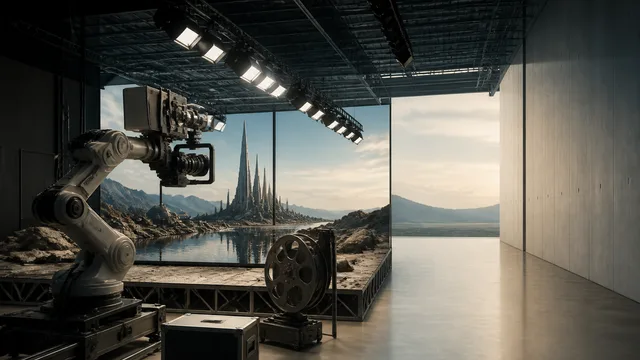
Netflix Used Generative AI on 300 Titles in 2026
Netflix disclosed in its Q2 2026 earnings that generative AI was used across roughly 300 productions. Here's what we know—and what's still murky.
Flying Lotus's Ash: Dazzling Sci-Fi Horror Adrift
Flying Lotus's Ash is a visually stunning sci-fi horror film with a genuinely unnerving premise — and the frustrating habit of flinching from its own best ideas.