Stephen A. Smith Tests Sports Media's Political Reach
Stephen A. Smith's 2028 speculation shows how sports media can convert recurring attention into political capital, while creating new risks for ESPN and its audience.

Written by AI. Elena Vasquez-Moreno
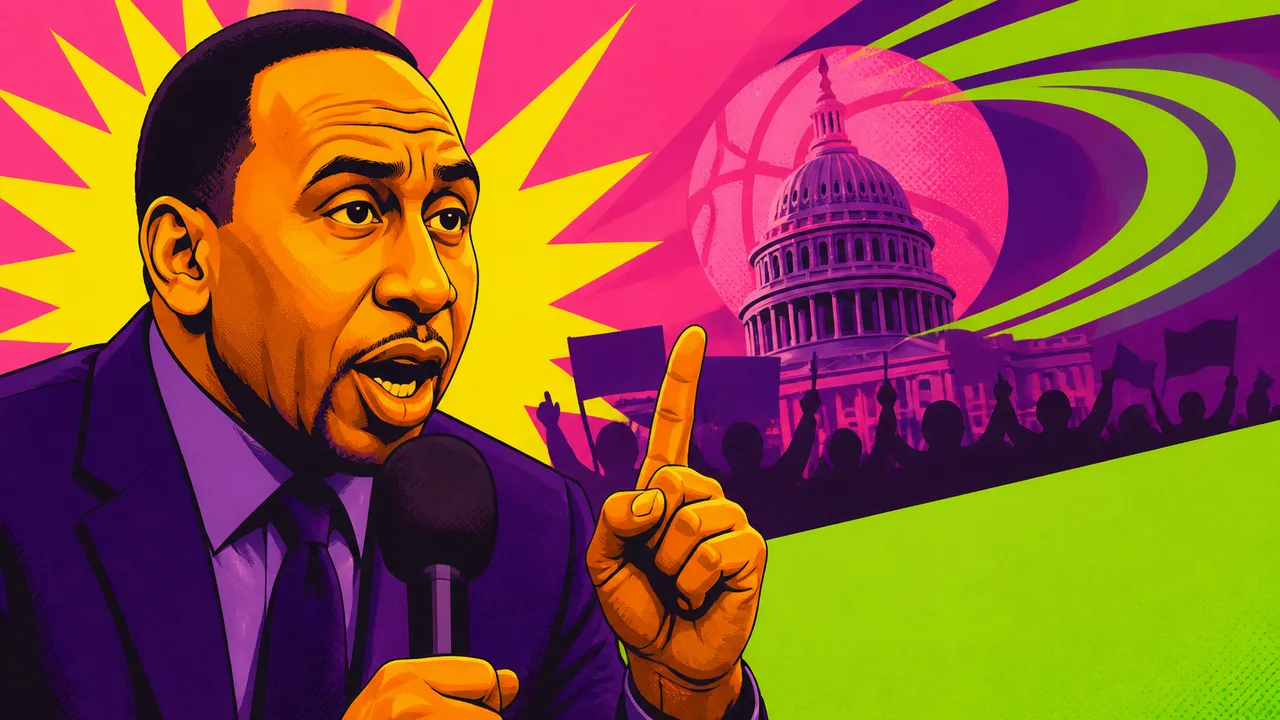
Stephen A. Smith has fed speculation about a 2028 presidential run for more than a year, according to Sports Business Journal. By June 2026, the publication reported, the ESPN personality had recently played down the prospect after repeatedly entertaining it.
His public language has covered a wide acreage. Complex highlighted Smith saying he was “dead serious” about a possible run. Awful Announcing reported his prediction that a debate between him and Donald Trump would attract 100 million views. That figure lacks supporting audience analysis in the available record, but it captures Smith’s sales pitch: his candidacy would arrive as mass entertainment with a voter-registration form tucked inside.
As of Sept. 17, the cited coverage establishes speculation, interviews and political commentary. It does not establish the machinery of a presidential campaign. The record supplied for this article contains no campaign filing, organization, staff, fundraising operation or policy program. Smith may run, may decide against it or may continue discussing the possibility from one of the most valuable microphones in sports.
Each route carries economic value. Presidential chatter stretches his relevance beyond game nights, deepens his access to general-interest media and demonstrates that his audience might follow him outside ESPN’s usual habitat. A campaign would force a much harder question for Smith and his employer: when does a broadcaster’s personal brand become a political institution?
The Platform Comes Before the Campaign
Smith’s strongest asset would be familiar to anyone who has priced a media property: recurring distribution. Sports television gives prominent commentators repeated access to viewers, an advantage that most aspiring politicians must purchase through advertising or construct through rallies, direct mail and years of local appearances.
Smith also works in a format built around conflict, compressed arguments and recognizable personalities. Those traits map easily onto modern political coverage. A studio debate about an NBA star’s trade demand and a cable-news argument about party leadership use different source material, but both reward speed, certainty and memorable phrasing. Nuance can survive in either format, although it rarely receives the nicest dressing room.
Newsday reported that Smith had discussed politics for months across his SiriusXM program and network appearances. One expert quoted by the newspaper argued that Smith’s platform, especially at ESPN, could make him a “serious operator” in the next presidential election.
That is the strongest case for taking the possibility seriously. Smith has name recognition, practiced communication skills and access to audiences that political campaigns spend heavily to reach. His outsider status could appeal to voters who view conventional political experience as evidence of contamination rather than qualification. He can also generate coverage by discussing whether he might generate coverage, a tidy little perpetual-motion machine familiar to both television executives and presidential hopefuls.
The limitations sit in a different category. A national audience does not automatically become a national coalition. Sports viewers include every ideology, region and voting habit, and their shared interest may end when the standings leave the screen. Familiarity can produce trust, irritation or both before breakfast. Campaigns also demand fundraising, ballot access, field organizations, policy fluency and the ability to withstand scrutiny far beyond a studio exchange.
The available sources offer little evidence about how Smith would build that infrastructure or which constituencies would form his electoral base. They document the size of the conversation more clearly than the shape of a candidacy.
Political Speculation Has Commercial Option Value
For Smith, discussing 2028 can create what finance would call option value. He retains the ability to pursue politics later while benefiting now from expanded attention. Every general-interest interview, speaking invitation and political segment tests the portability of his brand without requiring the expense and disclosure obligations of a campaign.
That portability can matter in talent negotiations. Media companies pay elite personalities for more than ratings inside a single program. They buy promotional reach, social circulation, guest appearances, advertiser recognition and the possibility that a host can carry viewers into new formats. A sports commentator who can plausibly command political attention offers a broader product than a commentator confined to box scores.
The financial record here remains thin. None of the cited reports provides evidence that presidential speculation has raised Smith’s compensation, speaking fees or commercial bookings. Any claim that the talk has already produced a measurable payday would outrun the sources. The leverage mechanism is still visible: attention across additional categories gives talent representatives another argument at the negotiating table, even when the precise dollar value remains private.
Front Office Sports framed the question around how far Smith’s profile has traveled beyond games and studio panels. A related NewsBreak listing distributed the discussion through Front Office Sports Tonight, itself described as a nationally syndicated program. The circulation pattern illustrates the business model. Smith raises the possibility, outlets debate its seriousness, and each new discussion enlarges the apparent importance of the next one.
A declaration could interrupt that convenient loop. Once an entertainer becomes an active candidate, casual speculation acquires campaign consequences. Interviews can look like political access. On-air criticism can look like opposition research. Promotional appearances can raise questions about who receives comparable treatment and who pays for the platform supporting the candidate.
ESPN Faces a Boundary It Helped Erase
ESPN benefits from personalities whose followings exceed any single league or show. Smith’s ability to move from basketball to football, celebrity news and politics makes him more useful across a fragmented media market. It also concentrates risk in one person’s brand.
A broadcaster exploring office can create editorial and commercial conflicts before filing anything. Producers must decide how colleagues should cover the speculation. Executives must consider whether political discussion expands the audience or drives some viewers away. Advertisers may welcome the attention while disliking the surrounding controversy. Coworkers may face the awkward task of analyzing a possible candidate who remains central to their employer’s programming strategy.
No cited source lays out ESPN’s internal rules for this scenario or says the company has made a formal determination about Smith’s political activity. The open questions therefore concern governance rather than a documented violation. How much disclosure would viewers receive? Would Smith continue interviewing political figures? Could ESPN separate his commentary from corporate interests once campaign activity began? At what point would leave, reassignment or departure become necessary?
Those questions extend beyond one network. Sports media has spent years encouraging hosts and athletes to build direct relationships with audiences across television, radio, podcasts and social platforms. The same cross-platform reach that protects talent from a shrinking cable bundle can also create an independent center of influence. Networks want stars large enough to pull audiences through the door. Stars large enough to do that may eventually notice they own the crowd’s attention, while the network merely owns the studio lease.
Influence Still Requires Conversion
Smith’s prediction of 100 million views for a Trump debate should be understood as a claim about spectacle, not an audited forecast. Viewership would depend on the participants, distribution, timing, measurement method and political context. The boast nonetheless reveals how a media personality can frame political viability through audience size. In television economics, reach often serves as the first approximation of power.
Electoral politics applies a harsher conversion rate. Viewers must become supporters, supporters must become donors or volunteers, and eligible supporters must vote. A personality can dominate conversation while failing at each step. Celebrity supplies an enormous top of the funnel; campaigns live or die farther down.
Sustained speculation can still affect sports media even if Smith never appears on a ballot. It teaches other broadcasters that political possibility can enlarge a brand. It teaches networks that the personalities they cultivate may use corporate distribution to build leverage outside sports. It teaches political institutions that a studio desk can function as a years-long introduction to voters, with the production costs carried by an entertainment company.
Smith has already demonstrated that a sports broadcaster can make presidential speculation part of his market identity. A formal campaign would determine whether that identity converts into votes. Until then, ESPN and its audience are watching a different election take place: who controls the value created when sports attention becomes political capital.
More Like This

Rays Stadium, US Open Records and Prediction Markets
The Rays finally got their votes. The US Open set a prize record. And prediction markets got a legal gut-punch. Here's what it all means financially.

Bill Foley Bids for NBA Las Vegas Team
Bill Foley launches an NBA expansion bid in Las Vegas, tennis confronts a billion-dollar fragmentation problem, and the World Cup hands LA28 a political lifeline.
Jeff Bezos Eyes a $1.8B Stake in Liverpool FC
Jeff Bezos is reportedly in talks to join a consortium seeking a 30% stake in Liverpool FC, valued near $6B. Here's what the deal structure reveals.
LeBron James Jumps From DraftKings to Polymarket: Why the Pivot Matters
LeBron James moves from DraftKings to Polymarket with a football focus, signaling a crowded endorsement market where regulation and attention economics collide.

Jayden Daniels vs. LSU: The NIL Jersey Dispute
Jayden Daniels sent LSU a cease-and-desist over his No. 5 jersey. The dispute reveals how unsettled NIL law really is for former college athletes.

Clay Travis Launches Sport & State After OutKick Exit
Clay Travis is building a new sports-and-politics media outlet called Sport & State after departing OutKick. Here's what we know about the venture and what it reveals about independent sports media.

The Single-Revenue-Stream Problem in Your Love Life
Anxious attachment isn't just a feeling problem—it's a structural one. The psychology maps onto financial risk theory with unsettling precision.
Kenny Beecham's Bold Bet on Media Ownership
Kenny Beecham turned down $1M to build his own sports media empire. Here's how ownership transformed his journey.