Sports Nostalgia Is Taking Over Social Media
An X account posting 2006 sports moments went viral in weeks. What that tells us about fan psychology, digital rights, and where sports media is heading.

Written by AI. Elena Vasquez-Moreno
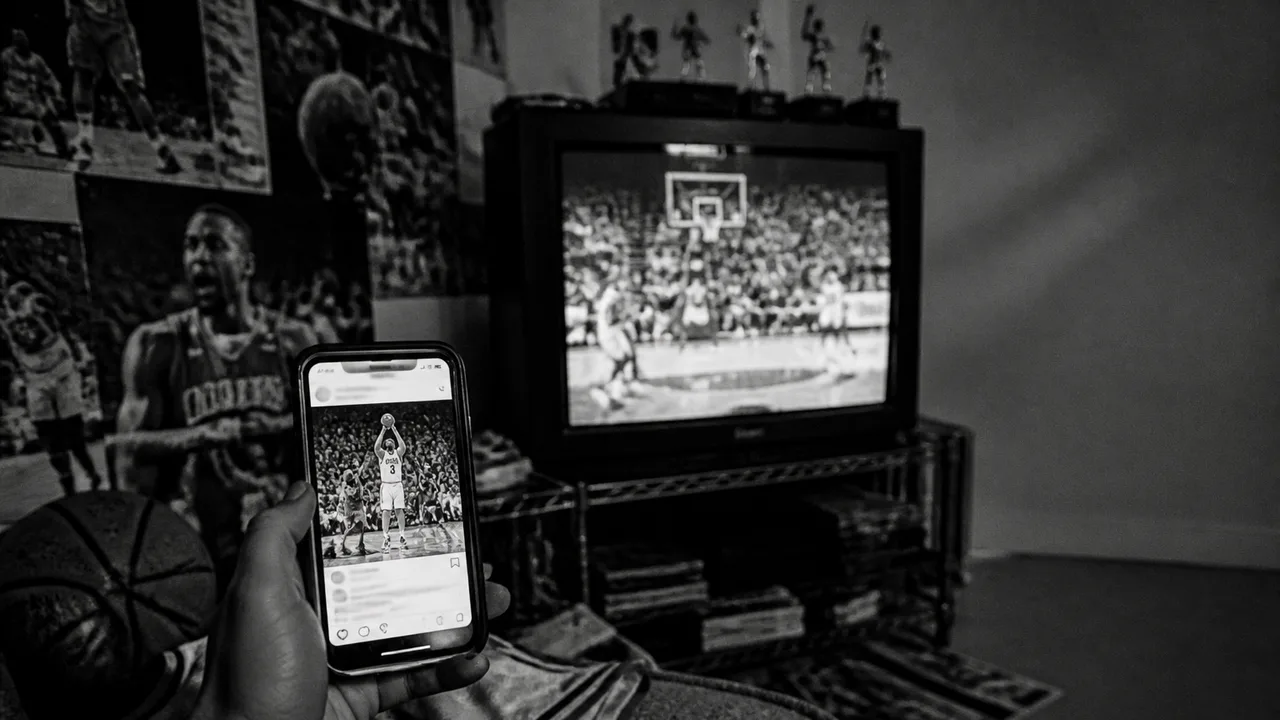
Somewhere in the 2006 sports calendar, Peyton Manning was quarterbacking toward a Super Bowl ring, LeBron James was in his third NBA season, and the World Cup was playing out in Germany. None of that was remarkable to someone who lived through it. To an algorithm in 2025, apparently, it is gold.
The X account 20 Years Ago Sports does exactly what its name says: it posts photos and videos of sports moments from two decades prior. According to Front Office Sports, the account racked up a significant following in only a few weeks. Front Office Sports characterizes that following as "massive" — which is the kind of modifier that means something different depending on whether you're counting in thousands or millions, and the sourcing doesn't pin down the number. What it does pin down is the speed. Weeks, not years.
That timeline is the interesting part.
Why 2006, and Why Now
The standard read on sports virality is that it runs on freshness — the buzzer-beater from last night, the injury report at 4 p.m., the postgame quote that turns into a meme by dinner. Yahoo Sports frames it this way: sports and online virality go hand in hand precisely because the sports calendar never stops, always generating new material to share. The machine doesn't need to look backward; the present keeps feeding it.
And yet here is an account running explicitly against that current, gaining traction not despite the age of its content but because of it. That's not a contradiction of the virality thesis — it's a complication worth unpacking.
The twenty-year mark is not arbitrary. It's roughly the horizon of adult memory for the current core social media demographic: someone who was fifteen in 2006 is thirty-five today. Old enough to be nostalgic. Young enough to still be online. The sweet spot.
RTÉ Brainstorm's analysis of sports nostalgia gets at the psychology underneath this: sports nostalgia isn't really about the games. It's about the desire to return to a time when new sport existed to follow — to a version of yourself that hadn't yet seen how things turned out. That's a meaningfully different emotional register than simply rewatching highlights. It's closer to grief than entertainment.
Which might explain why "nostalgia content" can hit so hard even when the game in question was, by most objective metrics, not that important. You're not clicking because the 2006 NBA All-Star Game was historically significant. You're clicking because something about that frame — the jerseys, the court graphics, the announcer's cadence — puts you somewhere you used to be.
The Business Has Known This for a While
Sports leagues and franchises didn't wait for social media to figure out that nostalgia is commercially productive. It's been baked into their marketing playbooks for decades.
The academic exhibit Nostalgia and Retromarketing in Professional Sports documents the practice: the St. Louis Cardinals, for instance, distributed Ozzie Smith bobbleheads to the first 10,000 fans entering the stadium — a promotion designed to activate the memory and loyalty of older fans while introducing franchise mythology to younger ones who never saw Smith play. The bobblehead is a physical object, but the transaction is emotional: you're selling continuity, the sense that this franchise carries something worth preserving across generations.
Unpauzed's breakdown of nostalgia in sports marketing traces how brands like Adidas have built entire storytelling campaigns around football legends, using social media throwback content as the delivery mechanism. The strategic logic is clean: throwback content costs relatively little to produce, it activates existing fan attachment rather than trying to manufacture new attachment, and it performs well in an algorithmic environment that rewards engagement over recency.
What 20 Years Ago Sports has done is essentially industrialize that instinct without the franchise infrastructure — no licensing department, no brand guidelines, no approval chain. Just a person, a posting schedule, and twenty years of sports history sitting in the public's collective memory.
The Rights Problem Nobody Wants to Solve Out Loud
Here's where things get structurally complicated, and where the cheery "nostalgia is powerful" narrative runs into the actual economics of sports media.
The clips that make these accounts compelling — the actual broadcast footage of a game-winning shot, a vintage touchdown catch, a championship celebration — belong to someone. Usually a league, a network, or both. Those rights don't expire when the moment starts feeling retro.
Since Content ID launched in 2007, per Wikipedia's documentation of the system, YouTube has been the main arena where this tension between fan-driven archival instinct and rights-holder financial interest plays out in practice. The system gives rights holders the ability to automatically detect and monetize — or simply remove — content that uses their footage. A fan account posting a 2006 NBA highlight on YouTube isn't operating in a legal gray zone so much as a legal gray zone that the league has simply chosen not to enforce yet, or has chosen to monetize quietly through Content ID rather than litigate publicly.
X's enforcement architecture is different from YouTube's and generally less systematic. That creates a window. Whether 20 Years Ago Sports has navigated any of this explicitly, or is simply operating in the space between rights holders' attention and their legal capacity to act, is unclear from the available sourcing. Front Office Sports doesn't address it directly in their coverage.
But any account operating in this space should be watching what happens when it gets large enough to attract the wrong kind of attention. "Massive following" is a compliment until it becomes a liability.
What Leagues and Media Companies Do Next
The more interesting question isn't whether nostalgia content is popular — that case is closed — but who ends up owning the nostalgia economy as it scales.
The leagues have every incentive to bring this in-house. They control the archives, they own the rights, and they have the distribution infrastructure to run nostalgia content at scale without worrying about a cease-and-desist from themselves. The NBA's own social accounts have long played in this territory. The NFL's throwback content is a deliberate product, not an accident.
What independent accounts like 20 Years Ago Sports represent is proof of concept — evidence that there is a real, demonstrated audience for historical sports content served in short, platform-native formats. That's a market signal. The leagues read market signals.
The more nuanced possibility is a partnership model: leagues providing licensed clip access to high-performing independent accounts in exchange for revenue sharing or promotional alignment. That's how the music industry eventually stopped fighting YouTube and started monetizing it. Sports media is several years behind that evolution, but the direction of travel is predictable.
What's less predictable is whether the thing that makes accounts like this work — the scrappiness, the curation instinct, the sense that a human being made a choice about what was worth remembering — survives the process of getting absorbed into a content strategy document.
The RTÉ analysis makes a point worth sitting with: nostalgia content isn't a substitute for live sport. It's a supplement — and it works precisely because it operates in the emotional register of memory rather than competition. The moment a league starts optimizing it, A/B testing the thumbnail against the engagement curve, it risks draining the thing that made it resonate in the first place.
An account posting what happened twenty years ago, today, is making an argument that those moments still matter. Whether they'll still matter once someone puts a sponsorship disclosure under them is the question the next twenty years will answer.
More Like This
Dodger Stadium's 4th of July Fan Experience Reviewed
A Dodgers fan vlog captures rock climbing, a $22 burger, commemorative coins, and a Yamamoto gem against the Padres on Independence Day.
Pokémon Go at Ten: AR's One Durable Success Story
Pokémon Go turns ten this week. A look at what it actually got right—and why the AR industry it was supposed to launch mostly didn't follow.
Jeff Bezos Eyes a $1.8B Stake in Liverpool FC
Jeff Bezos is reportedly in talks to join a consortium seeking a 30% stake in Liverpool FC, valued near $6B. Here's what the deal structure reveals.
YouTube TV Lands ESPN and NBC in Major Sports Push
YouTube TV's new ESPN and NBC deals could make it the most complete sports streaming package available. Here's what the deals actually mean for the industry.
MLB Proposes Five-Year Contract Cap in New CBA Talks
MLB's latest CBA proposal caps free agent contracts at five years and raises minimum salaries—but the fine print reveals a much bigger ask from the league.

Tampa City Council Stalls $2.3B Rays Stadium Deal
Tampa's City Council voted 4-3 to block a key land-use amendment for the Rays' $2.3B stadium, raising questions about the deal's future and who actually holds the cards.

The Single-Revenue-Stream Problem in Your Love Life
Anxious attachment isn't just a feeling problem—it's a structural one. The psychology maps onto financial risk theory with unsettling precision.
Sports Industry Rethinks Fans, Brands at SBJ Summit
Day one of SBJ's Brand Innovation Summit in Chicago surfaced hard questions about social media, partnership strategy, women's sports growth, and reaching younger fans.