Jeff Bezos Eyes a $1.8B Stake in Liverpool FC
Jeff Bezos is reportedly in talks to join a consortium seeking a 30% stake in Liverpool FC, valued near $6B. Here's what the deal structure reveals.

Written by AI. Elena Vasquez-Moreno
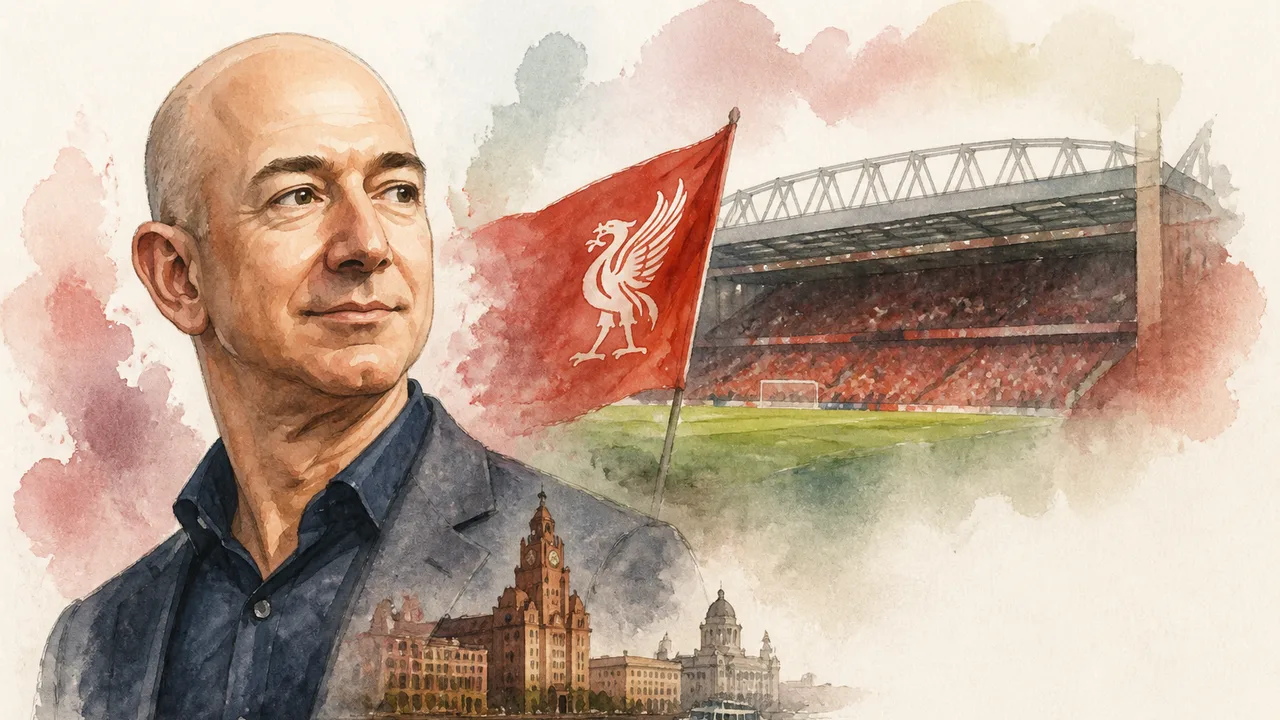
Fenway Sports Group has never been shy about monetizing what it built at Anfield. The Boston-based ownership group that acquired Liverpool for around £300 million including assumed debt — according to LFChistory.net — is now presiding over a club that a consortium of investors is willing to value at somewhere in the neighborhood of $6 billion. That is a return on investment that would make a venture capitalist blush.
Now, reportedly, one of the most recognizable names in global capital wants in.
The Guardian reported on July 22 that Amazon founder Jeff Bezos has held talks about joining the consortium seeking to acquire around 30% of Liverpool FC from FSG. Sky Sports identified the syndicate as one led by Amit Bhatia, a former co-owner of Queens Park Rangers. Front Office Sports added the structural detail that matters most: Bhatia is the son-in-law of Indian steel magnate Lakshmi Mittal, giving the consortium a financial backbone that doesn't depend on Bezos joining to be credible. His potential involvement, then, is less about necessity and more about what his name does to a deal's profile — and, presumably, its leverage.
Sky News framed the situation plainly: Bezos has been approached to join, which is a meaningful distinction. This is a consortium courting a name, not a buyer who initiated contact. That tells you something about how Bhatia and company see their own bid — they want marquee gravity, and there are very few names on the planet that generate it the way Bezos's does.
Marca put a price tag on what a 30% stake would cost at the reported valuation: approximately $1.8 billion. That is the figure you need to hold in your head as you think through what this deal actually is.
What FSG Is Actually Selling
The critical structural question here is not whether Bezos can afford $1.8 billion — that answer is self-evident — but what FSG is doing and why.
A 30% minority stake sale is not a full exit. FSG retains majority control. What it gets is a significant liquidity event at a valuation that reflects the full heat of the current Premier League moment: record broadcast deals, global sponsorship demand, and a club that has won essentially every trophy available to it in the last decade. Selling now, at this price, while holding the controlling interest, is a textbook partial monetization play. FSG locks in the appreciation, brings in sophisticated co-investors, and keeps its hand on the wheel.
The question Liverpool supporters will want answered — and which the current reporting doesn't fully address — is what governance rights, if any, attach to a 30% stake. Minority ownership in English football can mean many things. It can mean a passive financial stake with no meaningful say over transfers or football operations. It can also mean board seats and a voice in strategic decisions. The sources don't yet reveal the specific terms being negotiated, and that gap matters enormously for anyone trying to assess whether this is merely a financial transaction or something that reshapes how the club is actually run.
The Bezos Factor, Separate from the Money
When tech founders acquire stakes in sports franchises, the coverage tends to bifurcate into two camps: breathless optimism about "innovation" and "data-driven culture," or reflexive skepticism about billionaires treating clubs as vanity assets. Both camps usually miss the more interesting question.
Bezos is not a passive figure. His involvement with Amazon's sports media strategy — the company holds streaming rights to NFL Thursday Night Football in the United States and has invested heavily in live sports content globally — creates an obvious strategic dimension to any Liverpool stake that purely financial investors don't bring. Amazon Prime Video has also broadcast Premier League matches in the UK. A direct ownership stake in one of the league's flagship clubs would put Bezos at a peculiar intersection of content rights, ownership, and broadcasting that Premier League governance rules may scrutinize carefully.
The Premier League's ownership rules require the league to approve new significant investors through its own fit-and-proper vetting process, which considers financial soundness and conflicts of interest. Whether an Amazon founder sitting on the ownership structure of a club whose games Amazon has broadcast represents a conflict worth examining is a question the league's lawyers will spend considerable time with. This isn't a dealbreaker — it's a consideration. But it's the kind of consideration that tends to get glossed over in initial reporting and becomes material later.
What This Valuation Says About the Asset Class
Step back from the individuals involved and the $6 billion implied valuation is the story that deserves its own paragraph.
When FSG bought Liverpool, it was a distressed acquisition — the club was in financial difficulty, and the purchase price reflected that distress. What has happened since is not merely good management, though FSG would argue that too. It is the structural transformation of European football's economics. The Premier League's international broadcast rights have compounded at rates that make most traditional media assets look like savings accounts. Matchday revenue at redeveloped Anfield has grown substantially. Commercial partnerships have expanded globally.
The result is that any top-six Premier League club is now, functionally, a different category of asset than it was fifteen years ago. It is not simply a sports franchise. It is a global media and entertainment property with predictable cash flows, a fanbase that spans continents, and a scarcity value — there is no mechanism by which new clubs can simply enter the Premier League and compete for these economics. The league is, in the technical sense that antitrust economists use, a cartel, and the value of a top-six seat inside that cartel has never been higher.
That is why Bhatia, the Mittal family, and — if the reports are accurate — Bezos want in. The asset appreciates. The revenues are resilient. And unlike a media company, nobody disrupts Manchester City with a better algorithm.
The Unknowns That Matter
It's worth being precise about what the current reporting has and hasn't established.
The talks are confirmed by multiple credible outlets including The Guardian and Sky News. What isn't confirmed: whether Bezos will actually participate, at what level, under what terms, and whether FSG has given the consortium serious enough consideration to move toward exclusivity. "Talks" in the sports M&A world have a long half-life and a variable conversion rate.
FSG, per Sky Sports, had a spokesperson involved in the story's context — though the specific content of any FSG statement wasn't detailed in the available sourcing. The club itself has not publicly confirmed or denied. That silence is standard practice in live deal negotiations and tells us nothing definitive either way.
What we can say is that the architecture of the deal — a consortium with established infrastructure, a Mittal family connection providing credibility and capital, and Bezos as a potential high-profile addition — is coherent. It is the kind of structure you build when you're serious, not when you're fishing for attention.
Whether Bezos ultimately signs on or not, the fact that his name is in circulation around a $6 billion valuation tells you where the Premier League sits in the hierarchy of global trophy assets right now. The question FSG's bankers are quietly answering is whether this is the right moment to sell a piece of that hierarchy — or whether waiting another broadcast cycle might make $6 billion look like a discount.
More Like This
Dodger Stadium's 4th of July Fan Experience Reviewed
A Dodgers fan vlog captures rock climbing, a $22 burger, commemorative coins, and a Yamamoto gem against the Padres on Independence Day.
IOC Lifts Russia Ban, Opening Path to LA28
The IOC has provisionally reinstated the Russian Olympic Committee ahead of LA28, deferring final participation decisions to individual sports federations.
Knicks Merch Records, Izzo's Board Blast, ManU's Amazon Deal
From Fanatics order surges to Tom Izzo's trustee takedown to Manchester United's record Amazon deal—Tuesday's sports business landscape, mapped.

MLS Ticket Sales Surge, But TV Ratings Stay Flat
MLS is riding a World Cup attendance wave, but TV ratings haven't followed. What that gap means for media rights, and MLS player salaries.

Marathon Running's Rise as a Commercial Powerhouse
From shoe sales to title sponsorships, marathon running has become a serious commercial enterprise. Here's who's profiting—and what the growth costs.

MLB Proposes Five-Year Contract Cap in New CBA Talks
MLB's latest CBA proposal caps free agent contracts at five years and raises minimum salaries—but the fine print reveals a much bigger ask from the league.

Tour de France's 2 A.M. Drug Tests Expose Sport's Core Tension
Overnight anti-doping tests at the Tour de France sparked rider fury and a wider debate about what clean sport actually costs the athletes asked to prove it.
Stadium Food Prices and the Captive Fan Economy
How exclusive concession contracts, private stadium operations, and public subsidies created a system where fans pay 249% more for a hot dog.