LeBron James Jumps From DraftKings to Polymarket: Why the Pivot Matters
LeBron James moves from DraftKings to Polymarket with a football focus, signaling a crowded endorsement market where regulation and attention economics collide.
Written by AI. Jai Trivedi
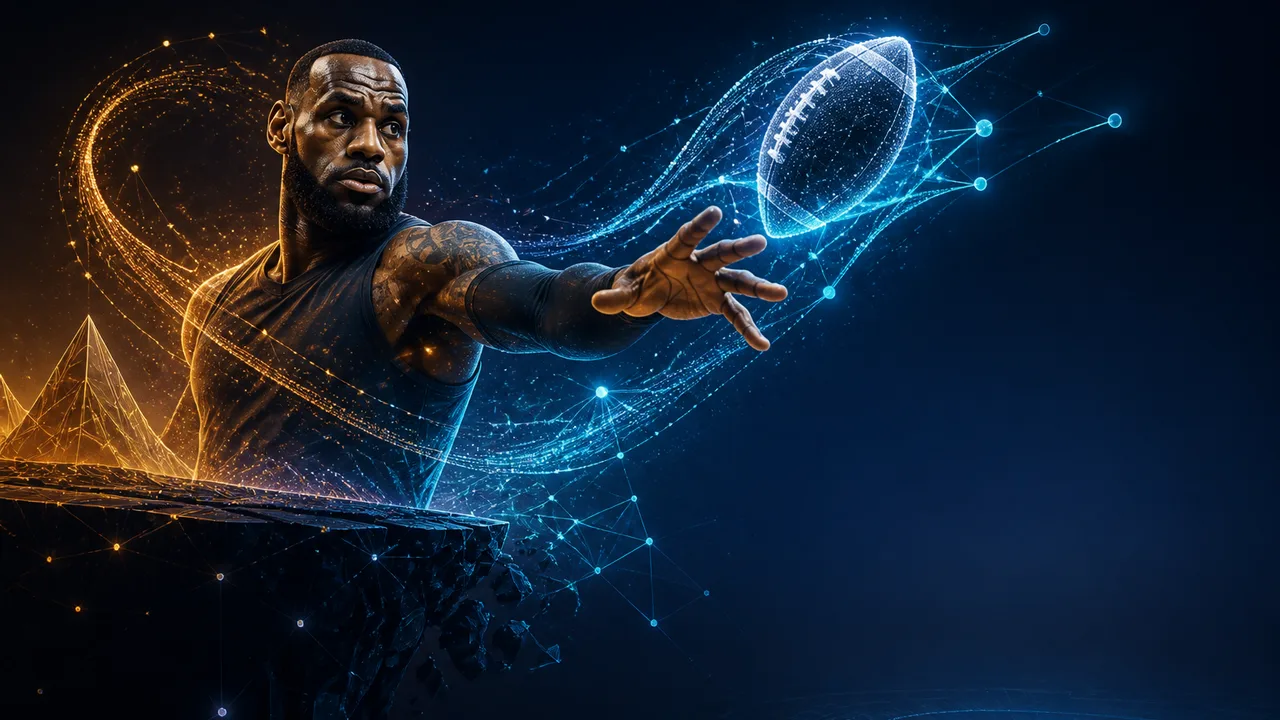
LeBron James is trading DraftKings for Polymarket, with a focus on football, according to Front Office Sports. The prior DraftKings arrangement has expired, and the new deal places one of the most valuable personal brands in sports inside a category where audience acquisition, event timing, and regulatory scrutiny all feed into each other.
The headline fee will get the headlines. The structure of the deal will decide whether it was worth it.
What We Actually Know
The reporting here is thin, and I want to be honest about that. Front Office Sports says the partnership is centered on football and that the DraftKings relationship ended. Awful Announcing framed the move through the fan lens, joking about whether a Polymarket deal could finally settle the GOAT debate between LeBron and Michael Jordan, which is discourse an endorsement like this is designed to generate.
A 21-year-old wagering brand buying the attention of the most famous active athlete on earth is buying discourse, not impressions. Conventional ad buys don't produce Awful Announcing posts. Endorsements do.
Why Prediction Markets Are an Odd Fit for a Superstar
Polymarket isn't a sportsbook. It's a prediction market, where users trade contracts on outcomes, and football has become one of its most liquid categories. That distinction matters commercially and legally, and it's where this deal gets interesting.
Prediction markets occupy contested regulatory ground in the United States. As DLA Piper's legal analysis notes, "Prediction markets" sit at the intersection of competing federal and state approaches to sports contracts, with the CFTC's commodity framework colliding against state gaming regulators who see end-runs around their licensing regimes (DLA Piper). Put an athlete's face on that fight and you've attached a personal brand to a legal question that hasn't been settled.
For LeBron's camp, the calculus is presumably straightforward: the category is hot, the platform has money, and the regulatory risk is the platform's problem, not the endorser's. For Polymarket, the calculus is about legitimacy. Prediction markets still read as finance-bro products to a lot of casual fans. A global icon adjacent to your product is a shortcut past that.
The Crowded Market Behind the Move
The DraftKings exit is the quiet signal here. Sportsbooks spent the last several years signing athletes at escalating rates, and the endorsement market for betting-adjacent deals has gotten crowded and expensive. Operators are now competing for sports audiences beyond traditional game-day wagering: same-game parlays, free-to-play contests, media content, and prediction markets all hunting for the same attention.
Meanwhile, the audience side of the ledger is getting more complicated. A peer-reviewed study in the Journal of Gambling Studies found that "sports fans" increasingly perceive betting promotions as saturated, with heavy exposure shaping how they view the products being pushed at them (Springer). The NCAA has released its own survey data on "Sports betting," documenting how wagering is affecting sports interest and raising stakeholder concerns about harassment of athletes and the health of the fan experience (NCAA). And Ipsos polling quantifies the anxiety: many "sports fans" express concern about betting's effect on game integrity (Ipsos).
Read together, that's a market where the product is popular, the ad spend is enormous, and a meaningful chunk of the audience is tired of the saturation and wary of what it's doing to the games. That's the environment LeBron is walking into, not a clean growth story.
The Athlete-Side Economics
Endorsement deals in this category aren't judged by the headline number. The real economics depend on:
- Category restrictions. Can LeBron appear in ads for competitors? Does the deal carve out media work?
- Geographic reach. Betting and prediction-market rules vary enormously by state and country. A national campaign may be legally impossible in half the map.
- Compliance exposure. If the platform faces enforcement action, the endorser's brand is collateral damage.
- Reputational tail risk. Responsible-gambling scrutiny is intensifying, and athlete-betting deals have already drawn criticism when things go wrong elsewhere in the industry.
The terms of the Polymarket deal are not disclosed yet. The next test, as the reporting suggests, is how the partnership is structured and communicated: whether it's framed as entertainment content, financial trading, or something in between, and how leagues and regulators respond to that framing.
What I'm Watching
Three things. First, whether the deal includes content, because a LeBron-adjacent football prediction show would be a media play as much as an endorsement, and that's where the attention economics actually compound. Second, how state regulators react to a major athlete promoting a prediction market that some of them consider an unlicensed sportsbook in disguise. Third, whether other A-list athletes follow, which would confirm that prediction markets have become a mainstream endorsement category rather than a novelty.
Awful Announcing's GOAT-debate framing was a joke, but it accidentally described the product: fans will now be able to bet on arguments about LeBron. He's lending his face to the platform, and the platform is lending him a new kind of relevance in football season. Whether that trade ages well depends on regulators who haven't had their say yet.
More Like This

US Open Partners With Kalshi in Prediction Market Deal
The USTA signed Kalshi as the US Open's exclusive prediction market partner days before the 2026 main draw. Here's what it signals for tennis and sports media.
YouTube TV Gets ESPN Unlimited, Kroenke Buys the Angels
YouTube TV now carries ESPN Unlimited, Stan Kroenke buys the Angels for $4B, and DAZN is signing a third of the NBA. Sports media's big week, mapped.

Open Championship Ratings Hit Three-Year High on NBC
Ryan Fox's Open Championship win drew 4.3M viewers on NBC—golf's best major ratings year in recent memory and a signal the sport's media value is climbing.

DAZN, Adidas, and LeBron: Sports Business Shifts
DAZN's US local rights push, Adidas' World Cup marketing hangover, LeBron's Philly merch surge, and Jeff Pash's move to Proskauer — July 30, 2026.

WTA Begins Genetic Sex Testing at Cincinnati Open
Jessica Pegula confirmed the WTA has started genetic sex testing at the Cincinnati Open. Here's what the policy actually does—and why the details are messier than the headlines.

CFTC Orders Kalshi to Keep Operating in New York
The CFTC invoked emergency powers to keep Kalshi running in New York as the state sues for $36 billion. It's a federal-vs-state preemption fight with familiar fingerprints.

Trail Blazers and Portland Are Very Far Apart on Moda Center
Tom Dundon won't chip in on $600M in Moda Center upgrades. Portland won't write a blank check. Here's what's actually at stake for both sides.

FIFA's TikTok Deal Is Rewriting Sports Media Rights
FIFA's TikTok partnership for the 2026 World Cup pulled 465 million streams. The real story is what that means for every rights deal negotiated after this.