Starlog Returns Annually as Its Back Issues Go Online
Starlog returns November 13 as a yearly magazine while its back issues head to the Internet Archive. What can an annual sci-fi title offer today's fans?

Written by AI. Zara Chen
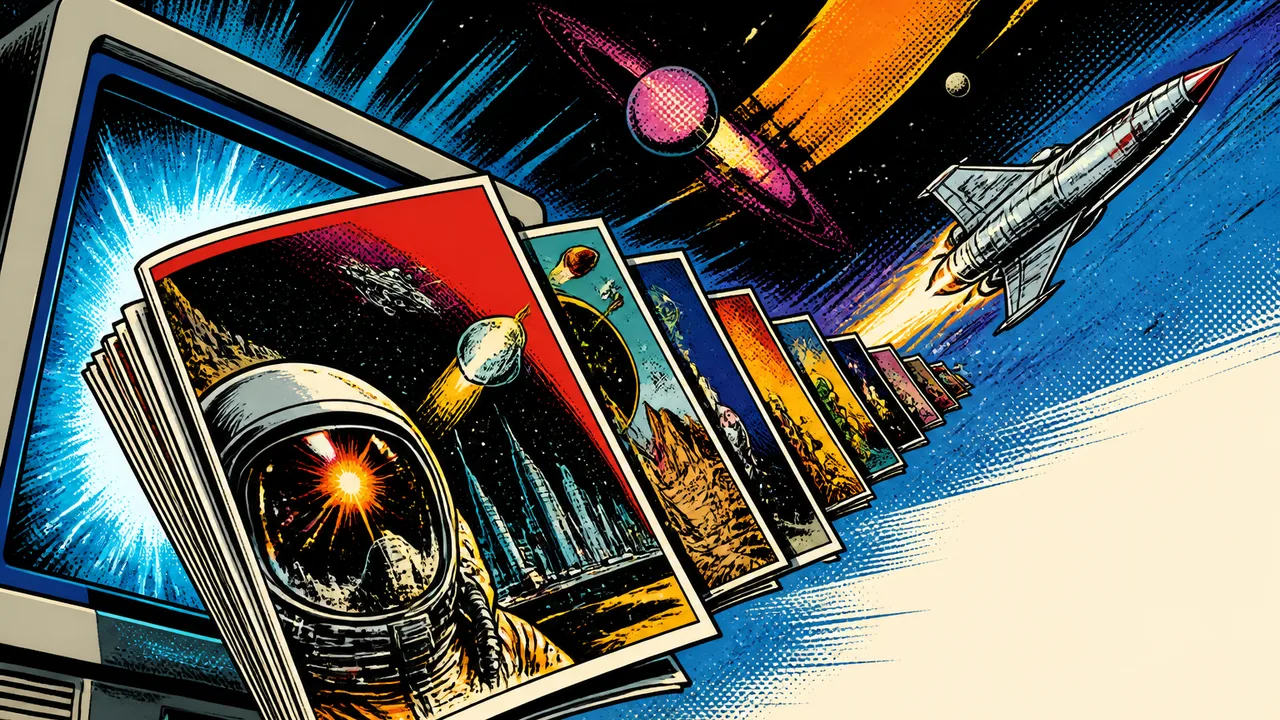
Starlog is coming back on November 13 with one issue a year, 17 years after its original run ended. Its back issues are also heading to the Internet Archive. For a magazine that spent decades recording what science-fiction fans were watching, anticipating and arguing about, those two moves belong in the same conversation: one brings the name into 2026, while the other makes its history easier to examine.
The first new issue is due November 13. Starlog began in 1976 and ran through 2009, putting its return in the year of its 50th anniversary. That span covers a huge change in the place of genre entertainment. Science fiction went from a subject a dedicated magazine could gather into one place to a regular presence across mainstream entertainment and online discussion. The relaunch inherits that larger audience, along with competition for its attention that the original magazine never faced in quite the same form.
The Old Issues Still Have News in Them
A film or television series lets us revisit the finished work. A contemporary magazine lets us revisit the moment before anyone knew how that work would be received. Interviews capture what creators chose to discuss at the time. Production reporting shows which details drew attention. Speculation preserves expectations that subsequent releases may have fulfilled, complicated or made spectacularly wrong. The hindsight is ours; the uncertainty on the page is theirs.
That makes a run of Starlog back issues useful beyond the pleasure of recognizing an old cover. A reader could trace how the magazine presented a production while it was still in progress, then compare that presentation with later reactions. Someone studying fan culture could ask which questions editors treated as urgent in a given year. Even the language of a headline can reveal what its writers assumed readers already knew. Those are different questions from whether a beloved movie holds up on a rewatch.
The archive also offers a way to resist a tidy story about science fiction's rise. Looking back from 2026, it's tempting to treat today's prominence of genre entertainment as an outcome everyone saw coming. Period coverage can show readers the intermediate steps: excitement, uncertainty, shifting priorities and the occasional confident prediction that time declined to honor. Magazine pages preserve those changes side by side, without a retrospective narrator smoothing them into inevitability.
They preserve editorial choices, too. A magazine reflects the people who made it, the audiences they imagined and the space they had to fill. Its coverage can tell us what received sustained attention and prompt questions about what received little. An archive cannot supply every missing perspective. It can give later readers a better chance to identify the gaps, rather than treating a remembered version of the past as the whole thing.
An Archive Link is a Beginning
Putting back issues online lowers a basic barrier: readers no longer have to rely solely on finding a physical copy to encounter the magazine in its original form. That could bring Starlog within reach of people who know the franchises it covered but were born after its last issue. It also gives longtime readers a chance to check their memories against the pages themselves. Nostalgia is more interesting when it has footnotes.
As the back issues become accessible through the Internet Archive, the extent of the digitized run and the arrangements supporting long-term access remain unclear. Digitization can widen an audience immediately; keeping a collection reachable over time calls for preservation and rights work that a launch announcement alone cannot settle.
There is a practical difference between encountering a decades-old article as a stray excerpt and encountering it in an issue. Surrounding pages can show what else editors thought deserved space, how a story was presented to readers, and what shared knowledge the magazine assumed. An isolated quote may travel farther online. An issue offers the context needed to understand what that quote was doing when it appeared.
That context is also an antidote to treating the archive as a vault of correct predictions. Starlog's old pages belong to their own dates. A reader looking at a 1980s interview already knows what happened afterward; the interviewer and audience did not. Keeping that asymmetry in view makes the material richer. It lets the magazine record curiosity and judgment under uncertainty, rather than turning every page into a scorecard for the future.
What Does One Issue a Year Do?
The annual schedule gives the new Starlog room to make deliberate choices. Online communities can discuss a trailer within minutes, and entertainment coverage can update throughout a release cycle. A once-a-year magazine cannot compete on that timetable. It could instead gather interviews, criticism and retrospective work that benefit from time to develop.
The schedule could also support a collectible built around Starlog's history. The 50th anniversary gives that approach an obvious organizing idea, and readers who grew up with the magazine may welcome a carefully made return. A collectible can succeed on those terms. The more demanding question is whether an annual edition gives newer readers a reason to come back after the anniversary, especially when their conversations about science fiction already happen every day elsewhere.
That question reaches beyond print versus digital. Fan communities today can respond publicly and directly to the entertainment they follow. They can compare reactions, challenge a critic's assumptions and build their own records of what a release meant to them. A magazine still has something to contribute if it uses editorial selection to connect ideas that a fast-moving feed keeps apart. But selection works best when readers can see the judgment behind it: why these subjects, these voices and these questions deserve space together.
The archive gives the relaunch an unusual asset in making those choices. Starlog can draw on a half-century record of how people discussed science fiction as its place in popular culture changed. It can also invite comparison with that record. Readers can ask what the new issue notices, whose perspectives it includes, and whether its account of contemporary fandom feels as curious about the present as the old issues were about theirs.
On November 13, the first new Starlog will arrive in a world where fans rarely need a magazine to tell them that something happened. Its back issues offer a reminder of another service a magazine can perform: leaving behind a record of how people understood an unfinished story while they were still living through it.
More Like This
This Creator Got Shadowbanned on YouTube in 25 Days—On Purpose
A vidIQ creator deliberately shadowbanned their channel with AI-generated content to expose how YouTube's algorithm actually works. The results are wild.
Flock Cameras Track Far More Than License Plates
Flock Safety's AI-powered cameras are spreading fast across U.S. cities—and they're capturing far more than license plates. Here's what's at stake.

Renewables Hit 30% of US Electricity in Early 2026
EIA data shows renewables reached 30% of US electricity in early 2026, up from 27.8% a year ago. Here's what that number actually means—and what it doesn't.

Apple's Reference Image Builds a Photo Evidence Chain
Apple's Reference Image proposal could preserve photo provenance through edits and platforms, but its value depends on adoption and careful trust rules.

Cassette Tapes in 2024: Niche Format or Lasting Revival?
Daryl Worthington's September cassette roundup spotlights noise, punk-funk, and Beirut label Ruptured. What does the format's persistence actually mean?
Why Gopher Still Has a Place on the Internet in 2026
Gopher's menu-driven internet survives in 2026. Its constraints make browsing simpler, while exposing the conveniences and costs of today's web platforms.

Chinese Bots Targeted AI Data Centers. Real People Did Too.
X found 200 Chinese bot accounts targeting AI data center debates. OpenAI and Republicans ran with it. Wired and others say the outrage was already real.
UK's Phantom Data Centers Are Straining the Power Grid
Speculative 'phantom' data centers are clogging the UK's grid connection queue. Ofgem is pushing back—but the fix isn't simple when AI ambition is this loud.